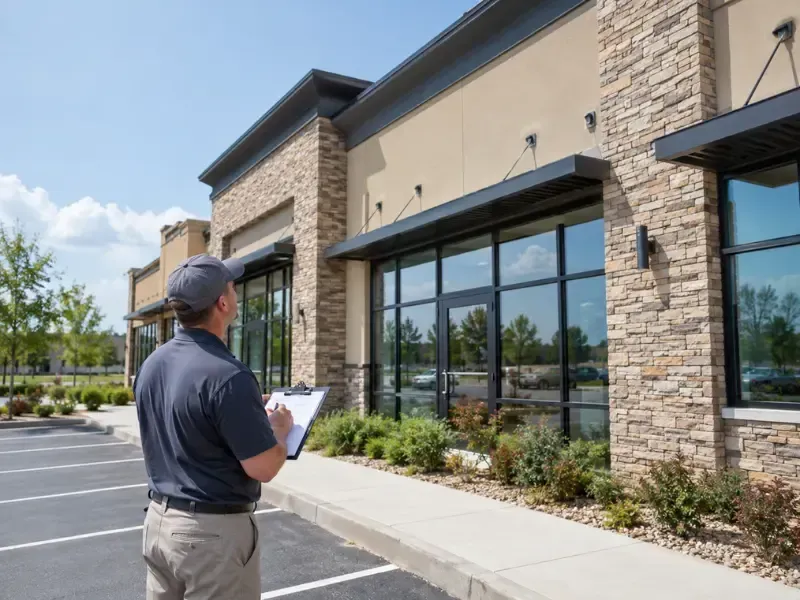
What Do Commercial Property Inspections Cover in Paradise Valley?
Something different from what they cover almost anywhere else, because the commercial stock here isn't strip malls and warehouses. Paradise Valley is zoned almost entirely residential, and the non-residential property that exists is resorts, medical offices, schools and places of worship — each operating under a Special Use Permit.
By Alex & Jeff, Certified Home Inspector · Last updated September 7, 2026
What Counts as Commercial Property Here?
Worth establishing first, because it shapes every other answer.
The Town's own General Plan puts it plainly: Paradise Valley is zoned almost exclusively residential at 70.4%, with non-residential uses at just 6.3%, all controlled through Special Use Permits, and open space making up the remaining 23.2%. The General Plan names the non-residential SUP uses as resort, medical office, school and places of worship.
So a commercial real estate inspection in Paradise Valley is realistically one of four things:
A resort or hospitality property — often many buildings on one parcel, extensive pool and spa amenities, commercial kitchens, and guest-room HVAC in the dozens or hundreds
A medical or professional office — smaller footprint, but specialised mechanical and sometimes medical gas or imaging infrastructure
A school — assembly occupancy, life-safety systems, and playfield and playground assets
A place of worship — assembly occupancy again, often with an older main structure and later additions
What you won't find here is warehousing, light industrial, or a multi-tenant retail centre. If that's what you're buying, it's in Scottsdale or Phoenix rather than Paradise Valley, and our Chandler commercial guide covers the standard commercial assessment process in more depth.
Why Does the Special Use Permit Matter?
This is the due-diligence item specific to Paradise Valley, and it isn't a building condition question at all.
Because non-residential use here exists by Special Use Permit rather than by right, the SUP and its stipulations govern what the property may actually be used for — hours, intensity, expansion, signage, and more. The Town publishes SUP stipulation summaries and notes that complete documentation is held at the Planning counter.
Two consequences for a buyer.
Condition and entitlement are separate questions. A building can be in excellent order and still not permit the use you have in mind. An inspection tells you about the asset; the SUP tells you what you're allowed to do with it. Read both.
Planned changes need checking before you commit. Amending an SUP is a Town Council process, not a permit counter transaction, and it takes time and is not guaranteed. If your business case depends on adding rooms, extending hours or expanding a footprint, that belongs in due diligence rather than after closing.
We don't advise on entitlement — that's for your attorney and a land use planner. But any commercial building inspector Paradise Valley Arizona buyers engage should be telling you the SUP exists and matters.
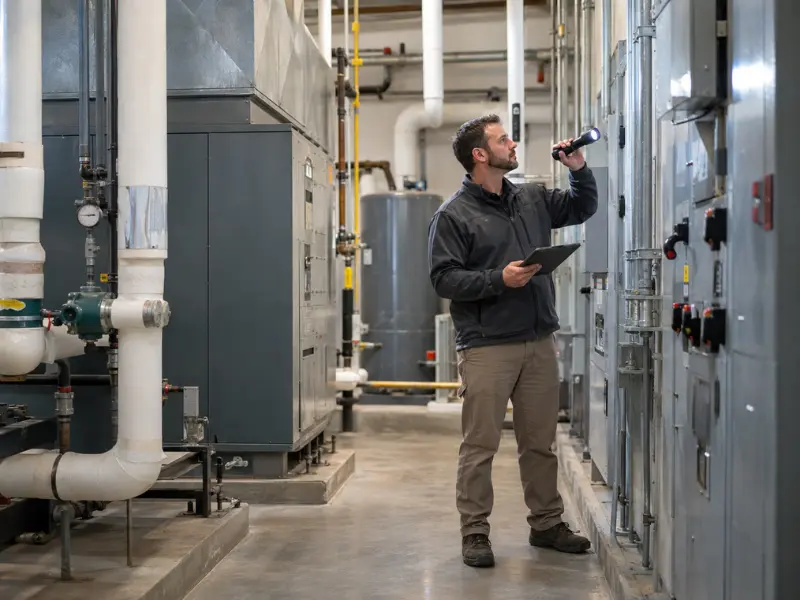
What Does a Commercial Property Inspection Include?
What does a commercial property inspection include, at a general level: the building envelope and roof, structure, site and paving, electrical service and distribution, plumbing supply and waste, HVAC equipment with ages and remaining life, vertical transportation where present, life-safety systems, and ADA-related observations.
The difference from residential isn't the list — it's that commercial assets are assessed for capital planning as well as condition. A buyer wants to know not only what's wrong now, but what will need money over the next decade, so equipment ages and expected remaining life matter more than they do on a house.
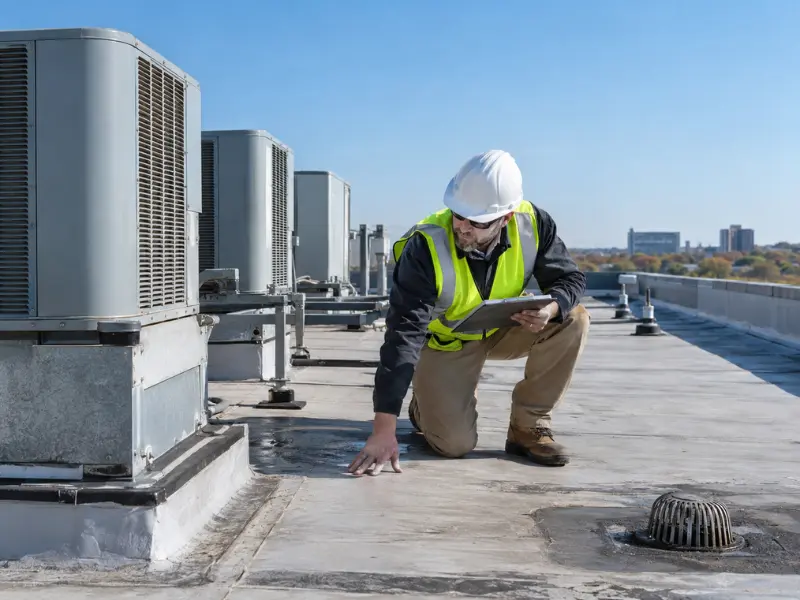
On Paradise Valley's actual stock, three things scale the work. Building count, since a resort parcel may hold dozens of separate structures. Amenity systems — pools, spas, commercial kitchens and laundries all carry their own equipment. And unit-count HVAC, where a hundred guest-room units is a sampling exercise rather than an inspection of each.
What Do ASTM and PCA Standards Require?
Do you follow ASTM/PCA standards? That deserves a straight answer rather than a marketing yes.
The recognised framework for commercial due diligence is a Property Condition Assessment conducted to ASTM E2018, producing a Property Condition Report. That's a defined scope with defined deliverables — typically an immediate-repairs schedule and a replacement-reserves table projecting capital needs over a ten to twelve year horizon, as opinions of probable cost rather than contractor bids. Lenders on institutional transactions frequently require it, and a PCA is usually a team exercise rather than one inspector.
A general commercial building inspection is not the same product. It's a condition assessment for a buyer's own information, without the standardised report structure, the reserve modelling, or the lender-facing format.
So the question to ask before engaging anyone — us included — is which of those two you actually need, and to get the answer in writing. If your lender has specified E2018, confirm scope explicitly rather than assuming, because discovering the mismatch late costs you the deadline.
A Phase I Environmental Site Assessment is a separate product again, performed by an Environmental Professional, and the protections it offers cannot be obtained retroactively.
Which Property Types Do You Inspect?
Realistically, the ones that exist here — and the honest framing is about capability rather than willingness.
Small to mid-sized professional and medical offices, places of worship, and schools are within the range of a commercial property inspector working to a general condition scope. A large resort with multiple buildings, commercial kitchens and hundreds of guest units is a different scale of engagement and usually a multi-disciplinary one.
The useful conversation before booking covers four things: how many separate structures, total floor area, which specialised systems are present, and whether a lender has specified a standard. Those four determine whether one inspector is the right answer or whether you need a team.
Our property types page covers the assets we handle, and multi-family assessment — which sits between residential and commercial — is covered in our Scottsdale multi-family guide.
How Much Does It Cost and How Long Does It Take?
How much does a commercial property inspection cost in Paradise Valley depends on floor area, the number of separate structures, building age and complexity, how many specialised systems are present, and above all which scope you're commissioning. A general condition inspection of a small office and a PCA on a resort parcel are not comparable engagements.
How long does a commercial inspection take follows the same drivers. A single-building professional office may be a day. A multi-building property with amenity systems runs considerably longer, and report turnaround on commercial work is longer than residential because the capital-planning element takes time to assemble properly.
Quotes come from a scoping conversation rather than a rate card, and they're free.
We work across Paradise Valley, Scottsdale, Phoenix and the wider Valley — see our commercial inspections page and the locations page. For residential work on the same properties, our Paradise Valley home inspection guide covers large-lot residential scope.
If you're searching commercial property inspections near me Paradise Valley AZ, or arranging a commercial property inspection near Paradise Valley, settle two questions first: has a lender specified ASTM E2018, and does the SUP allow what you intend to do?
Frequently Asked Questions
1. What does a commercial property inspection cover?
Building envelope and roof, structure, site and paving, electrical service and distribution, plumbing supply and waste, HVAC equipment with ages and estimated remaining life, vertical transportation where present, life-safety systems, and ADA-related observations. The difference from residential is that commercial assets get assessed for capital planning as well as current condition, so equipment age and remaining life carry more weight. On Paradise Valley properties, building count, amenity systems such as pools and commercial kitchens, and unit-count HVAC are what scale the work.
2. How much does a commercial inspection cost in Paradise Valley?
Floor area, the number of separate structures, building age and complexity, how many specialised systems are present, and which scope you are commissioning. That last one dominates: a general condition inspection of a small professional office and a full Property Condition Assessment on a resort parcel are not comparable engagements and should not be compared on price. Quotes come from a scoping conversation rather than a rate card, and they are free.
3. How long does a commercial inspection take?
A single-building professional office may be a day. A multi-building property with amenity systems — pools, spas, commercial kitchens, laundries — runs considerably longer, and a resort parcel with many structures becomes a sampling exercise rather than an inspection of every unit. Report turnaround is longer than residential too, because the capital-planning element takes time to assemble properly rather than being a same-week deliverable.
4. Do you follow ASTM/PCA standards?
The recognised framework for commercial due diligence is a Property Condition Assessment to ASTM E2018, producing a Property Condition Report with an immediate-repairs schedule and a replacement-reserves table projecting capital needs over roughly ten to twelve years, as opinions of probable cost rather than bids. Lenders often require it, and it is usually a team exercise. A general commercial condition inspection is a different product. Confirm which scope you need in writing before engaging anyone, and if your lender specified E2018, say so upfront.
5. Do you inspect all commercial property types?
The honest answer is about capability rather than willingness. Small to mid-sized professional and medical offices, places of worship and schools sit within the range of a general commercial condition scope. A large resort with multiple buildings, commercial kitchens and hundreds of guest units is a different scale and usually needs a multi-disciplinary team. Four questions settle it before booking: how many separate structures, total floor area, which specialised systems are present, and whether a lender has specified a standard.
Contact Halcomb Property Inspections
Halcomb Property Inspections Serving Paradise Valley, AZ and the Phoenix metropolitan area Phone: (480) 273-9328 Hours: Monday–Sunday, 6:00 AM – 9:00 PM Serving Paradise Valley, Scottsdale, Phoenix, and the wider Valley.
Under contract on a commercial property? Request a free quote or call (480) 273-9328 — tell us the scope your lender specified and we'll tell you straight whether it's work we do.
