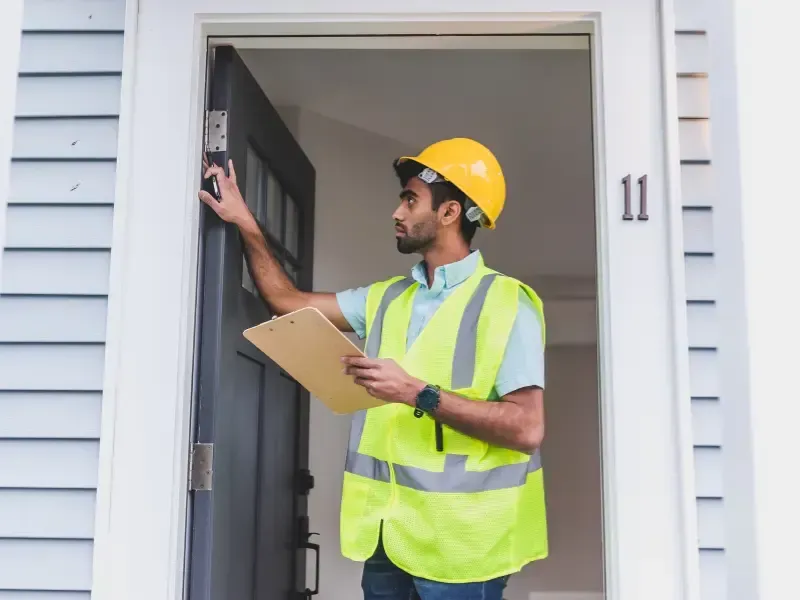
Need an Investor Home Inspection in Scottsdale AZ?
Halcomb Property Inspections provides professional investor home inspection Scottsdale real estate investors and landlords need before acquiring rental property, fix-and-flip assets, and long-term holds across the Scottsdale and North Scottsdale market. Our investment property inspection and investor due diligence inspection service is built around the questions investors actually ask — not the cosmetic concerns of an owner-occupant buyer. InterNACHI-certified, licensed in Arizona, written reports within 24 hours.
By Halcomb Property Inspections | InterNACHI-Certified · Last updated July 2026
What Is an Investor Home Inspection?
An investor home inspection is a professional property assessment conducted specifically to support an investment decision — evaluating a property through the lens of ROI, deferred maintenance cost, rental habitability, and capital expenditure timeline rather than the emotional and cosmetic concerns that drive an owner-occupant purchase.
The scope of the inspection itself is the same as a standard home inspection: structure, roof, foundation, HVAC, electrical, plumbing, and interior systems. What's different is the emphasis and output. An investor doesn't need to know that the guest bathroom tile is dated. They need to know:
Whether the HVAC system has 2 years of life or 10
Whether the roof needs replacement before the first tenant moves in
Whether the electrical panel is original and will require upgrading for modern rental standards
What the realistic 5-year capital expenditure exposure is across all major systems
Whether there are any conditions that affect habitability or rental licensing under City of Scottsdale codes
An investor home inspection answers those questions directly. A standard buyer's inspection generates findings — an investor's inspection translates those findings into decisions.
What Do Investors Look for in a Home Inspection?
The investor home inspection checklist 2026 for Scottsdale investment properties focuses on systems with near-term capital cost implications:
HVAC age and remaining life. Scottsdale's cooling load is the most significant operating variable for any rental property. An HVAC system averaging 12 to 15 years of age in this climate is approaching end of life — the question is whether it fails before or after close, and whether the acquisition price accounts for replacement. We note the approximate install date, assess current condition, and flag whether failure is a near-term or medium-term capital event.
Roof condition and estimated remaining life. Scottsdale roof replacement is a significant capital event for any investment property depending on size and material. An investor acquiring a property with five years of roof life remaining at the price of a property with fifteen years of roof life is overpaying unless the acquisition reflects that difference. We assess tile underlayment condition, visible wear, flashing integrity, and give an estimated remaining life range.
Electrical panel capacity and age. Scottsdale's 1970s–1980s construction stock often has original 100-amp panels, sometimes with Federal Pacific or Zinsco equipment that presents both capacity and safety concerns. Modern rental tenants with EV chargers, home offices, and kitchen appliances drive higher electrical loads than 1980s-era panels were designed for. We identify panel age, brand, and whether an upgrade is likely needed.
Plumbing material and condition. Galvanized supply lines in older Scottsdale properties are approaching end of life. Original ABS drain lines, polybutylene supply lines, and single-wall connections all have replacement implications that affect an investor's capital timeline. We identify pipe material and note any active or impending failure conditions.
Foundation and slab condition. Scottsdale's expansive soil and post-tension slab construction create specific failure patterns — slab cracking, interior door misalignment, and floor separation — that are worth understanding before acquisition. We distinguish cosmetic cracking from structural concern and note whether engineer assessment is warranted.
Pool condition. Scottsdale properties with pools have a significant rental advantage, but a pool in poor condition becomes a liability — immediate repair cost, habitability impact during repairs, and potential safety liability. We assess equipment condition, structure, and any safety barrier compliance issues.
Deferred maintenance load. The cumulative picture of minor items — caulking, weatherstripping, fixture condition, water heater age — gives an investor a realistic estimate of immediate make-ready cost before a tenant can occupy the property.
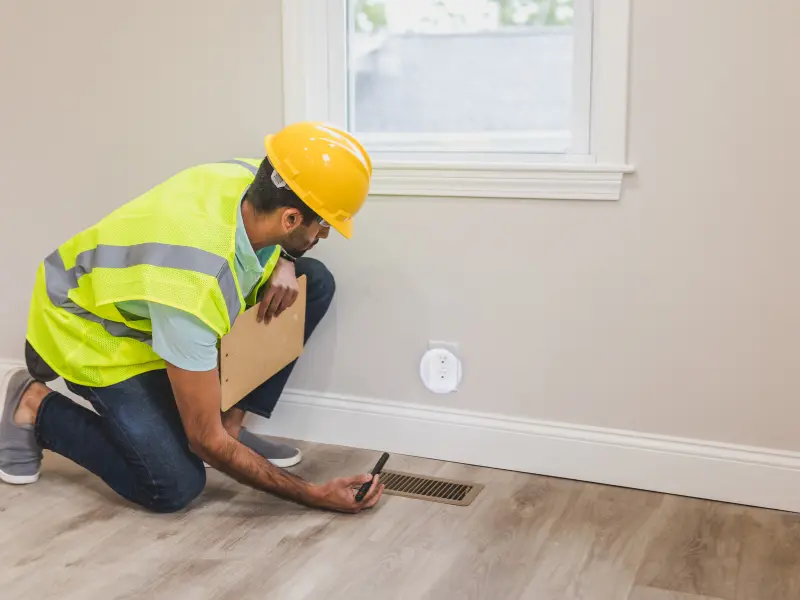
How Is an Investor Home Inspection Different from a Buyer's Inspection?
Both use the same physical scope. The difference is in emphasis and output.
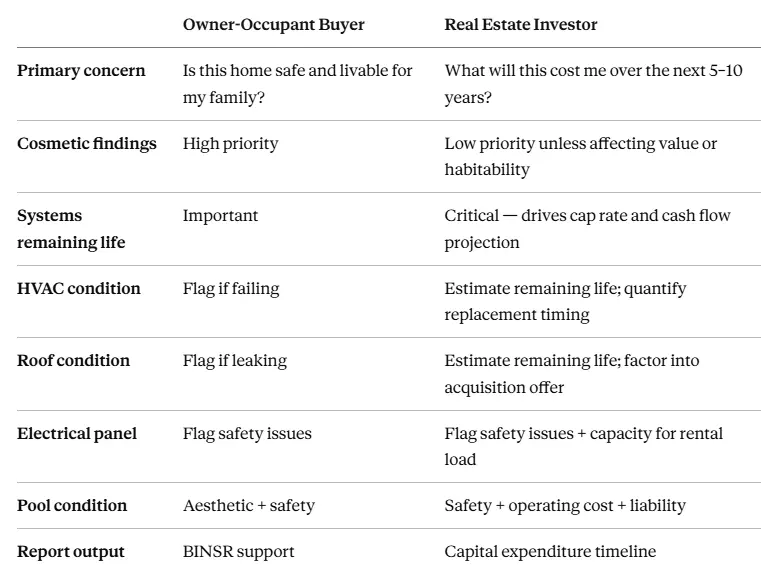
An investor reading a standard home inspection report has to do a second layer of interpretation — translating "HVAC is aging" into a near-term capital budget item. We deliver that translation directly. The best investor home inspectors in Scottsdale understand that their client's decision is financial, not emotional, and they write reports accordingly.
Home Inspection Tips for Real Estate Investors in Scottsdale
These are the practical insights we share with Scottsdale investors who inspect regularly:
Schedule inspection immediately after contract acceptance — don't wait. In Scottsdale's competitive investment market, inspection windows are often short. The goal is to complete the inspection, review findings, and make your decision (proceed, renegotiate, or exit) with time remaining in the due diligence period under Arizona Department of Real Estate framework.
Prioritize systems over finishes. New flooring takes a week and is cosmetic. A new HVAC system means a tenant can't live there without it. A new roof causes water damage every rain event if it fails before replacement. Systems drive your capital cost timeline; finishes are scheduling.
Get the inspection even when waiving other contingencies. Some Scottsdale investors waive inspection to compete on a tight offer. This is a calculated risk — see the FAQ below on waiving inspection. If you do waive, understand what you're accepting.
Use the inspection to renegotiate, not just to decide. A documented finding of a failing HVAC unit or an aging roof is a legitimate basis for a price adjustment or seller credit. The written inspection report is your negotiating document.
Inspect pools separately if condition is uncertain. Our pre-purchase pool inspection provides detailed equipment assessment, structural evaluation, and an honest remaining-life estimate for the pool as a standalone asset. For Scottsdale investment properties where the pool is a rental premium driver, a dedicated pool inspection is worth the additional cost.
Ask about rental compliance at time of inspection. We note any conditions that may affect habitability or code compliance under City of Scottsdale building codes, which is useful context if you're planning to rent the property immediately after close.
What Is an Investor Home Inspection in Scottsdale's Market Context?
Scottsdale's investment property market has a few characteristics that make a thorough rental property inspection especially important:
High HVAC replacement frequency. Scottsdale's cooling season runs effectively year-round — HVAC systems here run significantly more hours than in moderate climates. An HVAC system that's 10 years old in Scottsdale has more operational wear than the same unit in a cooler market. We assess current condition and estimate remaining life in the context of actual Scottsdale operating conditions, not national averages.
Pool density creates a consistent capital liability. A large percentage of Scottsdale single-family rentals have pools. Pool equipment — pump, heater, automation, decking — requires ongoing capital. An investor due diligence inspection that glosses over pool condition is missing one of the larger potential capital events on a Scottsdale property.
1980s–2000s construction stock dominates the rental market. Most of Scottsdale's single-family rental inventory was built in the 1980s through early 2000s. This construction vintage has predictable failure patterns — HVAC replacement, original panel upgrades, galvanized or early copper plumbing approaching end of life, tile roof underlayment that needs eventual replacement even when the tiles are fine.
Short-term rental properties have additional compliance requirements. Scottsdale has specific regulations around short-term rentals. We don't assess regulatory compliance as part of a physical inspection, but we flag any physical conditions that may be relevant to habitability or licensing.
How Much Does an Investor Home Inspection Cost in Scottsdale?
An investor home inspection is typically priced similarly to a standard home inspection — cost varies by property size and whether a pool or additional services are included. Halcomb Property Inspections provides written estimates before scheduling — call (480) 273-9328.
For investors acquiring multiple properties, we accommodate repeat client scheduling with priority turnaround on reports. A rental property inspection that's delivered within 24 hours gives you time to act within your due diligence window without rushing the decision.
Is a Home Inspection Necessary for an Investment Property?
Yes — arguably more necessary than for an owner-occupant purchase. An owner-occupant who buys without an inspection and later discovers a failing HVAC lives with the problem and replaces it when it fails. An investor who buys without an inspection and discovers the same problem absorbs an unbudgeted capital event that directly affects the property's return.
Investment decisions are financial projections. Inspection findings are financial data. An investment property inspection makes the projection more accurate — and in Scottsdale's market, where acquisition prices are high and cap rates are compressed, an undetected capital event can eliminate a year of projected return.
Arizona's Arizona Board of Technical Registration licenses home inspectors precisely because property inspection is a professional assessment with real financial consequences. For an investment acquisition, the inspection cost is a rounding error against the financial risk of an undetected condition.
Can I Waive an Investor Home Inspection in Scottsdale?
Yes — it's legally permitted under Arizona purchase contracts. Whether it's a good idea is a different question.
When waiving inspection is a calculated risk:
You're purchasing at a price that already reflects likely capital needs
You've walked the property extensively and have contractor relationships to assess condition independently
You're buying below market specifically because the property needs significant work, and you've priced that in
You're in a multiple-offer situation where waiving inspection is the price of winning
What you're actually accepting when you waive:
No documented baseline of the property's condition at acquisition
No written record of any existing defects for insurance purposes
No leverage to renegotiate based on findings
Full absorption of any capital events discovered after close
For investors who waive inspection regularly, we offer post-close inspections — a full property assessment conducted after you've taken ownership that establishes a documented baseline, prioritizes deferred maintenance, and gives you a capital expenditure timeline for the first 1–3 years of ownership. This doesn't give you the negotiating leverage of a pre-close inspection, but it gives you the planning information.
Frequently Asked Questions
1. How much does an investor home inspection cost in Scottsdale?
Cost varies by property size and whether pool inspection is included. Halcomb Property Inspections provides written estimates before scheduling — call (480) 273-9328. Reports delivered within 24 hours to support your due diligence timeline.
2. What do investors look for in a home inspection?
HVAC remaining life and replacement timeline, roof condition and estimated remaining life, electrical panel age and capacity for rental load, plumbing material and condition, foundation and slab integrity, pool condition and capital exposure, and total deferred maintenance load — all translated into a capital expenditure timeline rather than a findings list.
3. Is a home inspection necessary for an investment property?
Yes — more so than for an owner-occupant purchase. Investment decisions are financial projections; inspection findings are financial data. An undetected capital event in a Scottsdale investment property can eliminate a year of projected return. The inspection cost is a rounding error against that risk.
4. How is an investor home inspection different from a buyer's inspection?
The physical scope is the same. The emphasis differs — an investor inspection prioritizes systems remaining life, capital cost timeline, and rental habitability over cosmetic findings. The report output is oriented toward financial decision-making, not BINSR support.
5. Can I waive an investor home inspection in Scottsdale?
Yes — it's permitted under Arizona purchase contracts. Waiving is a calculated risk: acceptable when you've priced in likely capital needs or are buying below market for a known condition. We also offer post-close inspections for investors who've already acquired — establishing a documented baseline and capital expenditure timeline after closing.
Schedule Your Investor Home Inspection in Scottsdale
Whether you're acquiring a single-family rental in South Scottsdale or a short-term rental property in North Scottsdale, Halcomb Property Inspections delivers a due diligence assessment built around investment decisions.
Book Your Inspection or call (480) 273-9328 today.
Related services:
Contact Halcomb Property Inspections
Halcomb Property Inspections Phoenix, AZ — Serving all of Maricopa County Phone: (480) 273-9328 Hours: Mon – Sun, 6:00 am – 9:00 pm
Serving Scottsdale, Phoenix, Tempe, Mesa, Chandler, Gilbert, Paradise Valley, Cave Creek, Fountain Hills, and surrounding Maricopa County communities.
