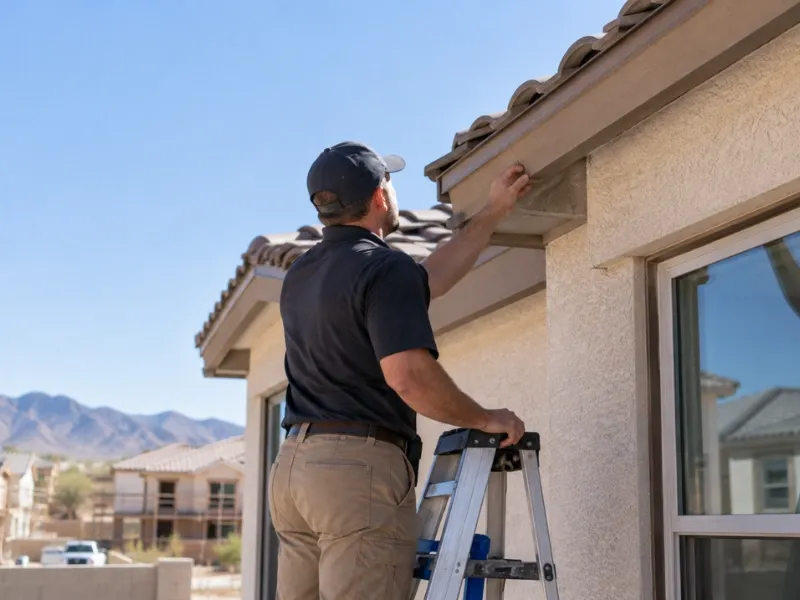
When Do You Need A New Construction Home Inspection?
A new construction home inspection should be done before the pouring of the slab, before the drywall is installed and before closing. A fourth visit near month 11 catches what shows up after you move in. Each one looks at parts of the house the others can't see.
By Alex & Jeff, Certified Home Inspector · Last updated October 29, 2026
What do phase inspections cover on a new build?
Phase inspections cover the house in stages, so an inspector sees each system while it's still visible. Instead of one look at a finished home, you get several looks at a home in progress.
Here's how the visits usually line up:
Phase | When it happens | What's still visible | Main things checked |
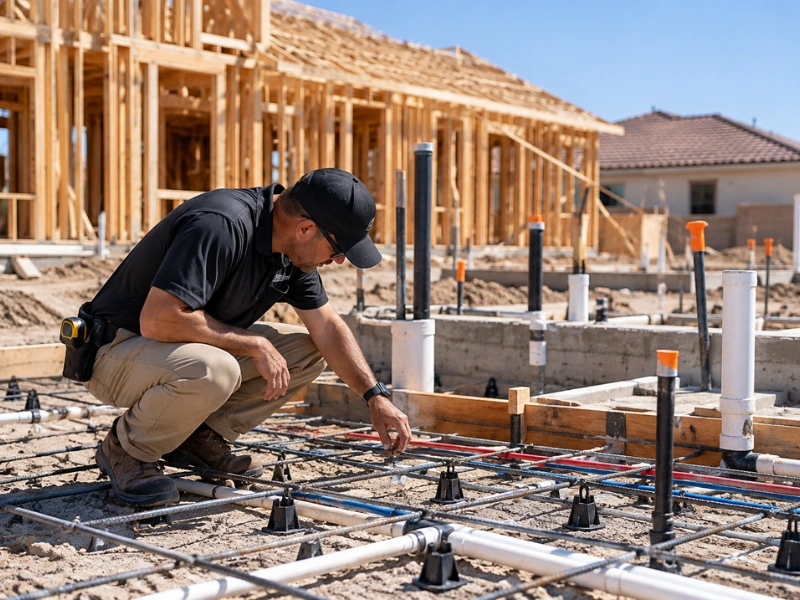
Pre-pour | Forms set, before concrete | Footings, rebar, under-slab plumbing | Rebar spacing, vapor barrier, pipe sleeves |
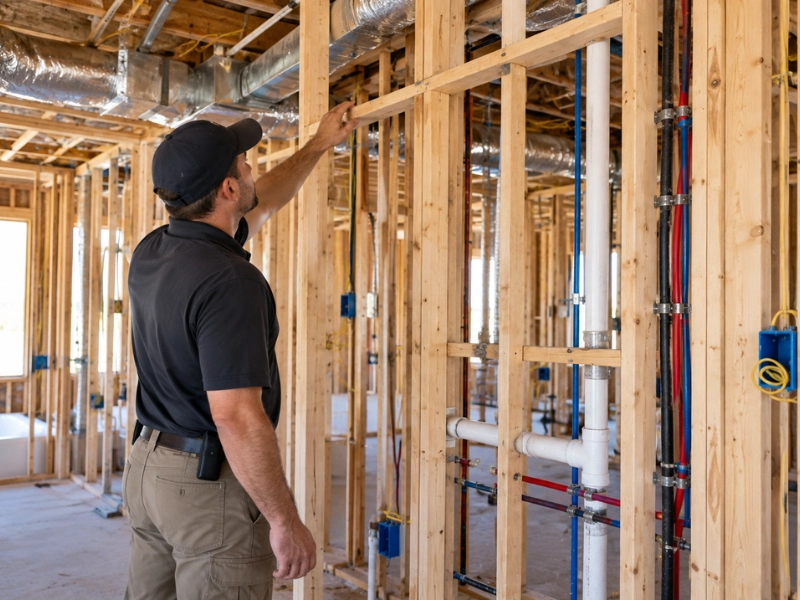
Pre-drywall | Rough-ins done, before insulation | Framing, wiring, ducts, pipes | Framing fixes, nail plates, fire blocking, duct runs |
Final | Before closing walkthrough | Finished house | Systems, roof, grading, appliances, finishes |
11-month | Before the builder warranty ends | Lived-in house | Settling, cracks, HVAC after summer, leaks |
So when should a new build be checked? The honest answer is at every stage you can still catch something. If you can only afford one inspection, the pre-drywall phase will show the most issues, as the insulation and drywall will cover all up.
Why isn't the city's inspection enough on its own?
Your home will be checked by a city inspector for minimum compliance and also by an independent inspector that only reports back to you. Municipal
inspectors check that homes are compliant at certain stages during construction. For example, the Town of Queen Creek explains that its building safety inspections cover the foundation, framing and final stages. It also notes that construction quality is a separate matter, handled by the state contractor registrar.
That gap is exactly why people ask do new homes need an inspection at all. A home can pass code and still have:
A disconnected duct pouring cool air into the attic
Missing insulation in tight attic corners
Grading that sends monsoon runoff toward the slab
Cosmetic damage from trades working after each other
None of that fails a code check. However, all of it costs you money or comfort later.
What does a pre-drywall inspection look for in Chandler heat?
Pre-drywall inspections review the structure of your home including the framing, rough plumbing, electrical and duct work. There are some special considerations in the East Valley when looking at attic and duct details.
While most people think of a pre-drywall inspection as a brief framing inspection, there is a lot more to it:
Framing. Cut or notched studs, missing hangers, and trusses that crews altered on site.
Nail plates. Steel plates protect pipes and wires where they pass through studs. Missing ones lead to nail punctures later.
Fire blocking. Builders should seal gaps between floors and around penetrations.
Duct runs. Crushed, kinked or loose ducts lose cooling fast in a hot attic.
Window flashing. Poor flashing lets water in behind stucco during monsoon storms.
Our team handles each of these on our new construction home inspections in Chandler, with photos for every item. That way, your builder knows exactly what to fix before the walls close.
What should you expect at the final inspection before closing?
Expect a full top-to-bottom review of the finished home, usually a week or two before your builder's walkthrough. That gap gives you time to read the report and bring it with you.
The final visit works like a standard home inspection, adapted for a house nobody has lived in yet:
Roof and attic. Tile placement, flashing, and insulation depth across the whole attic.
Cooling system. Temperature drop at the vents and proper drainage for the condensate line.
Water heater and plumbing. Pressure, leaks under sinks, and working shutoff valves.
Electrical. Outlet tests, breaker labels, and smoke alarm placement.
Exterior. Grading, stucco, and seals around windows and doors.
At walk-through with builder, go through each room and ask them to put all items listed on your report into their punch list. Have them write it down so you can sign.
How do you time each visit with your builder?
You keep in regular contact with the superintendents at your builder’s site and book in when they tell you it’s time for that stage. As windows will be short, you’ll probably get a day or two’s notice.
A few tips will help you with this:
Ask for the schedule early. Most superintendents can give a rough week for each stage.
Request a heads-up call. Ask to hear when the house is ready for insulation, not after it's installed.
Put it in writing. Note your planned inspections in your purchase paperwork if you can.
Stay flexible. Builders slip, so an inspector with early and weekend hours helps.
Then, once each report arrives, send it to the builder the same day. Fast reporting gives the crew time to correct items before the next stage starts.
How should you use your 11 month warranty inspection report?
To ensure you make your claim within the 11 month timeframe of your warranty, you should write a letter to your builder requesting repairs based on your 11 month warranty inspection report. Ensure you make this appointment around month 10/11.
Once this has been completed, all that remains is:
Send the full report in writing. Email it and keep a copy.
List items by room. It's easier for the builder's warranty team to schedule.
Follow up on every open item. Note dates and who you spoke with.
Know your state deadline. Under Arizona Revised Statutes § 32-1162, you have two years to file a new home complaint with the Registrar of Contractors. The clock starts at close of escrow or move-in, whichever came first.
In other words, the 11-month visit buys you time. Even if the builder's warranty runs out, you still have that state window for workmanship issues.
Where do we inspect new builds around Chandler?
We inspect new builds throughout Chandler and the nearby East Valley, including Gilbert, Mesa, Queen Creek and San Tan Valley. Plenty of master-planned communities here are still adding homes, so phase timing is a constant.
If you're searching for new construction home inspections in Chandler AZ, start with our Chandler page above. Buyers looking for pre-drywall inspections near Chandler and Queen Creek Arizona can also see our Queen Creek new construction inspections. And if you're comparing new build inspectors Chandler AZ, our guide on choosing a home inspector in Chandler covers what to ask before you book.
How do you book your first phase inspection?
Call or text (480) 273-9328, or use our contact page, to book your first phase. Have your builder's name, lot number and expected stage dates ready, since that makes scheduling quick.
Frequently asked questions
1. Does a brand new home really need an independent inspection?
Yes, as nobody else will be working sole for you at the closing table. The builder’s site Superintendent may be managing a number of homes. City inspectors only check minimum standards. Having your own report means you can have a reference point to refer back to, and the builder will want to make any changes as they are most likely to make changes before closing.
2. What is a pre-drywall visit and when in the build does it happen?
This is a walk through of the house. This will be after the plumbing, electrics and HVAC have been installed but prior to insulation being fitted. This is usually only a day or 2. It is best to ask your builder to contact you as soon as they pass their city inspection.
3. What is the 11-month warranty visit for?
This is to identify any issues that would occur once the house is inhabited. The HVAC, roof and stucco will all have been under extra pressure due to the full summer in Arizona. The slab will settle slightly within the first year. Issues will be noted during this inspection.
4. What turns up most often in new Chandler builds?
Disconnected/ crushed ducting in the attic, thin insulation in the edges of the attic, lack of GFCI. Cracks in the stucco, gaps around external penetrations and yard grading going into the house. Most of these are simple to fix.
5. Will the builder allow an independent inspector on site?
Most will, however many will have some rules. They may ask for proof of insurance, a set date and someone to accompany them whilst onsite. Check your purchase contract early as a few builders only allow inspections at certain times.
Visit or Call Us
Halcomb Property Inspections
Phone: (480) 273-9328 (call or text)
Hours: Monday to Sunday, 6:00 AM to 9:00 PM
InterNACHI-certified inspectors, licensed in Arizona, serving Chandler, Gilbert, Mesa, Queen Creek, San Tan Valley and the Phoenix metro area.
