How Do Pest Inspections Find Termites In Chandler?
Pest inspections can show the presence of termites by checking the areas they travel rather than the areas they feed. The inspection around a Chandler home would include the slab edge, stucco base, garage, plumbing, and attic. It also means the damp soil that draws them in. Halcomb Property Inspections checks all of it and reports what we see with photos, usually within 24 hours.
By Alex & Jeff, Certified Home Inspectors · Last updated October 23, 2026
What does a termite inspection actually look at on a Chandler home?
A termite inspection is a visual check of every accessible spot where termites can reach the wood in your house. If you've searched what is a termite inspection, that's the plain answer. It isn't a treatment, and nobody opens walls. Instead, the inspector follows the routes termites use.
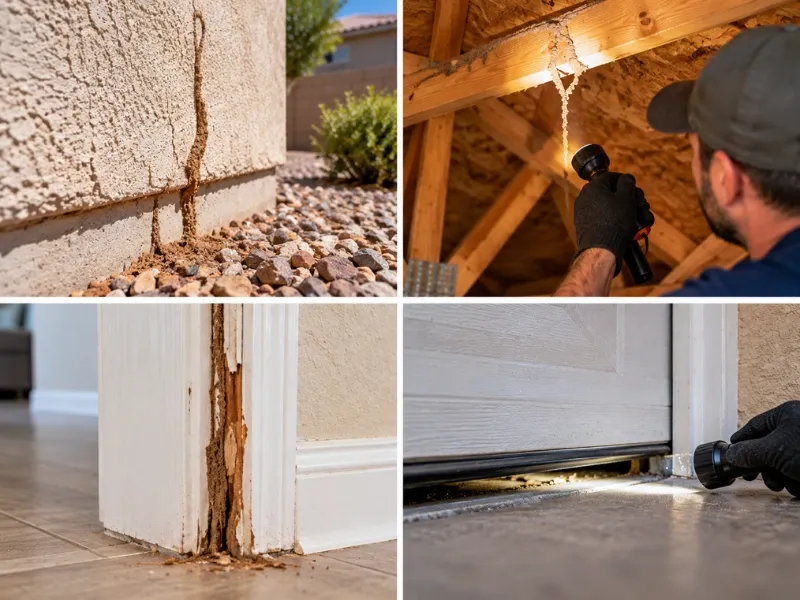
On a typical Chandler slab home with stucco over wood framing, we work through these areas:
Area | What we look for | Why it matters here |
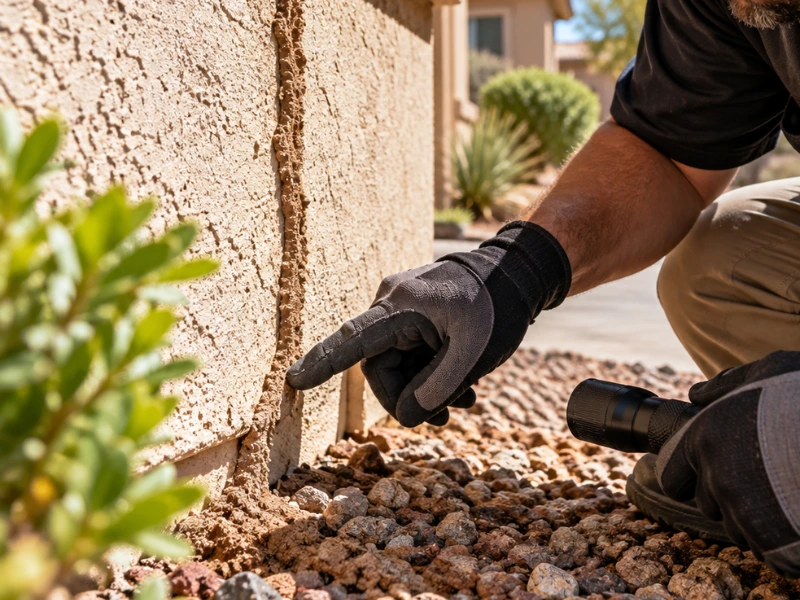
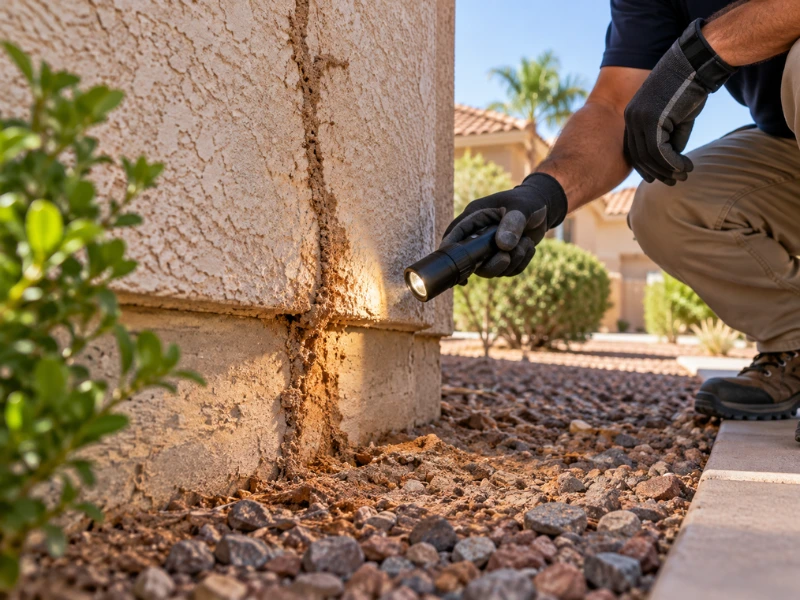
Stucco base and stem wall | Mud tubes, stucco cracks, soil piled against the wall | Termites tunnel behind stucco where you can't see them |
Garage slab joints | Tubes coming up through the gap between slabs | Joints and seams are common ways in on slab homes |
Tub drain openings | Tubes or damage under the tub access panel | Plumbing cutouts leave bare soil under the slab |
Baseboards and door frames | Blistered paint, hollow-sounding wood | Damage often shows here first |
Attic | Tubes hanging from framing, damaged trusses | Some Arizona termites build tubes down from above |
We also note what we couldn't reach, like a garage packed to the ceiling. That matters, because a blocked area is an unchecked area.
Where are the pest entry points on a typical Chandler lot?
The main pests entry points on a Chandler lot are wherever their soils, water, or wood touches the house. Termites, scorpions, and rodents all use different entry points but they all start outside on the edge of your property.
Much of south Chandler was previously irrigated farmland before it became houses. Today we still have drip lines running through our lawns as we keep this once-farm soils nice and damp and the termites are following. We pay close attention to these areas during our service and take extra precautions to make sure any entry points to your home are tightly sealed:
Buried stucco edges, where landscape rock or soil covers the bottom of the wall
Bubblers and drip emitters watering right against the foundation
Planters built against stucco, which hide cracks behind them
Wood fences and patio posts touching both soil and the house
Gaps under garage doors, a favorite route for bark scorpions
Gaps at the roofline and AC line openings, which roof rats can use
The Arizona Department of Agriculture point out that the crack just 1/64 of an inch wide can give termites hidden access. It also lists sprinklers, planters, and fences against the house as warning signs. As a result, our report flags these conditions even when no insects turn up.
What separates a wood destroying insect report from a full pest inspection?
A wood destroying insect report is a narrow, state-format document for your lender, while a full pest inspection looks at the wider set of pest risks on the property. Many buyers need both, and they answer different questions.
Wood destroying insect report (WDIIR) | Halcomb pest inspection | |
Main purpose | Tells a lender about termite activity or damage | Shows you every pest risk we can see |
Covers rodents and entry points | No | Yes |
Covers conducive conditions | Listed on the form | Explained, with photos |
Who can sign it | Only a licensed pest control business | Our certified inspectors |
That distinction matters because, under state rules, a WDIIR can only come from a licensed pest control business. So if you're looking for wood destroying insect reports Chandler AZ lenders will accept, we arrange it for you. A state-licensed inspector qualified to sign the WDIIR completes it. Our Scottsdale pest inspection guide walks through each section of that form.
When do pest inspections fit into a Chandler home purchase?
Pest inspections should be done early in your inspection period, preferably on the same day as the home inspection. Arizona resale contracts give buyers a limited amount of time to get inspections, so scheduling later in the process can leave you with no time to negotiate.
Scheduling both together has real benefits:
One visit means fewer calls to the listing agent for access
Findings in one report often explain the other, such as a plumbing leak that's also feeding termites
You get everything in time to ask for repairs or treatment
People asking how much does a pest inspection cost usually find the answer depends on the home's size, any detached structures, and whether you add a WDIIR. Booking it alongside our residential property inspections also keeps things simple, since you only coordinate one company.
Why does monsoon season change what an inspection finds?
Monsoon season changes the inspection process because summer rains cause termite swarms that leave behind obvious evidence. During the months of July and August, winged termites are leaving their colonies to start new ones after they've been disturbed by the rain.
That evidence is easy to miss. Many buyers searching how do you know if a home has termites expect to see bugs, but you usually won't. The EPA notes that most people only find out after seeing a swarm or hitting damage. It also warns that ant swarms often get mistaken for termites.
So after a monsoon, we check windowsills, light fixtures, and garage corners for piles of shed wings. Termite wings are all the same length, while ant wings aren't. Meanwhile, the rain also softens soil, so fresh mud tubes show up faster in late summer than in May.
Where do our pest inspections cover Chandler and Mesa?
Our pest inspections cover all of Chandler, plus Mesa, Gilbert, and the surrounding East Valley. If you're comparing pest inspections in Chandler AZ, we regularly work in:
Chandler: Downtown Chandler, Ocotillo, Fulton Ranch, Sun Groves, and Chandler Heights
Many of our calls come from buyers looking for termite inspections near Chandler and Mesa Arizona with an inspection deadline only days away. Our Chandler inspection page covers the other services we offer locally, and our pest inspection service lists everything we check.
When you're ready, request a free estimate and we'll fit it into your inspection window.
Frequently asked questions
1. Why are subterranean termites such a problem in Chandler?
Subterranean termites are a problem in Chandler because they live in the soil under almost every slab home. Irrigation also keeps that soil moist. They don't need to live in your wood. Instead, they commute to it through mud tubes, so a colony can feed on a house for years without anyone noticing. Dry desert air also pushes them toward the damp spots near foundations.
2. Is a termite report needed when buying a home here?
A termite report isn't required by Arizona law for every sale, but many lenders require one before closing. VA loans in particular usually need it. Even when your lender doesn't ask, it's worth getting, since sellers only have to disclose problems they know about. Check with your loan officer early so it fits your timeline.
3. What does a pest inspection cost?
A pest inspection's cost depends mostly on the home's size, the number of detached structures, and whether you also need the state WDIIR form. A large home with a casita takes longer than a small single-story house. Bundling it with a home inspection can also save a trip. Either way, we give you a free estimate before you book.
4. What are the early signs of termite activity?
The early signs of termite activity are pencil-width mud tubes, small piles of shed wings, and wood that sounds hollow when tapped. You might also see paint that bubbles along baseboards or door frames. Tiny pellets under wood trim can point to drywood termites instead. Any of these is worth a professional look before it spreads.
5. Does a pest inspection cover scorpions and rodents too?
Yes, our pest inspection covers rodents, including droppings, nesting, chew marks, and the gaps they use to get in. We don't treat for scorpions. However, we do flag the entry points that let them inside, such as worn door sweeps and gaps under garage doors. That gives you a clear list to hand to a pest control company if you need treatment.
6. Should I get a pest inspection on a new-build home?
Yes, pest inspection for a new home is a wise investment. While builders typically treat the soil prior to pouring a slab, additions or landscape irrigation can disturb the treated soil or run right up against the stucco. An inspection before builder's warranty expires ensures any needed corrections to the original pest control work can be done at the builder's expense.
7. Do I need a separate pest inspection if I'm getting a home inspection?
Because home inspectors typically don't check for pests, a separate pest inspection is a good idea. While they might note some evidence of termites, rodents, or the lack of sealing around windows and doors, a professional pest inspection will check for these things more thoroughly. The benefit of hiring us to do both inspections is that you get them both done at the same time and save the time and money of scheduling 2 separate inspections.
8. How often should a Chandler home get a termite inspection?
Most homes in Chandler should be inspected for termites at least once per year. This is because many homes have a history of periodic infestation after the monsoon rains in the late summer. Having a professional inspection done in the summer can spot problems before they worsen and cause thousands of dollars in repairs. Termite inspections should also be done anytime there has been a major change in vegetation near the home, or a plumbing leak that could cause changes in ground moisture near your home's slab foundation.
How can you reach Halcomb Property Inspections?
Halcomb Property Inspections Phone: (480) 273-9328 (call or text) Hours: Monday to Sunday, 6:00 AM to 9:00 PM Credentials: InterNACHI-certified inspectors, licensed in Arizona Service area: Chandler, Mesa, Gilbert, Tempe, Scottsdale, Phoenix, and the wider Valley
