Who Does Pool Inspections Services In Scottsdale?
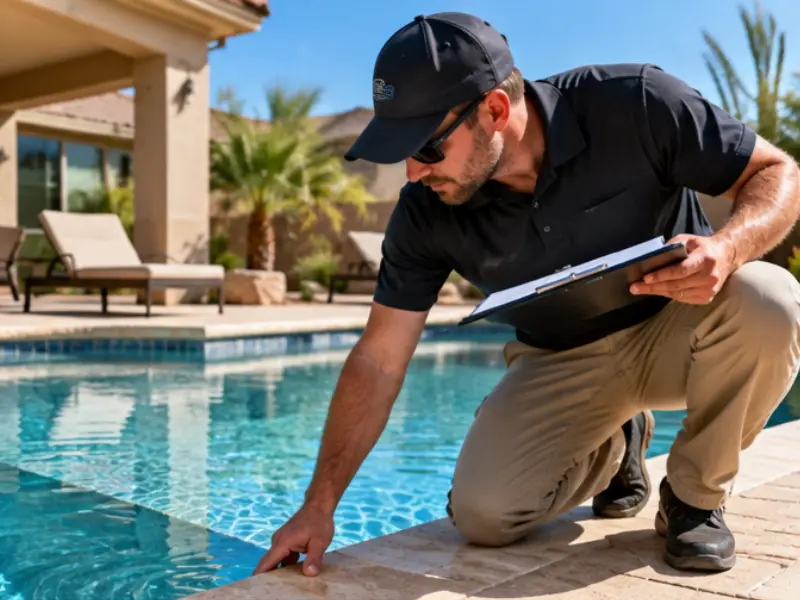
Pool inspections services in Scottsdale are offer by a certified inspector, who examines the equipment, shell, plumbing and safety features, and reports any deficiencies before buying. Halcomb Property Inspections offer inspections across pools and spas in Scottsdale with a free estimate and report within 24 hours.
By Alex & Jeff, Certified Home Inspector · Last updated October 16, 2026
Who inspects pools in Scottsdale?
Halcomb Property Inspections does, along with pool service companies and leak detection specialists, so each one does a different job. Who inspects pools in Scottsdale for a buyer? We do, through our pool and spa inspections. A pool service company, for example, mostly keeps water clean and equipment running. Meanwhile, a leak specialist hunts for one problem with special gear. By contrast, a pool inspection looks at the whole pool and tells you what it found.
Searching for pool inspection Scottsdale? Look for someone with no stake in the sale. We never work for realtors or sellers, so our findings go to you. That matters, because a pool can add luxury and value to a home only when it's safe, working and compliant with local codes.
Bring what you have to the inspection. Pool plans, permits, equipment manuals, service records, and the date of the last resurfacing can all be beneficial in telling the history of the pool. Even if some documents are missing, it's best to make the seller provide the needed ones.
Which inspector adds a pool inspection to a property inspection?
Halcomb does, as a specialty add-on to a home inspection. Which inspector adds a pool inspection to a property inspection in Scottsdale? Ask for it when you book, and we'll plan the visit around both. One visit means one schedule and one report, and our reports arrive within 24 hours.
Booking a pre purchase pool inspection Scottsdale buyers can trust? Timing matters. Most inspection contingencies run on a short clock, so ask for the pool at the start, not after the house is done. A home inspection usually takes two to three hours, and the pool adds time on top of that, so tell us early.
Who assesses pool equipment in Scottsdale?
We do. Who assesses pool equipment in Scottsdale, and what does that mean? For a pool equipment and pump assessment Scottsdale homeowners can rely on, we check pumps, filters and heaters, timers and automation, chlorinators, blowers and lighting, and the valves and circulation system. Here's what we look for:
Equipment | What we check | Common red flags |
Pump | Operation, noise and leaks at seals | Grinding, rust, drips at the housing |
Filter | Housing, pressure and connections | Cracks, high pressure, leaks at fittings |
Heater | Operation and visible condition | Scale, rust, rough or failed ignition |
Timers and automation | Controls and settings | Overridden or non-working controls |
Chlorinator | Condition and connections | Corrosion, heavy scaling |
Valves and plumbing | Visible piping and flow | Leaks, cracked or patched pipe |
It's a visual and operational check. We run the equipment and report what we see, but we don't take it apart. If something looks bad, we'll say so and suggest a specialist.
Age matters too. Equipment typically has a data plate with a manufacture date, so you can tell when the pump or heater is nearing end of life even if it is running smoothly on the day of the inspection. Request service records as well, as a well maintained older pump may outperform a poorly maintained newer pump.
How can you tell if a pool is leaking before buying?
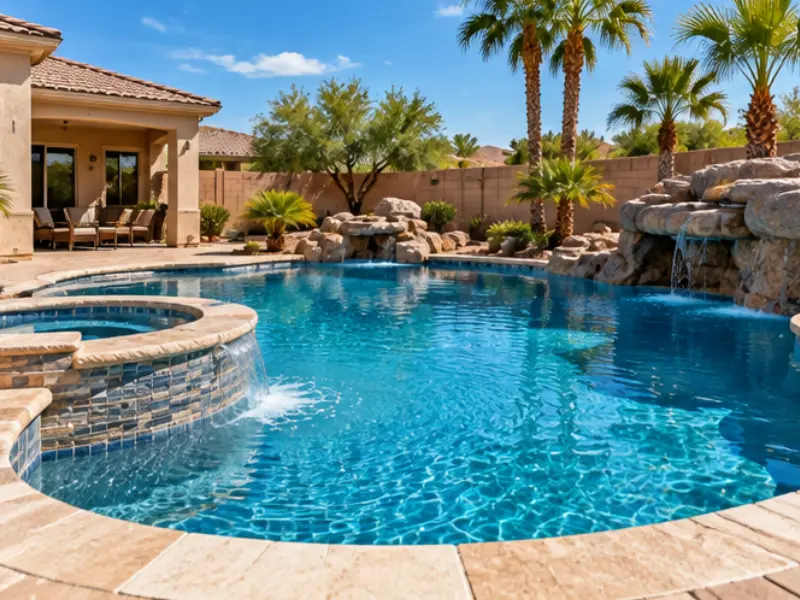
You can see the tell-tale signs, but a visual inspection can only tell you that there may be a leak. We check for water levels and clarity, crack and stain on the shells, signs of wear on the decks and coping, and drainage around the pool. While cracks are an obvious concern, we also look for tell-tale damp spots on the deck as signs of poor drainage, which can be an indicator of a slow leak. Other clues matter too:
A low water level that the seller keeps topping off
Wet or soft ground near the equipment or along the pool edge
Cracked decking or coping that shifts or sinks
A fill valve that seems to run all the time
Algae that keeps coming back despite treatment
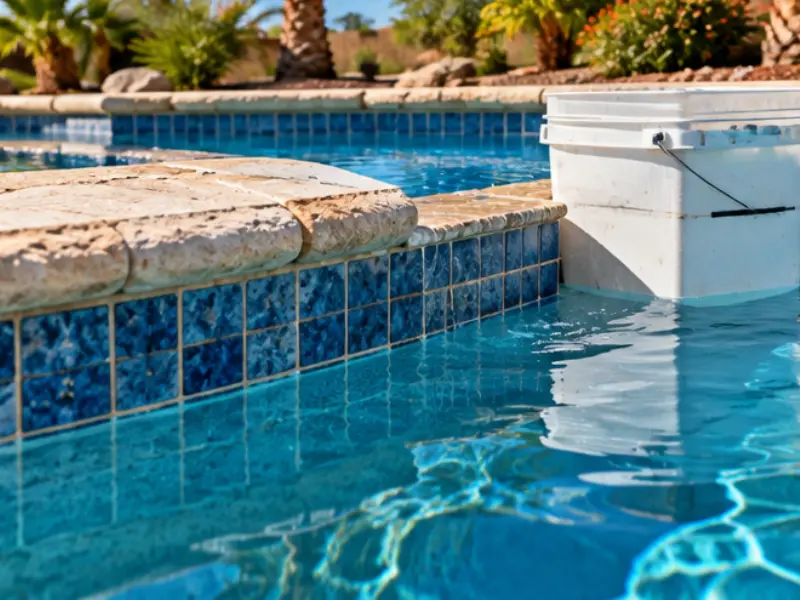
Ask the seller how often they add water. Then, if you see any red flags, hire a leak detection professional before finalizing the sale. You want them to pressure-test the lines and find the source of the problem, which is something we can't do. A simple bucket test can also help. If you put a bucket of water next to the pool and the water level is dropping faster than it should, then you have a leak. It's not conclusive, but it'll show you if you need to invest in more testing. Ask to see water bills from over several months as well. Pools lose water to evaporation in Arizona, but if you're constantly having to top it up, then chances are there's another reason it's happening.
How much does a pool inspection cost?
It depends on the pool and the visit, so we give a free estimate instead of a flat number. Cost usually follows the size of the pool, whether there's a spa, how much equipment you have and whether the pool is an add-on to a home inspection. Our estimates are free and no-pressure, and we put clear pricing in front of you with no surprises. To get a number, call with the address, the pool size and whether there's a spa, and we'll tell you what to expect.
Still, think of it as a small price to pay compared to what the damage might cost the buyer. A cracked shell or faulty plumbing can easily cost thousands of dollars, and knowing about it ahead of time could save you from having to shell out that kind of cash at closing.
Why is a pool inspection worth it when buying a house?
Because pool problems are expensive and easy to miss. Why is a pool inspection worth it when buying a house? A report gives you a list you can negotiate with, a way to budget for repairs and a check on safety features. If it turns up problems, you can ask the seller for repairs, a credit or a lower price, and get quotes before you decide.
Also, safety deserves its own look. Scottsdale requires short-term rental properties to have a pool barrier in working order. That includes a 60-inch fence or alarms on doors and windows, plus gates that close and latch themselves with the latch at least 54 inches high. If you plan to rent the home, that matters even more. Drain safety counts, too. Federal law requires pool and spa drain covers to meet a safety standard because entrapment can be fatal. We check for self-latching gates, alarms, safety covers and anti-entrapment drain covers during the inspection.
Where does Halcomb Property Inspections inspect pools around Scottsdale?
We inspect across Scottsdale, Paradise Valley, Phoenix, Tempe, Mesa, Chandler and Fountain Hills. Our Scottsdale page covers local services, while our residential inspections page explains the home inspection a pool can be added to. When you're ready, request a free estimate or call (480) 273-9328.
Frequently asked questions
1. What does a pool inspection include?
We inspect equipment, structure, safety, plumbing and electrical, and a few other areas so nothing about the pool is left to imagination. By that we means, pumps, filters, heaters, timers, automation systems, chlorinators and lights, plus the shell, decking and coping, fencing, gates, alarms, covers and drain covers. We'll check visible plumbing, grounding and bonding, GFCI outlets, water level and clarity, jets on a spa, skimmers and return lines, and drainage in relation to the pool.
2. Which pool problems turn out to be the most expensive?
These are the ones that cannot be seen: leaks in the shell or buried plumbing, cracks in the structure, and a worn surface that needs resurfacing. Equipment, such as a pump or heater, is usually less expensive to replace. Electrical bonding issues are also a concern because of a safety hazard. Since the expensive problems are hidden, an inspection prior to closing is the cheapest way to find out about them.
3. Can you tell whether a pool is leaking before I buy?
We can identify signs indicative of a leak, but we cannot confirm a leak. We can check water levels, cracks, stains, and wear and tear. If anything looks suspicious, we can recommend a professional leak detection service that can perform a pressure test on the lines to confirm your suspicions. It's a good idea to be certain before your home is re-plumbed by an inexperienced handyman.
4. Do you check pool barrier and safety gate requirements?
I can check the safety features that provide protection for people around the pool including: fencing, self-latching gates, alarms, safety covers, anti-entrapment drain covers and slip resistant surfaces. I will report on what I find but keep in mind that we are not the city, so if you are considering renting or remodeling please contact Scottsdale to confirm their requirements.
5. Can the pool be assessed at the same visit as the property?
Yes, pool inspections can be included with your home inspection giving you an inspection and report at a fraction of the time. Please advise when you book so we can give you an estimate on the extra time it will take. We guarantee same day reports (normally within 24 hours) which is helpful when needing an inspection with an aggressive timeline.
Contact Us
Halcomb Property Inspections Phone: (480) 273-9328 Hours: Monday to Sunday, 6:00 AM to 9:00 PM Serving Scottsdale, Paradise Valley, Phoenix, Tempe, Mesa, Chandler and the wider Valley.
