How Property Inspections Protect Idle Scottsdale Homes?
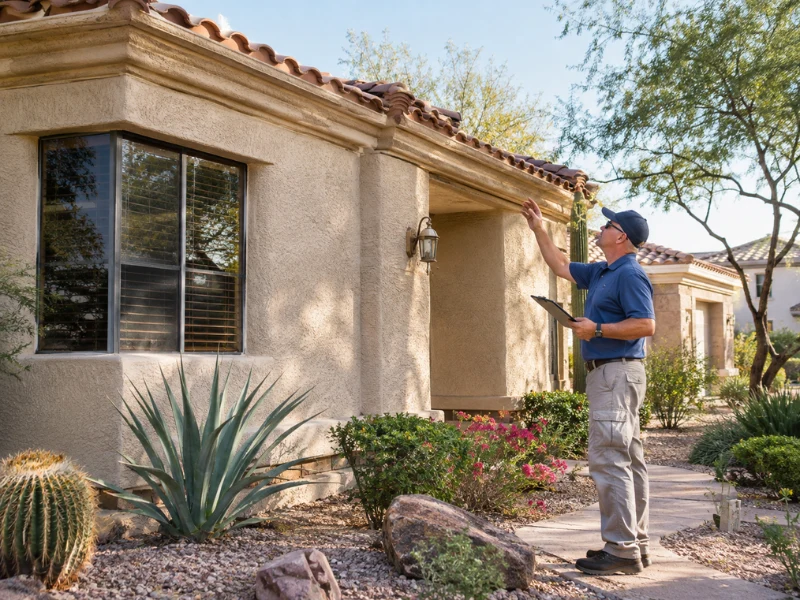
Property inspections protect idle Scottsdale homes by catching summer damage before the owners walk back in. At Halcomb Property Inspections, we look over seasonal homes across Scottsdale and Paradise Valley each fall. That way, small problems get fixed while they're still small. Owners then arrive to a house that's actually ready for them.
By Alex & Jeff, Certified Home Inspector · Last updated November 17, 2026
What do property inspections look at in second homes left empty?
They look at the same major systems as a full home inspection. The difference is the question behind it: what changed while nobody was there? On second homes left empty, we're not judging a house for a sale. Instead, we're comparing it against how a lived-in home should look and flagging anything that drifted.
Our property assessments for Scottsdale AZ second homes follow one checklist. It's the same one behind our residential property inspections:
Roof covering, flashings, gutters and drainage
Attic, insulation and ventilation
Electrical panels, outlets, GFCIs and smoke and CO detectors
Plumbing fixtures, visible piping, water heater and water pressure
Heating, cooling, thermostats and ductwork
Walls, ceilings, floors, windows and doors
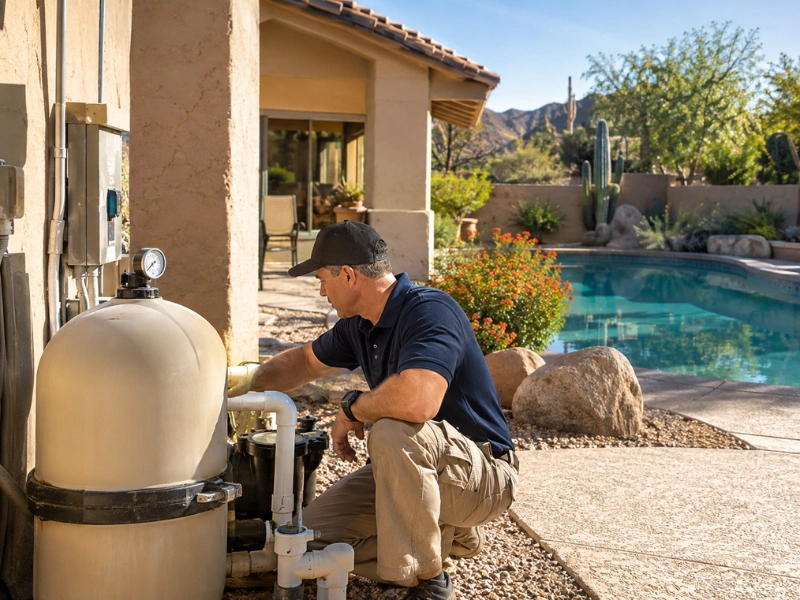
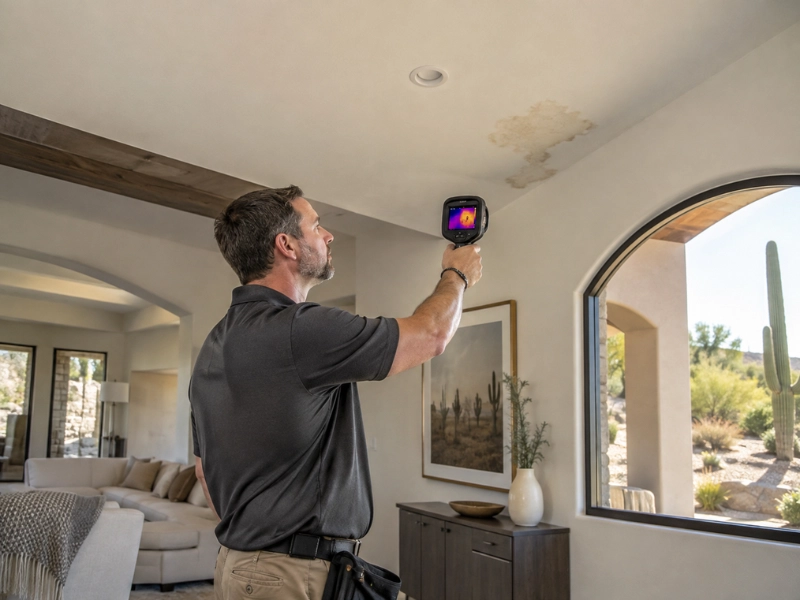
We also bring thermal imaging and moisture meters to every visit. They matter more in a closed-up house. A damp patch behind drywall often hasn't stained the paint yet. Many owners add a pool inspection on the same visit. After all, that equipment ran all summer with nobody watching.
Why does a Scottsdale summer make the timing matter?
Because most of the damage happens months before anyone sees it. Snowbird owners usually leave in spring. Then Scottsdale's hardest weather arrives right after. The National Weather Service in Phoenix sets monsoon season from June 15 through September 30. That's three and a half months of dust storms, sudden downpours and strong wind gusts, all hitting an empty house.
Here's the trouble. A July storm can leave a slipped roof tile or a cracked stucco seam, and nobody notices until November. Meanwhile, every rain after that pushes a little more water in. As a result, an easy August fix can become wet insulation and stained ceilings by fall.
Tile roofs are a good example. On most Scottsdale homes, the tile itself isn't what keeps water out. The underlayment beneath it does. So one cracked or shifted tile can let rain reach that layer for months without a single drip inside.
Heat adds to it too. On a 110-degree afternoon, an attic in the Valley gets far hotter than the outside air. That's hard on roof underlayment, wiring insulation and anything rubber, and an empty house gives none of it a break.
When is the right time for checking a home before the season?
About two to four weeks before the owners arrive is the sweet spot for checking a home before the season. That window leaves enough time to book a roofer, plumber or HVAC tech if we find something. It's also close enough to arrival that nothing new is likely to go wrong in between.
For most Scottsdale snowbirds, that puts the visit somewhere between mid-October and late November. However, owners who return right after the holidays can push it into December. Some owners go searching for tips on checking a seasonal home before the owners come back to Scottsdale. The main rule is simple. Don't schedule it the day before the flight, or any needed repair lands on your first week back.
It also helps to have the power and water on and the AC running for a day or two first. Systems that have been idle behave differently once they're under load, so this gives us a truer picture.
Coming back to Scottsdale this season?
Call or text: (480) 273-9328
Hours: Mon–Sun, 6:00 am – 9:00 pm
Free, no-pressure estimates before you book.
How should you read the findings on an idle home?
Sort them by how fast they can cause more damage, not by how expensive they look. A small active leak matters more than a big cosmetic crack. After all, the leak keeps working while you decide what to do. We write our reports so that ranking is easy to see.
Here's how we'd suggest prioritizing what comes back:
Type of finding | What it usually means | When to act |
|---|---|---|
Safety hazard | A tripped or failed GFCI, missing detector batteries, a gas smell | Before anyone stays the night |
Active water | Moisture readings, fresh staining, a dripping fitting | Within days |
Storm damage | Displaced roof tiles, torn screens, cracked stucco seams | Before the next big rain |
Wear from idling | Stiff valves, weak AC output, sediment noise in the water heater | In the first few weeks back |
Monitor only | Hairline cracks, aging sealant, minor settling | Note it and recheck next year |
Also, keep the report. Next fall's findings mean a lot more when you can compare them against this year's photos.
If a property manager looks after the house, send them a copy too. That way, they can line up repairs while you're still packing. It's the simplest way to get the work done before you land. It also gives them a clear record to hand any roofer or plumber they call in.
What can owners do in spring to make the fall check easier?
A few small steps on the way out cut down what the fall inspection finds. Most Arizona owners know the basics already. These steps make the biggest difference later:
Leave the AC on with the thermostat set in the mid-80s rather than switching it off
Shut the main water off, or at least the supply to the washer and toilets
Clear out food, soap and candles that draw rodents
Seal gaps around utility lines and garage door seals
Take dated photos of every room, ceiling and the roof
Rodents deserve extra attention in the desert. The University of Arizona's pack rat guide says pack rats occasionally damage wiring in homes. It also names pest-proofing as the best way to keep them out. So if you spot droppings or nesting before you leave, book a pest inspection first.
Where do we inspect seasonal homes around Scottsdale?
We cover all of Scottsdale, from McCormick Ranch and Gainey Ranch up through DC Ranch, Troon and Pinnacle Peak. In addition, we're just as busy in Paradise Valley and Fountain Hills. That's good news for anyone looking for property assessments near Scottsdale and Paradise Valley AZ. Our full service area also takes in Phoenix, Tempe, Mesa and the wider Valley.
North Scottsdale homes near the McDowell Mountains often sit on larger desert lots. Those houses see more wildlife and blowing dust than central Scottsdale does. So up there, we pay closer attention to rooflines, attic vents and screens.
Plenty of our seasonal clients own condos in central Phoenix too. Our post on who carries out property inspections in Phoenix explains how those visits work.
Ultimately, property inspections on an empty home come down to one thing. You find out what the summer did before it costs you more. A fall visit, a clear report and a few weeks to act is usually all it takes.
Frequently asked questions
1. What quietly goes wrong in a house nobody has been in since May?
Slow leaks, dry drain traps, chewed wiring and monsoon water under roof tiles are the usual culprits, and none make noise. When people ask what goes wrong in a vacant house in the desert, or what fails in an unoccupied house first, it's almost always the parts that rely on regular use, like seals, traps and valves.
2. Which systems suffer most from sitting idle in this heat?
The air conditioning, water heater and roof take the hardest hit, followed by pool equipment and irrigation. Anyone wondering what should be checked on a house that has been empty for months should start with those, because a struggling AC or a leaking irrigation line can run up damage for weeks unnoticed.
3. Can this be arranged while the owners are still out of state?
Yes, owners don't have to attend, so you can book by phone, text or our online form. Access usually goes through a property manager, neighbor or lockbox, and we confirm it when you book.
4. What gets sent back, and how soon would they know about a problem?
You get a digital report with photos, condition notes and next steps within 24 hours, often the same day. Urgent findings, like an active leak, sit at the top of the report so they're the first thing you see.
5. How often is this worth doing on a home used a few months a year?
Once a year, a few weeks before the owners return, covers most seasonal homes, plus one visit after a severe monsoon. So for anyone asking should a second home be checked before the owners return, the answer is yes, because that's when summer damage is easiest to catch and cheapest to fix.
Visit or Call Us
Halcomb Property Inspections
Phone: (480) 273-9328
Hours: Mon–Sun, 6:00 am – 9:00 pm
Family- and veteran-operated home inspection company
Serving Scottsdale, Paradise Valley, Fountain Hills, Phoenix, Tempe, Mesa and the wider Valley. Call for a free estimate, or use our contact page to book a visit.
