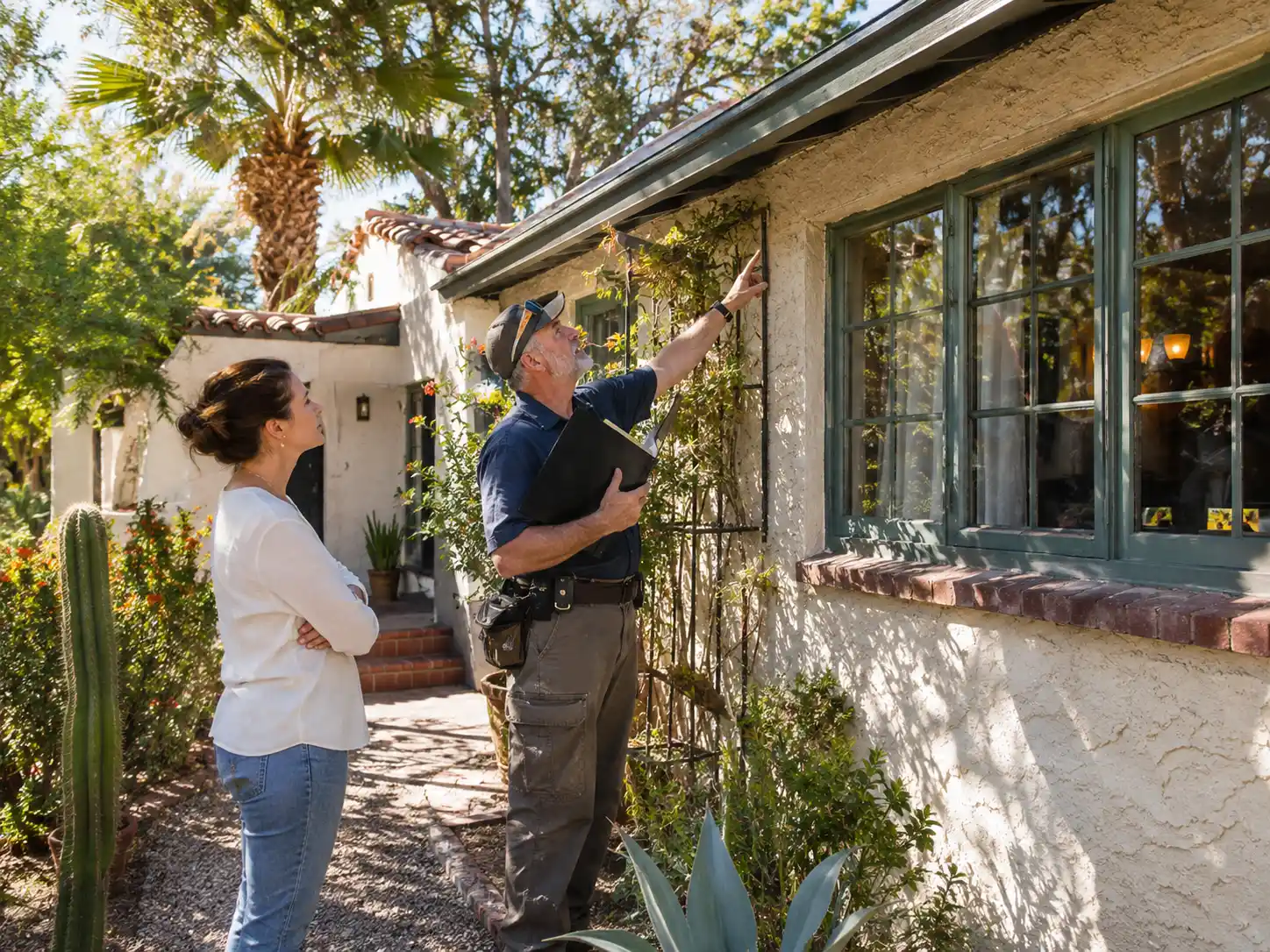
Why Get Residential Property Inspections On Old Homes?
Residential property inspections matter more on old homes because the biggest problems are usually original parts that still work, just not safely or for much longer. In Phoenix and Scottsdale, Halcomb Property Inspections looks closely at decades-old panels, drains and past additions, so you know what you're buying before the inspection period ends.
By Alex & Jeff, Certified Home Inspector · Last updated November 10, 2026
What makes older Phoenix housing stock different to inspect?
Older Phoenix housing stock was built for a smaller city, lighter electrical loads and fewer appliances. As a result, the house you see today is often the original shell plus 60 years of changes.
Most older homes in the Valley fall into two broad groups:
Pre-war homes from the 1920s to the early 1940s, found in districts such as Willo, Encanto-Palmcroft and F.Q. Story
Post-war ranch homes from the late 1940s to the 1960s, built fast and in large numbers across central and south Phoenix and south Scottsdale
Both areas have some common characteristics. Many buildings have brick/block/slump block walls. Many buildings also have flat or shallow pitched roofs with parapets. There is some flood irrigation in central Phoenix meaning yards are built to retain water near the foundations. That's great for shade trees. However, it also puts steady moisture against old footings, so we look closely for cracks and settling along those walls.
The bigger issue, though, is what came later. Carports were enclosed, garages became bedrooms and kitchens moved. Some of that work was permitted, and some clearly wasn't. So a good inspection reads the house like a timeline, not just a checklist.
Which original electrical panels raise red flags?
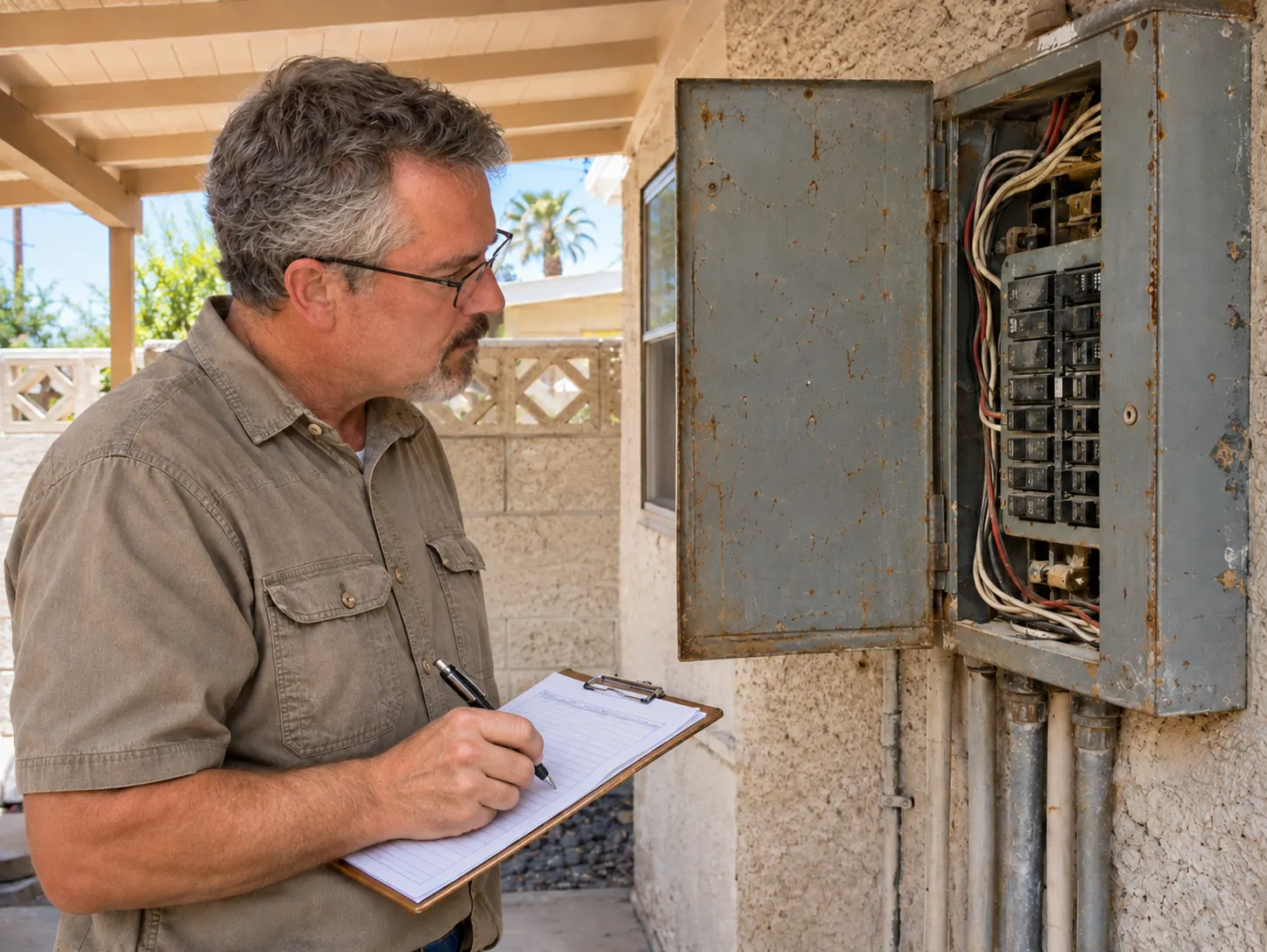
A few makes of panels and services can be common in original electrical panels. When customers are asking if old electrical panels are a problem in Arizona homes, this will depend on what make of panel you have, what size it is and what treatment it has had.
Here's what we look for when the cover comes off:
Panel or service type | What we look for | Usual next step |
Federal Pacific Stab-Lok | Breakers known for not tripping reliably | Electrician evaluation, often replacement |
Zinsco | Loose or overheated bus bar connections | Electrician evaluation, often replacement |
Fuse box | Oversized fuses, signs of overloading | Upgrade to a breaker panel |
60-amp service | Too small for modern AC and kitchens | Service upgrade quote |
Any older panel | Scorching, rust, double-tapped breakers | Repair by a licensed electrician |
Wiring after the panel is also an issue. Houses wired between approx 1965-1973 often have aluminium spur wiring. This can cause problems with the wiring becoming loose and causing overheating at sockets and switches. Older pre-war houses can have fabric insulated wiring which becomes brittle as it ages.
Heat makes all of this worse. Most Valley panels are mounted outside, so summer sun bakes them for months each year. Meanwhile, today's air conditioning puts far more load on that panel than the original owners ever did.
Insurance is the other reason to care. Some insurers won't write a policy, or charge more, when certain panel brands are present. That's why it's smart to get a quote from your insurer early, not after the report.
How do residential property inspections handle a 1950s house?
The inspection of a 1950s house is similar to any other home, however there are more things to consider. There are a few extra factors to consider when looking at what you should look out for with a 1950s house.
A few extra steps are worth serious thought:
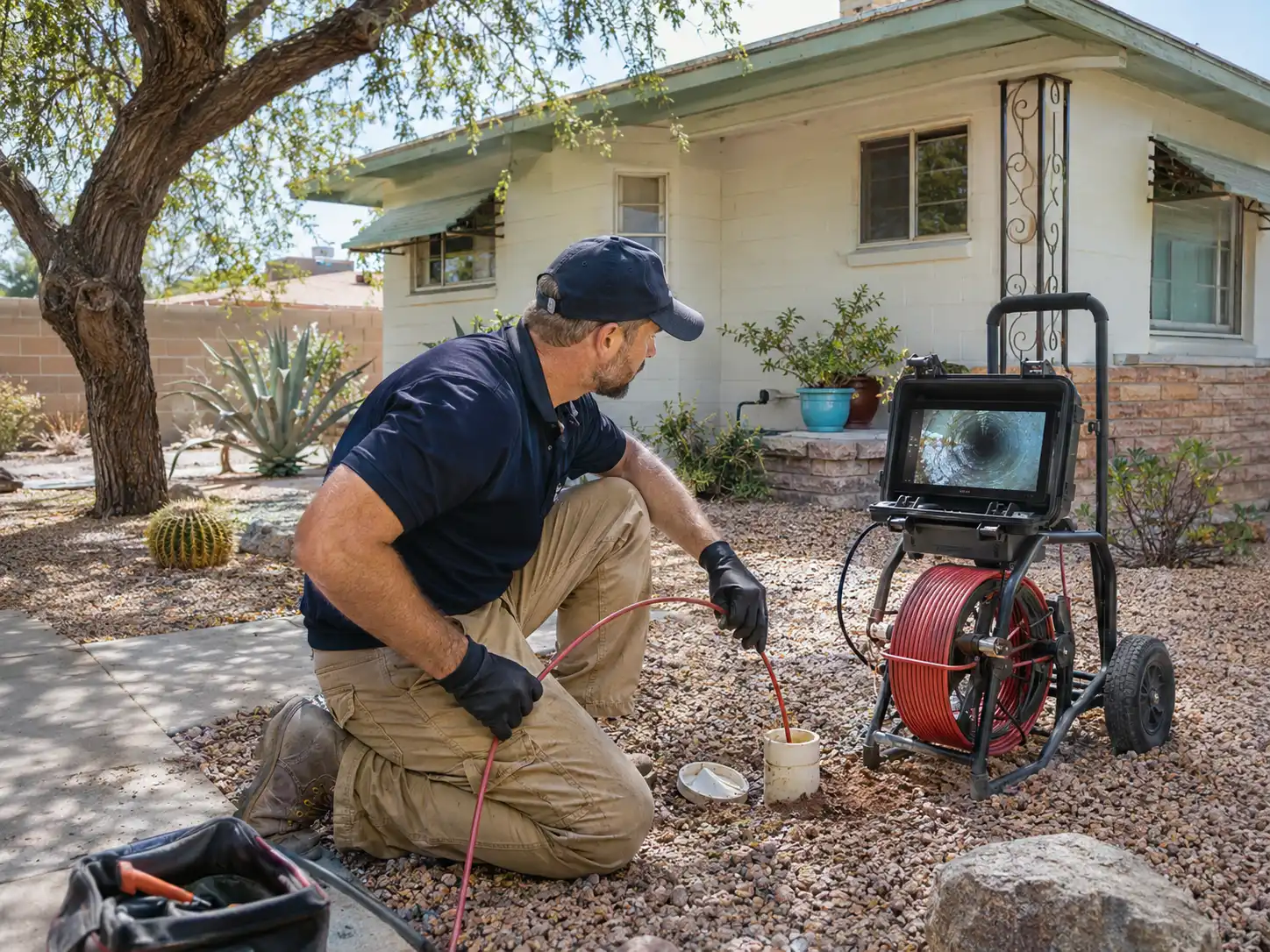
Sewer scope: original drain lines can be cracked, sagging or full of roots, and you can't see any of that from inside. Our sewer scope inspection puts a camera down the main line.
Asbestos and lead testing: older flooring, ceiling texture and duct wrap may contain asbestos. See our guide to environmental testing in Phoenix homes.
Thermal imaging: it helps find hidden moisture under flat roofs and along old plumbing runs.
Lead paint deserves its own mention. According to the EPA's lead disclosure rule, lead-based paint was banned for homes in 1978, yet it's still in millions of them. Sellers of most pre-1978 homes must disclose any lead paint they know about before you sign.
Before you even book, it also helps to pull the permit history from the city. Then you can compare what was approved with what's actually there. Our standard residential property inspections page lists everything that comes with the core visit.
What changes when the home is in a historic district?
In a designated historic district, exterior repairs can need city approval before work starts. That affects how, and how fast, you can fix what the inspection finds.
If you've been searching for advice on buying an older home in a historic Phoenix neighbourhood, this is the part most guides skip. Phoenix's Historic Preservation Office FAQ explains that exterior changes in an HP overlay district need review first. Minor works can usually be cleared using a Certificate of No Effect but more complex or visible works will require a Certificate of Appropriateness. This involves having a pre-application meeting.
In practice, this shapes your repair plan:
Windows may need to match the original style, not just the cheapest replacement
Roof changes visible from the street can trigger review
Interior work, such as rewiring or replumbing, generally isn't part of historic review
So when the report flags windows or a roof, ask a contractor who knows historic districts for a quote during your inspection period. That way, the cost and the timeline are both on the table.
Where does Halcomb inspect older homes near Phoenix and Scottsdale?
We inspect older homes across the Valley, from central Phoenix historic districts to mid-century ranches in south Scottsdale. If you need home inspections near Phoenix and Scottsdale AZ, we cover:
Central Phoenix, including Willo, Encanto-Palmcroft, F.Q. Story and Arcadia
South and Old Town Scottsdale
Paradise Valley, Mesa, Chandler and Gilbert
You can learn more about our home inspections in Phoenix and home inspections in Scottsdale. Our goal is simple: residential property inspections in Phoenix AZ that fit the age of the house, not a one-size-fits-all checklist.
Above all, residential property inspections on old homes are about knowing which original parts are near the end and which still have years left. That knowledge turns an exciting old house into a smart purchase.
Frequently asked questions
1. What turns up on a mid-century Phoenix home that never shows on a newer one?
Mostly materials and methods that newer codes phased out, such as galvanized water pipe, missing GFCI protection near sinks, single-pane steel windows and thin attic insulation. That list is what comes up on an older home report in Phoenix far more often than on a newer build.
2. Which original systems are at the end of their life by now?
In a 1950s or 1960s home, nearly every original mechanical system has outlived its design life. With evaporative cooling and original systems, the usual finds are rooftop coolers leaking around their curbs, leaky attic ductwork and water heaters past the 8 to 12 years Valley hard water allows.
3. How long does the walkthrough take on an older house?
The normal walk through takes around 3-4 hours. If you have a sewer scope or any checks then it will take longer. Most of the buyers will join your inspection for the last hour where they can see the main issues with the house.
4. What is worth negotiating on, and what is just age?
You can negotiate any health and safety issues, current water issues and anything that could affect your insurance or mortgage such as panel dangers, roof leaks and blocked drains. Anything that is just old such as old finishes, old windows and old but working fittings are unlikely to be negotiable.
5. Can you get the report before the contract window closes?
As long as you book your inspection early in the 10 day inspection period in Arizona then you should receive your report within around 1 day. This gives time to get quotes from an electrician or roofer.
Visit or Call Us
Halcomb Property Inspections
Address: Serving the Phoenix metropolitan area
Phone: (480) 273-9328
InterNACHI-certified home inspection company licensed in Arizona Serving Phoenix, Scottsdale, Paradise Valley, Mesa, Chandler and Gilbert.
Call for a free quote, or use our contact page to book a visit.
