When Should You Book a Roof Inspection in Paradise Valley, AZ?
Both, and the calendar is fixed rather than a matter of opinion. The National Weather Service defines Arizona's monsoon season as June 15 to September 30 — a window set deliberately in 2008 so the season could be tracked like a hurricane season. That gives you two natural bookings a year, and they look for different things.
By Alex & Jeff, Certified Home Inspector · Last updated August 25, 2026
The Two-Inspection Year
How often should a roof be inspected in Arizona? Annually as a baseline — but here the useful answer is twice, bracketing one season.
Before June 15. This one is preventive. Clear drains, scuppers, and gutters, check that coating and flashing are intact, confirm tiles are seated and fasteners sound. You're closing the gaps a storm would exploit.
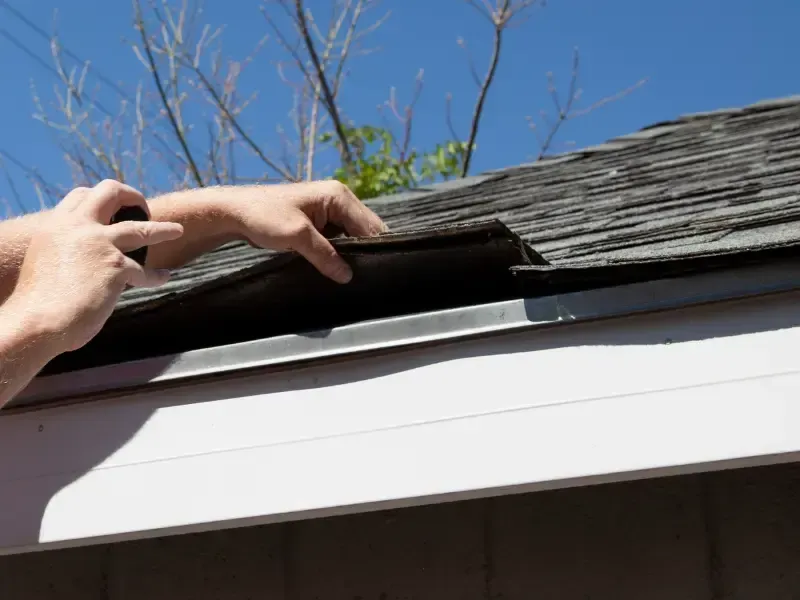
After September 30. This one is diagnostic. Monsoon microbursts produce straight-line winds well over 60 mph, and the damage they leave is often not visible from the ground — a lifted tile, a displaced flashing, a torn edge on a low-slope membrane. Arizona State University's monsoon overview explains why the season behaves as it does; the practical consequence is that damage arrives suddenly and locally, so a neighbourhood can take a hit while a street away sees nothing.
Peak activity runs July and August, so the post-season inspection is the one that actually finds things. A roof condition inspection booked in October catches what the summer did while there's still time to act before winter rain.
Beyond that calendar: inspect at purchase, after any significant wind or hail event regardless of date, and whenever a ceiling stain appears.
What Does a Roof Inspection Include?
What does a roof inspection include comes down to three vantage points, and the third is the one people don't expect.
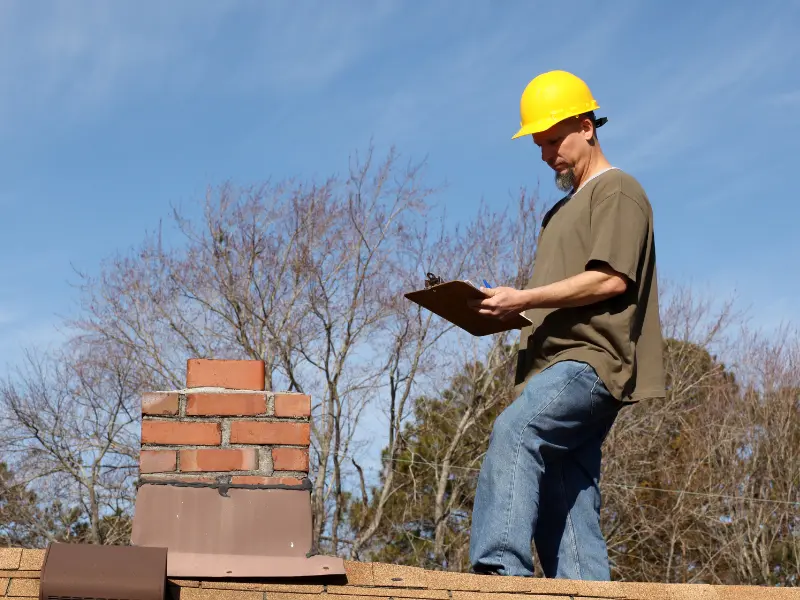
From the ground and the eaves. Overall plane and sag, fascia and soffit condition, tile alignment and slippage, visible flashing at walls and chimneys, gutter and scupper condition, and evidence of previous repairs.
On or across the surface, where it's safe. Covering condition, penetration seals, valley condition, parapet caps, and drain and scupper openings. On tile and foam that access is deliberately limited, which the next section covers.
From inside the attic. Sheathing staining, daylight at penetrations, rusted fastener tips, displaced or compressed insulation, and the condition of the underside of the deck.
That third one carries more weight in this climate than most homeowners realise. Underlayment doesn't only fail from UV above — it bakes from the attic below, and an under-ventilated attic in a Phoenix summer cooks it from both directions. So a roof that looks intact from outside can be sitting on underlayment near the end of its life, and the attic is where you find out. Our Paradise Valley home inspection guide covers how this fits into a full inspection on large-lot properties.

Do You Inspect Tile and Flat Roofs?
Yes, both, with limits worth stating plainly.
Tile. The tile is a rain shield; the underlayment beneath does the waterproofing, and it doesn't last as long as the tile does. Walking a tile field breaks tiles, so assessment happens from the eaves, from a ladder, and from the attic. Our Chandler inspection guide covers the tile and foam material question in more depth.
Low-slope and flat. Paradise Valley has a lot of it, given the contemporary and mid-century architecture around Camelback and Mummy Mountain. Here's the failure chain that's specific to this climate, and it's worth understanding because it's preventable.
A monsoon storm is usually preceded by a haboob — a wall of dust. That dust settles across a flat roof and into drains and scuppers. Ten minutes later the rain arrives and turns it to mud, which washes toward the outlets and blocks them. Once the outlets are blocked, water ponds. Ponding adds weight the roof wasn't designed to carry standing, and it finds any crack in the coating or any lifted seam that a dry roof would have tolerated.
Which is why clearing drains and scuppers in early June is the single highest-value thing an owner of a flat roof here can do, and why a roof assessment inspection in this market always looks at outlets rather than just at the field.
Walking foam can dent and damage it, so that too is assessed carefully rather than trampled.
What We Report, and What We Don't Do
Photos and a written report, yes — and it's worth saying why that matters beyond convenience.
Every finding is photographed and located, so the report is something you can hand to a roofing contractor, an insurer, or a buyer's agent without anyone having to take your word for it. On a post-monsoon inspection that documentation is the difference between a claim with evidence and a claim with a description.
What we don't do is repair. Arizona home inspectors work to a defined standard of practice under the State Board of Technical Registration, and that scope is observational. Roofing repair and replacement is the work of a licensed roofing contractor.
That separation is the point rather than a limitation. A roofing company's free inspection is a sales visit — sometimes a genuinely useful one, but the party assessing whether you need a new roof is the party selling it. An independent roof inspector service has no stake in the answer, which is why a report from one carries weight in a negotiation and a free assessment often doesn't.
If your roof is fine, we'll write that down too.
Cost, and Paradise Valley Specifics
How much does a roof inspection cost in Paradise Valley depends on whether it's part of a full inspection or a standalone visit, and on the roof itself: single covering or several, tile plus low-slope sections, multiple structures, and how accessible the attic is. Within a full residential inspection, roof assessment is standard scope rather than an add-on. As a standalone — for an owner after a storm, or a seller getting ahead of a buyer's report — it's shorter and priced accordingly. Estimates are free.
Three things make Paradise Valley roofs their own category. Mixed coverings are normal: a tile main roof with flat sections over wings or garages, sometimes foam over one and modified bitumen over another, each with a different service life and a different failure mode. Large footprints on one-acre lots mean more roof area, more penetrations, and more transitions — and transitions are where leaks live. And hillside exposure around Camelback and Mummy Mountain means some roofs take wind that sheltered valley properties don't.
We cover Paradise Valley, Scottsdale, and Phoenix, with scope on our residential inspections page, the buildings we handle on property types, and the full area on our locations page. Recurring findings are covered in our guide to things that fail a home inspection.
If you've been searching roof inspection near me Paradise Valley AZ, or for a roof inspector Paradise Valley Arizona homeowners use independently of a roofing company, book the first week of October. That's when a roof condition inspection near Paradise Valley finds what the summer actually did.
Frequently Asked Questions
1. What does a roof inspection cover?
Three vantage points. From the ground and eaves: overall plane and sag, fascia and soffit, tile alignment and slippage, visible flashing, gutters and scuppers, and evidence of prior repairs. On the surface where access is safe: covering condition, penetration seals, valleys, parapet caps, and drain openings. And from inside the attic: sheathing staining, daylight at penetrations, rusted fastener tips, displaced insulation, and the underside of the deck. The attic matters more here than most owners expect, because underlayment bakes from below as well as above.
2. How much does a roof inspection cost in Paradise Valley?
It depends on whether it's booked as part of a full residential inspection, where roof assessment is standard scope, or as a standalone visit. For a standalone, cost tracks the roof itself: whether there's a single covering or several, tile combined with low-slope sections, how many separate structures are involved, and how accessible the attic is. Paradise Valley properties often carry mixed coverings across large footprints, which takes longer than a single-covering tract roof. Estimates are free.
3. How often should a desert roof be inspected?
Twice a year, bracketing monsoon season, which the National Weather Service fixes as June 15 to September 30. Before mid-June is preventive: clear drains and scuppers, confirm coating and flashing are intact, check tiles are seated. After the end of September is diagnostic, since microburst winds well over 60 mph leave damage that isn't visible from the ground. Also inspect at purchase, after any significant wind or hail event whatever the date, and whenever a ceiling stain appears.
4. Do you inspect tile and flat roofs?
Yes, both, with access limits. On tile, walking the field breaks tiles, so assessment is done from the eaves, a ladder, and the attic — and the key question is the underlayment beneath, which doesn't last as long as the tile above it. On low-slope and flat roofs, the priority is drains and scuppers: haboob dust settles on the roof, the following rain turns it to mud, mud blocks the outlets, and water ponds. Ponding weight then exploits any crack a dry roof would have tolerated. Foam is assessed carefully too, since walking it can cause damage.
5. Do you provide photos and a written report?
Yes. Every finding is photographed and located, so the report stands on its own when you hand it to a roofing contractor, an insurer, or a buyer's agent. After a monsoon storm that documentation is what separates a claim supported by evidence from a claim supported by a description. Worth noting the difference from a roofing company's free inspection: there, the party assessing whether you need a new roof is also the party selling it. An independent report has no stake in the outcome, and if the roof is sound, that's what it says.
Contact Halcomb Property Inspections
Halcomb Property Inspections Serving Paradise Valley, AZ and the Phoenix metropolitan area Phone: (480) 273-9328 Hours: Monday–Sunday, 6:00 AM – 9:00 PM Serving Paradise Valley including the Camelback and Mummy Mountain areas, plus Scottsdale, Phoenix, and the wider Valley.
Monsoon just ended? Request a free quote or call (480) 273-9328, and we'll document what the season did before the winter rain finds it.
