Which Swimming Pool Inspection Covers Equipment?
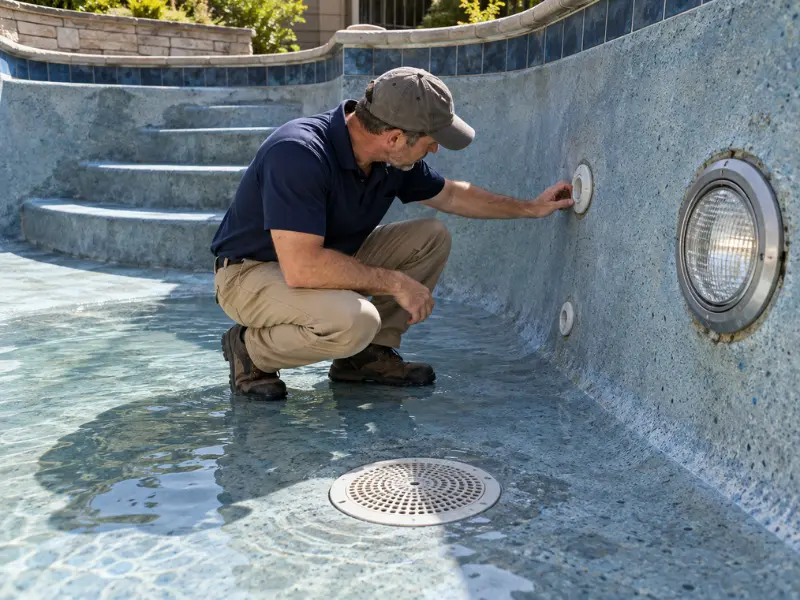
A swimming pool inspection in Peoria that covers the equipment actually runs the pump, filter, heater and automation through a cycle, then measures the barrier and tests the gates. Halcomb Property Inspections does that alongside a home inspection, seven days a week, with a written report within 24 hours.
By Alex & Jeff, Certified Home Inspector · Last updated October 7, 2026
What Should You Know Before Booking a Swimming Pool Inspection in Peoria?
A home inspection and a pool inspection are different jobs.
The pump, filter and heater get run, not just looked at.
Arizona sets a five-foot barrier floor, and cities can go stricter.
Sellers must hand buyers a state pool safety notice.
A visual inspection can't confirm a buried leak.
Book it inside your inspection period.
Why Does a Pool Need Its Own Inspection Beyond the Home Inspection?
A general inspection is built around the house: roof, structure, electrical, plumbing, HVAC. The pool, the spa and everything on the equipment pad sit outside that. So a general report will often note that a pool exists and leave it there. That's not a flaw in the home inspection. It's a gap you can close on purpose.
Buyers ask who adds a pool inspection to a home inspection in Peoria. We do. Just mention the pool when you book, since it changes how much time we block out and what we bring. Our pool inspections page lays out the full service, and our home buyer inspection page for Peoria shows how the two fit together in a purchase.
How Does a Pool Equipment and Pump Inspection in Peoria Work?
The equipment pad is where most of the pool money goes. So if you're searching for a pool equipment and pump inspection in Peoria, ask one thing: does the inspector watch the system work, or just look at it? Which inspector checks pool equipment in Peoria properly? The one who starts everything up, lets it run, and watches what it does.
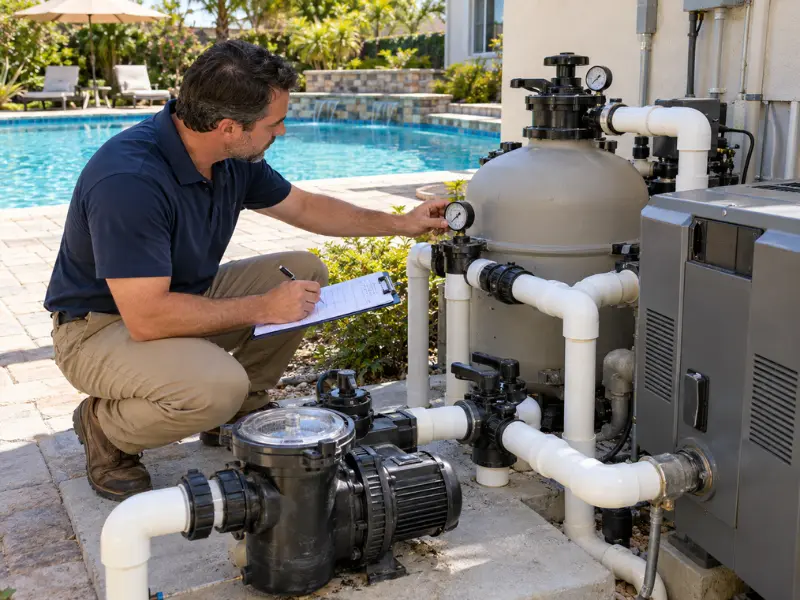
In practice, the pump comes up to pressure and runs smoothly. The filter and valves hold without weeping at the connections. The timers and automation switch things on and off when they should. The heater is the item most often left untested, especially in a Peoria summer when nobody's needed it in months. We still confirm it starts and shuts down. Then we look at bonding, grounding and GFCI protection at the pad, because electrical faults near water are the ones that really matter.
The usual follow-up is how long a swimming pool inspection takes. Most run one to two hours, depending on the pool and how much equipment is on the pad.
Item on the pad | What we do | What it can reveal |
Pump and motor | Run it and watch pressure and operation | Noise, weak flow, leaking seals, a motor near the end of its life |
Filter and valves | Check condition, connections and valve operation | Weeping fittings, cracked housings, valves that stick or don't seal |
Heater | Confirm startup and shutdown | A unit that won't fire or won't stop |
Timers and automation | Cycle the controls | Programming faults and equipment running when it shouldn't |
Bonding and GFCI | Inspect grounding and protection | Loose or missing bonding, unprotected outlets |
Drain covers | Look at covers and main drain layout | Missing or damaged anti-entrapment covers, single versus dual main drain |
Is a Pre-Purchase Pool Inspection in Peoria Worth Doing Before Closing?
If you're comparing pre purchase pool inspection options in Peoria, it comes down to timing. People ask whether a pool inspection is worth it when buying a home in Arizona, and honestly, the inspection period is the last point where findings are cheap to act on. After closing, a failing pump or a gate that won't latch is your repair bill. Before closing, it's something you can ask the seller to fix or credit.
Arizona law adds a buyer-side detail most people miss. Under A.R.S. § 36-1681, anyone selling a home with a pool has to give the buyer a notice explaining pool safety and ownership responsibilities, and the state publishes it as the Residential Pool Safety Notice. Ask your agent whether you got it.
The statute also exempts a residence where everyone living there is at least six years old. A seller with grown kids may never have needed a compliant barrier, and that can become your problem if young children live in the house. Find out before you sign.
Which Peoria Neighborhoods Have the Oldest Pool Equipment?
Age changes what we expect to find. In Old Town Peoria and other older parts of the city, a pool may have been added long after the house was built. That often means equipment replaced piece by piece and barriers that were retrofitted. In north Peoria communities like Vistancia, built out mostly since the mid-2000s, builder-installed equipment is often original and getting close to replacement time. Established areas around Rio Vista and Fletcher Heights tend to sit in between, with a mix of original and replaced parts.
None of that is a verdict on any one pool. It's why the report notes the apparent age of each major item, so you can see what might need attention soon, not just what's broken today. Our guide to a home inspector in Peoria covers how these neighborhoods differ for the house itself.
How Do You Choose Who Inspects Your Swimming Pool?
Search who inspects swimming pools near Peoria and you'll find home inspectors, pool service companies and leak specialists. They do different jobs. Three questions sort them out:
Will you run the equipment, or only look at it?
Will you measure the barrier against Arizona's statute and tell me what falls short?
Are you licensed in Arizona, and independent of the sellers and agents?
Our inspectors are InterNACHI-certified and licensed in Arizona, and we never work for realtors or sellers.
Where Does a Visual Pool Inspection Stop?
If you're wondering what a pool inspection does not cover, the limits matter, because that's where disputes start. A pool inspection is visual and operational. It doesn't mean draining the pool, pressure-testing buried plumbing, or opening sealed equipment. It can't tell you how many years a pump or heater has left, and it isn't a lab water test. It also can't certify code compliance the way a city can, so check the barrier with the City of Peoria when a decision depends on it.
Where Do We Inspect Pools in and Around Peoria?
We inspect pools across Peoria, including Old Town, Vistancia, Rio Vista and Fletcher Heights, and our Peoria pool inspection page covers the local service. Nearby, we also work in Glendale, El Mirage, Sun City, Avondale and Goodyear, plus the wider West Valley.
Frequently Asked Questions
1. What does a swimming pool inspection include?
Equipment, structure and safety. Beyond the pad items in the table above, we look at the pool shell, coping, decking, waterline tile and visible cracking. Then skimmers, return lines, drainage around the pool and spa jets if there's a spa. On the safety side, we check fencing, self-latching gates, alarms, safety covers and anti-entrapment drain covers, plus water level and how clear the water looks.
2. Can you add a pool inspection to my home inspection?
Yes. Tell us about the pool when you book, not on the day, since it changes how much time we block out and what we bring. A pool inspection typically takes one to two hours on its own, so we plan that into your visit. The written report arrives within 24 hours of the inspection, often the same day.
3. Can you tell whether a pool is leaking before I buy?
We can tell you whether there's visible evidence of a leak. That isn't the same as confirming one. Signs include ground that stays wet near the equipment pad or shell, cracks along the plaster or tile line, and equipment cycling like it's making up for lost water. What a visual inspection can't do is find a leak in buried plumbing. That takes pressure or dye testing by a leak specialist, and we can point you to one if what we see calls for it.
4. Do you check pool barrier and safety gate requirements?
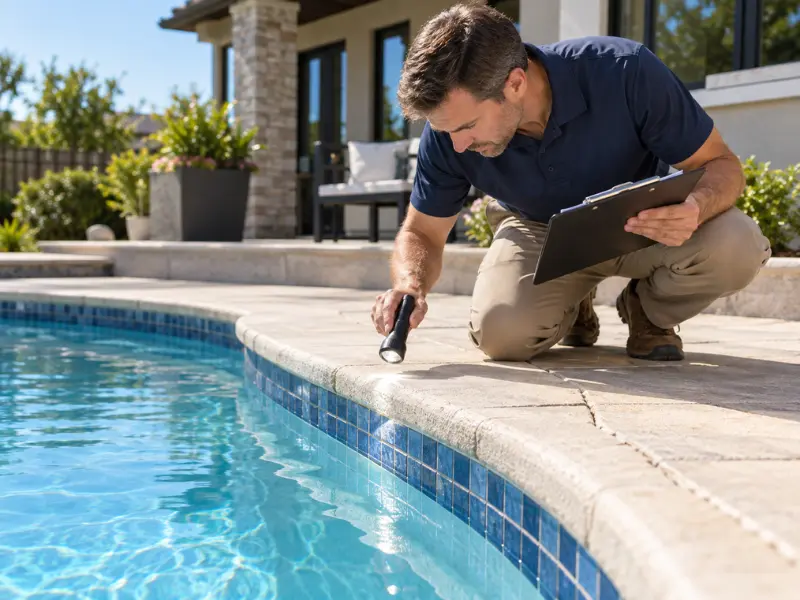
Yes. We measure against A.R.S. § 36-1681. That means a barrier at least five feet high measured from the outside, no opening a four-inch sphere can pass through, nothing climbable on the outside, and a barrier at least 20 inches from the water. Gates have to open outward and be self-closing and self-latching. Where the house forms part of the barrier, ground-level doors with direct pool access need self-latching devices too. Cities can set stricter rules, so we flag anything that fails the state standard and suggest you confirm local requirements with the City of Peoria.
5. How much does a pool inspection cost in Peoria?
Thumbtack's Phoenix data puts a pool inspection at around $175 on average, with a range from $85 to $499, according to Thumbtack's pool inspection cost guide. Treat that as a marketplace ballpark. The price moves with pool size, equipment, whether there's a spa, and whether the visit is bundled with a home inspection. Our quote is free, and it comes after a short conversation about your pool.
Ready to Book a Swimming Pool Inspection in Peoria?
A pool inspection that runs the equipment and measures the barrier is the surest way to know what you're buying before your inspection period ends. Send us the pool details and your contract dates, and we'll confirm availability and give you a free quote. Request your free quote or call (480) 273-9328.
Halcomb Property Inspections Phone: (480) 273-9328 Hours: Monday to Sunday, 6:00 AM to 9:00 PM Serving Peoria, including Old Town, Vistancia, Rio Vista and Fletcher Heights, plus Glendale, El Mirage, Sun City, Avondale, Goodyear and the wider Valley.
