What Do Pool Inspections Find In Arizona Heat?
Pool inspections in Arizona most often reveal the effects of heat and sun exposure, like cooked-out pump motors, fragile above-ground plastic plumbing, worn plaster surfaces, compromised deck joints, and hidden leaks masked by normal evaporation. A pool can look perfectly blue in the listing photos. It can still hide thousands of dollars of trouble at the equipment pad.
By Alex & Jeff, Certified Home Inspectors · Last updated October 22, 2026
How does Arizona heat damage a pool over time?
Arizona heat takes a toll on your pool. Not only does it attack the water, but the water then takes a toll on the surrounding area.
Here's what that looks like in practice:
Scale at the waterline. Hard water and fast evaporation leave white calcium crust on tile and the surface just below it.
Surface wear. Plaster gets rough, stained, and etched. Even pebble finishes wear down faster under heavy sun and chemical swings.
Sun-baked plumbing. PVC pipe and valves sitting in full sun at the equipment pad turn chalky and brittle, then crack.
Deck movement. Concrete decks expand in the heat. When the joint between the coping and the deck fails, water gets underneath.
Hot equipment. Pump motors running in direct sun all summer work harder and wear out sooner.
None of this is unusual. It's just what 10 or 15 Arizona summers do to a backyard pool.
What does a pool equipment inspection check in the desert?
A pool equipment inspection checks whether the pump, filter, heater, controls, and electrical work safely. It also estimates how much life they have left. In Chandler, a lot of that comes down to heat exposure.
Component | How heat wears it | What we look for |
Pump and motor | Runs long hours in direct sun | Noise, overheating, leaks at the seal |
Filter | Works harder with dust and debris | Cracks, pressure readings, leaks at the clamp |
Heater | Sun-baked housing and wiring | Corrosion, ignition, venting, leaks |
Above-ground PVC | UV makes it brittle | Chalky pipe, cracks, dripping fittings |
Valves and autofill | Seals dry out | Leaks, sticking, constant filling |
Electrical and bonding | Heat stresses connections | GFCI protection, bonding wires, damaged conduit |
The electrical part matters most for safety. Pool equipment has to be properly bonded and protected, and a loose or corroded connection is a real shock hazard. That's not something to guess at. See what else we cover on our pool inspections page.
How does pool leak detection work during pool inspections?
Pool leak detection begins at the inspection stage. This process is concerned with distinguishing between water lost due to evaporation and water lost through leaks. In the desert, this step is challenging since the evaporation rate is high, which means that there is a lot of water loss due to it.
According to Chandler's pool care guidance, an average pool in our climate can lose around 20,000 gallons a year to evaporation. The city points out that autofill valves can fail or leak, and that cracks can allow water to escape, undetected. Therefore, a drop in the water level is not necessarily an indication of something wrong.
During the inspection, the telltale signs of evaporation are looked for:
An autofill that seems to run constantly
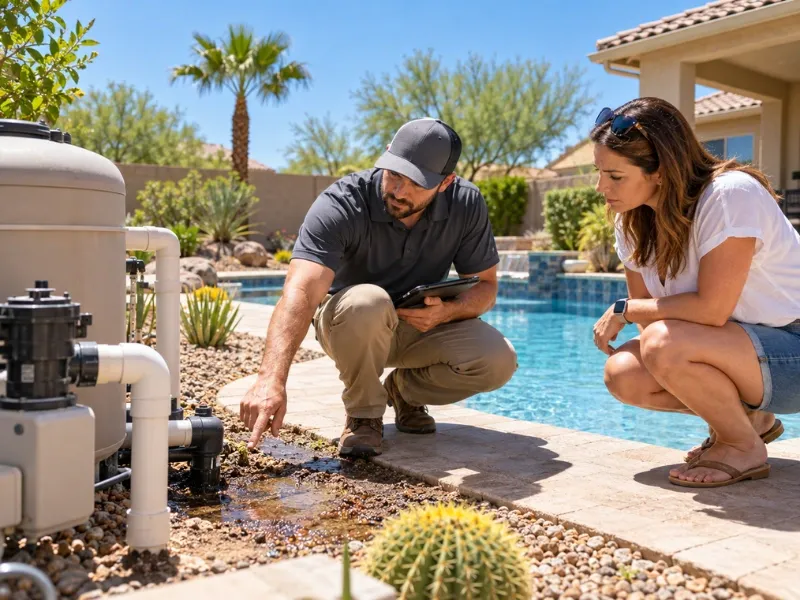
Damp soil or puddles near the equipment pad or plumbing runs
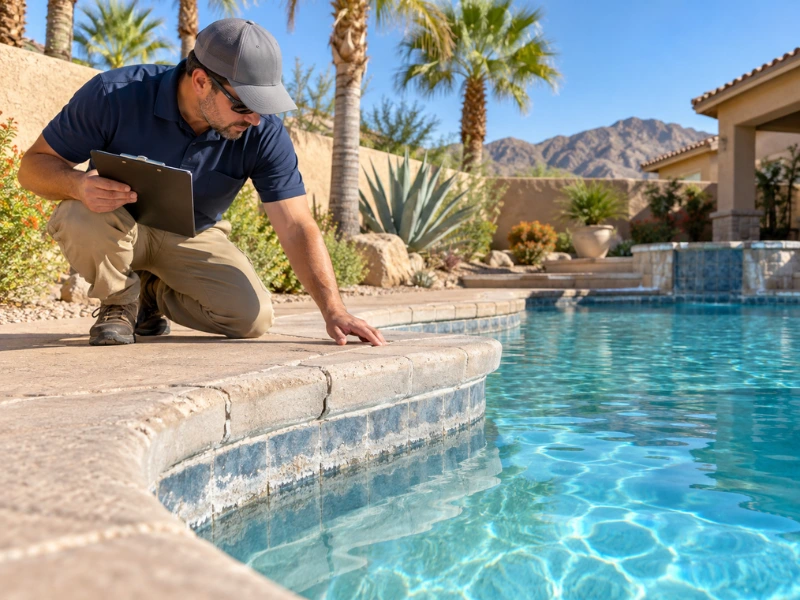
Cracks in the pool shell, tile line, or around fittings
A settling or cracked deck near the pool edge
Drips at valves, unions, and filter clamps
If the signs point to a hidden leak, we'll say so clearly in the report. Pinpointing an underground leak usually takes a specialized pressure test. We'll recommend that as a next step rather than guess.
Why does pool barrier safety still matter in an inspection?
Pool barrier safety is important because Arizona law requires pools to be enclosed, and heat weakens the very things that make up a barrier. Gates tend to be the weakest link.
Self-closing hinges lose tension. Latches stick or drift out of alignment. Wood and vinyl fencing warp in the sun. State law requires a pool to be protected by an enclosure, as the Arizona Department of Health Services' residential pool safety notice explains. Sellers also have to give buyers that notice. Arizona's standard resale contract also puts the cost of barrier compliance on the buyer, so it's worth knowing before you close.
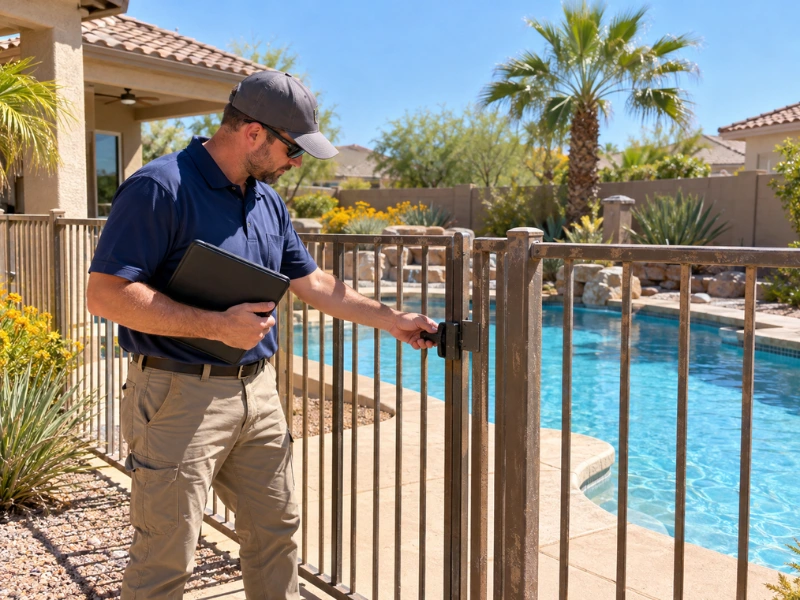
We test the gate, check the latch height, and note gaps or climbable objects near the fence.
When does a pool inspection pay off for Chandler buyers?
A pool inspection is worth it for nearly any Chandler buyer, since repairs can be costly and often aren't revealed in listing photos. Curious about whether you should get a pool inspection before you buy? Just compare the price of the inspection to the cost of a new pump, heater, or resurfacing job.
As for the costs of a pool inspection, everything depends on the services you need. A pool survey as part of a home inspection is cheaper than an individual call. A spa or any other equipment may take more time, so we will calculate and show the cost during the booking.
Timing is also essential in this process, so be sure to book your pool inspection well within the inspection contingency of your contract, so that you have time and flexibility to negotiate repairs. And if you are asking someone about pool inspections in Chandler and Ahwatukee Arizona, you need to ask just one question: does the inspector check the equipment, electrical and barrier, or just the water? That's what separates good pool inspectors Chandler AZ buyers can rely on from a quick walk-around. Our Chandler pool inspection services cover all three.
Frequently asked questions
1. How much water should a pool lose to evaporation in Chandler?
A pool in the Chandler area can lose up to 20,000 gallons of water to evaporation each year (on average) with the majority of that occurring during the summer months. On hot, dry, breezy days you could lose several inches of water from evaporation. If your pool is dropping much faster than that or during cooler months, then you could be losing water to a leak.
2. Can a pool inspection find a leak in underground plumbing?
A pool inspection can locate the tell-tale signs of an underground leak, but can not usually find the actual source of the leak. If you have wet spots on your yard, an autofill that runs constantly or a deck that appears to be coming unattached from your pool, you have an underground leak. To actually find the source of the leak, a specialized pressure test or leak detection service will be needed.
3. Why does my pool's autofill run all the time in summer?
The summer months bring about a plenty amount of water loss due to evaporation. If your autofill is running constantly during the hotter, drier months of the year, you could be experiencing excessive evaporations, a leak, or a faulty valve. Hot, dry, windy conditions will cause your pool to lose water at a much higher rate than normal. A faulty autofill valve, however, will act as if your pool is constantly losing water and will try to refill itself.
4. Does Arizona sun damage pool plaster and tile?
Hot, dry conditions will eventually weather pool plaster and tile. Severe cases of scaling, staining, etching and spotting will occur if the water is not properly maintained taking into consideration Arizona's unique climate. Tile grout and the area in which the tile meets the coping will erode much faster under extreme heat.
5. How long does pool equipment last in Arizona heat?
Most equipment, such as pumps and heaters, last anywhere from 8-12 years in the state of Arizona. In some cases, equipment that has been sitting in direct sunlight for the majority of the year may not last that long. Filters and valves vary tremendously depending on maintenance. The life span of most items can be told by how much shade is kept away from the equipment pad and how well the equipment is serviced.
6. Is a cracked pool deck a sign of a bigger problem?
A cracked deck is often a sign of something more than just a simple crack. The hotter our Arizona summers are, the more expansion joints there are in your deck, the more likely it is that the deck will crack. Cracking usually begins at the edges of the deck and works its way inward. If you notice sections of your deck sinking or settling, you could be having issues with underground leaks that allow water to run underneath your deck.
7. Can you inspect a pool that has been drained or turned green?
Yes, we can perform a comprehensive pool inspection on a drained or green pool. Some aspects of a drained pool inspection are limited due to the fact that most cracks can not be seen when the pool is completely drained. A green pool can not have cracks or fittings inspected either, but the equipment can still be serviced if the equipment has power and can be run safely.
8. How soon do I get the pool inspection report?
You can expect to receive a detailed digital copy of your pool inspection report within 24 hours of the inspection with most reports being sent out the same day. Reports are complete with digital pictures of any issues found and notes on what repairs are recommended. This allows for easy communication with the seller's agent or repair company.
Where can you book a pool inspection in Chandler?
You can book a pool inspection in Chandler by calling or texting Halcomb Property Inspections at (480) 273-9328 for a free quote. Tell us whether it's a pool alone or part of a full home inspection. We'll set up a time that fits your inspection period. You can also reach us through our contact page or read about the 7 common pool issues we find.
Visit or Call Us
Halcomb Property Inspections Phone: (480) 273-9328 (call or text) Hours: Monday to Sunday, 6:00 AM to 9:00 PM Service area: Chandler, Ahwatukee, Gilbert, Tempe, Mesa, Scottsdale, Phoenix, and the wider Phoenix metro
