What Does a Commercial Inspection Cover in Scottsdale?
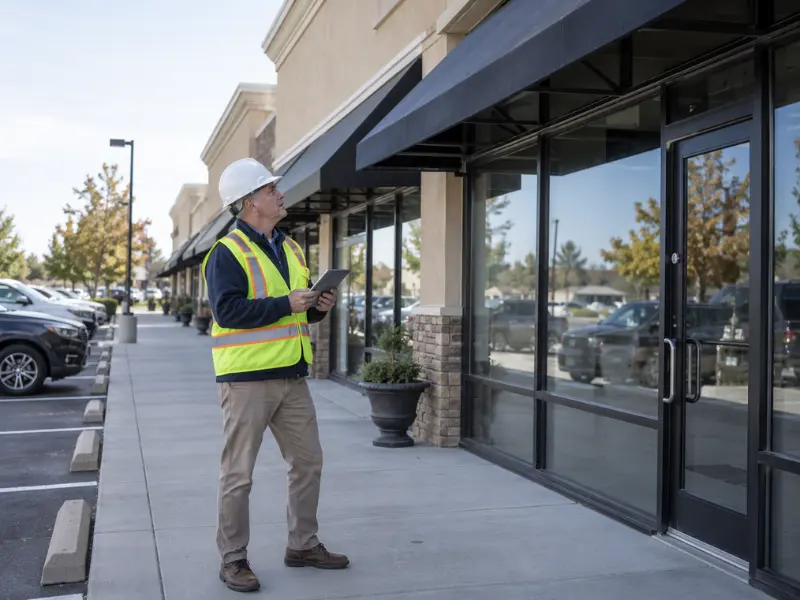
That depends on what you are buying, more than it does anywhere else in the Valley. Scottsdale's commercial stock runs from Airpark flex and light industrial through medical suites, Old Town retail and hospitality, which means the first useful question is not what an inspection covers but which asset class you are dealing with.
By Alex & Jeff, Certified Home Inspector · Last updated September 16, 2026
Why Does Asset Class Decide the Scope?
Because the systems that matter differ completely between one commercial building and the next.
A flex or light industrial building near the Airpark brings clear-span structure, dock or grade-level doors, heavier electrical service, and a roof carrying a lot of equipment. Our industrial inspection guide covers that end.
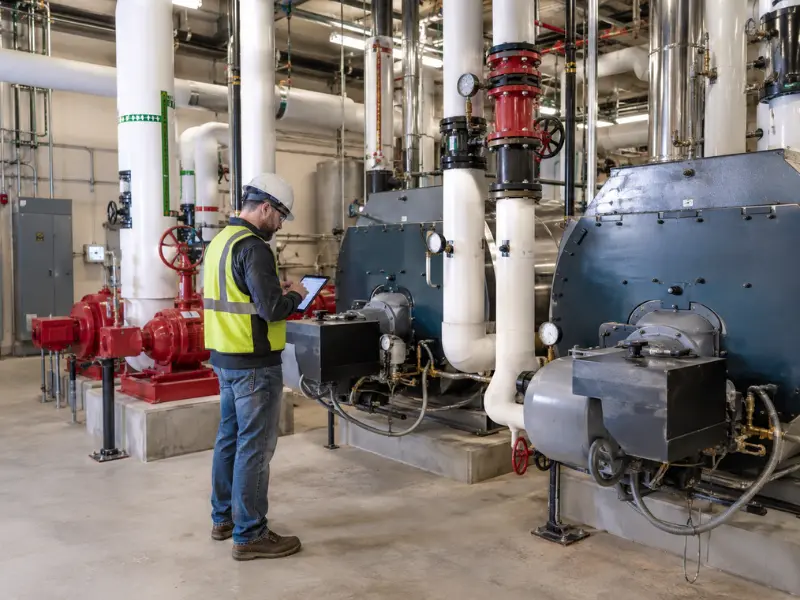
A medical or professional suite brings specialised mechanical, sometimes medical gas or imaging infrastructure, higher plumbing fixture counts, and twenty years of tenant improvement layered over the original plan. The office building guide works through that history and why it hides most of the unbudgeted expense.
Retail and hospitality in and around Old Town bring commercial kitchens, grease interceptors, public accommodation access questions, and buildings that have been reconfigured for successive tenants.
Multi-family sits in its own category, covered in our multi-family guide.
So when someone asks what does a commercial property inspection include, the accurate answer starts with a question back. Two buildings of identical square footage can need very different scopes.
What Is in Every Commercial Scope?
Underneath the asset-specific parts, a consistent core.
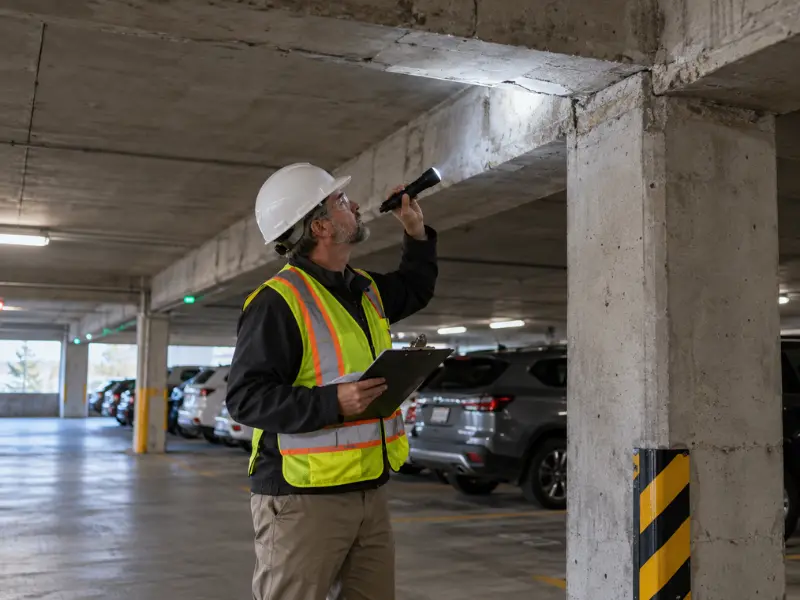
Building envelope and roof, including rooftop equipment and the curbs and flashings around it, which is where most commercial roof leaks start. Structure and foundation. Site, paving and drainage. Electrical service and distribution. Plumbing supply and waste. HVAC assessed unit by unit with ages and estimated remaining life rather than sampled. Vertical transportation where present. Life-safety systems. And observations relating to accessibility.
The difference from residential is that commercial assets are assessed for capital planning as well as current condition. A buyer wants to know what will need money over the next decade, not just what is broken today, so equipment age and remaining life carry weight they would not carry on a house.
When Should You Book Against a Due Diligence Deadline?
Early, and earlier than feels necessary.
Commercial due diligence periods are negotiated rather than standard, and they are longer than a residential inspection period. That length is deceptive, because the work inside it is sequential rather than parallel. A condition assessment can surface something that needs a structural engineer, a roofing consultant, or an environmental professional, and each of those is a separate engagement with its own lead time.
Three practical points.
Book at the start of the period, not the middle. The value of a long window is the room it leaves for follow-up, and that room disappears if the first inspection lands late.
Tell us the deadline when you call. If the date cannot be met properly we would rather say so at the outset than deliver something rushed against it.
Ask your lender what they require in writing, early. Lender requirements drive scope, and discovering a mismatch in week three of a four-week window is the expensive way to find out.
What Does ASTM E2018 Actually Mean?
Worth understanding, because the term gets used loosely in marketing.
A Property Condition Assessment conducted to ASTM E2018 is a defined product with defined deliverables: a Property Condition Report containing an immediate-repairs schedule and a replacement-reserves table projecting capital needs across roughly ten to twelve years, expressed as opinions of probable cost rather than contractor bids. Lenders on institutional transactions frequently require it, and a PCA is typically a multi-disciplinary exercise rather than one inspector's work.
A general commercial condition inspection is a different product. It assesses condition for the buyer's own information, without the standardised report structure, the reserve modelling or the lender-facing format. For many private transactions that is exactly what is needed and the PCA would be over-specified.
Whatever you are told, ask your lender in writing whether E2018 is specified, then confirm scope with any firm before engaging rather than after. Anyone asking which inspector near me does commercial property condition assessments should treat a vague answer as an answer.
A Phase I Environmental Site Assessment is a separate product again, performed by an Environmental Professional, and its protections cannot be obtained retroactively.
How Long Does the Inspection and Report Take?
Field time depends on size, the number of buildings and tenancies, and how many discrete systems are present. A single-tenant suite may be a day. A multi-building property with several rooftop units, commercial kitchens and decades of tenant work takes considerably longer, and on a large asset it becomes a sampling exercise rather than an inspection of every unit.
Report turnaround runs longer than residential, and the reason is the capital-planning element. Assembling equipment ages, remaining life and likely expenditure properly takes time, and a same-week commercial report on a complex asset is usually a sign that something was skipped.
Build both into your timeline rather than assuming the report arrives the day after the site visit.
What Does It Cost, and Where Do You Work?
How much does a commercial property inspection cost turns on floor area, the number of separate structures and tenancies, building age and complexity, which specialised systems are present, and above all which scope is being commissioned. A general condition inspection of a small suite and a full PCA on a multi-building asset are not comparable engagements and should not be compared on price.
Quotes come from a scoping conversation rather than a rate card, and they are free. Tell us the asset class, the approximate size and the deadline, and the conversation gets useful quickly. That is worth asking of any commercial building inspector Phoenix metro throws up in a search, not just us.
We work across Scottsdale, Phoenix, Paradise Valley and the wider Valley. See our commercial inspections page, the assets we cover on property types, and the area list on our locations page. For the Paradise Valley market specifically, where the commercial base is almost entirely resort and medical use under Special Use Permits, see our Paradise Valley commercial guide.
Searching for a commercial inspection Scottsdale AZ buyers rely on, or wondering who does commercial inspections near me and who inspects commercial buildings in the Scottsdale area? Two questions settle it: what scope has my lender specified, and what is my deadline. Whoever you engage should ask you both before quoting. The same goes for commercial property inspection Maricopa County AZ more broadly, and if you are weighing up the best commercial property inspector near Scottsdale AZ, the one worth hiring is whichever tells you honestly when a scope is beyond them.
Frequently Asked Questions
1. How much does a commercial inspection cost in the Scottsdale area?
The dominant variable is scope rather than size. A general condition inspection of a single-tenant suite and a full Property Condition Assessment on a multi-building asset are different products, and comparing them on price is comparing a survey to a valuation. After scope, the drivers are floor area, the number of separate structures and tenancies, building age, and how many specialised systems are present, since medical gas, commercial kitchens and imaging infrastructure each add time. Quotes come from a scoping conversation rather than a rate card.
2. Do you perform commercial property condition assessments (ASTM E2018)?
Establish first whether you actually need one, because it changes the answer's importance. A PCA to E2018 produces a Property Condition Report with an immediate-repairs schedule and a replacement-reserves table across roughly ten to twelve years, as opinions of probable cost. Lenders on institutional deals often require it, and it is usually a multi-disciplinary exercise. Many private transactions need a general condition inspection instead, where a PCA would be over-specified. Ask your lender in writing which they require, then confirm scope with any firm before engaging.
3. What commercial property types do you inspect?
Scottsdale's mix runs wider than most Valley submarkets: Airpark flex and light industrial, medical and professional offices, Old Town retail and hospitality, and multi-family. Each brings different systems, so the useful conversation before booking covers four things. How many separate structures, total floor area, which specialised systems are present, and whether a lender has specified a standard. Those four determine whether one inspector is appropriate or whether the asset needs a multi-disciplinary team.
4. How long does a commercial inspection and report take?
Field time ranges from about a day for a single-tenant suite to considerably longer on a multi-building property with several rooftop units, commercial kitchens and decades of tenant improvement. On large assets it becomes a sampling exercise rather than an inspection of every unit. Report turnaround runs longer than residential because the capital-planning element takes time to assemble properly. A same-week commercial report on a complex asset usually means something was skipped, so build both stages into your timeline.
5. Can you inspect for a lender or due-diligence deadline?
Tell us the deadline at first contact, because it determines whether the work can be done properly rather than merely quickly. Commercial due diligence periods are negotiated and longer than residential ones, but the work inside them is sequential: a condition assessment can surface something needing a structural engineer, roofing consultant or environmental professional, each with its own lead time. Book at the start of the window rather than the middle, and confirm your lender's scope requirement in writing before anyone is engaged.
Contact Halcomb Property Inspections
Halcomb Property Inspections Serving Scottsdale, AZ and the Phoenix metropolitan area Phone: (480) 273-9328 Hours: Monday–Sunday, 6:00 AM – 9:00 PM Serving Scottsdale, Phoenix, Paradise Valley, Tempe, Mesa, Chandler and the wider Valley.
Working to a due diligence deadline? Request a free quote or call (480) 273-9328 with the asset class, the size and the date, and we will tell you straight away whether it is work we do.
