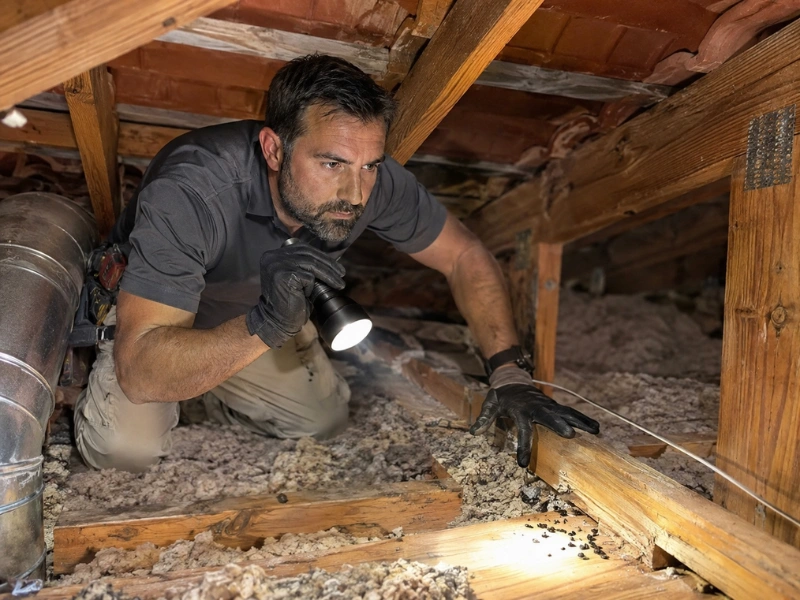
What Do Pest Inspections Cover On Phoenix Homes?
Pest inspections on Phoenix homes look for visible signs of termites and other pests, plus the conditions that invite them, such as damp soil against the foundation and wood touching the ground. Halcomb Property Inspections reports what we find with photos, and the official state termite report comes from a licensed pest management company.
By Alex & Jeff, Certified Home Inspector · Last updated November 11, 2026
What do pest inspections check during a Phoenix home inspection?
During a home inspection, we check for visible pest evidence and the conditions that make an infestation likely. We don't treat pests, and we don't issue the state's termite form, but we document what a buyer needs to know before the inspection period ends.
Here's what we look for and why it matters:
What we note | Where we usually find it | Why it matters |
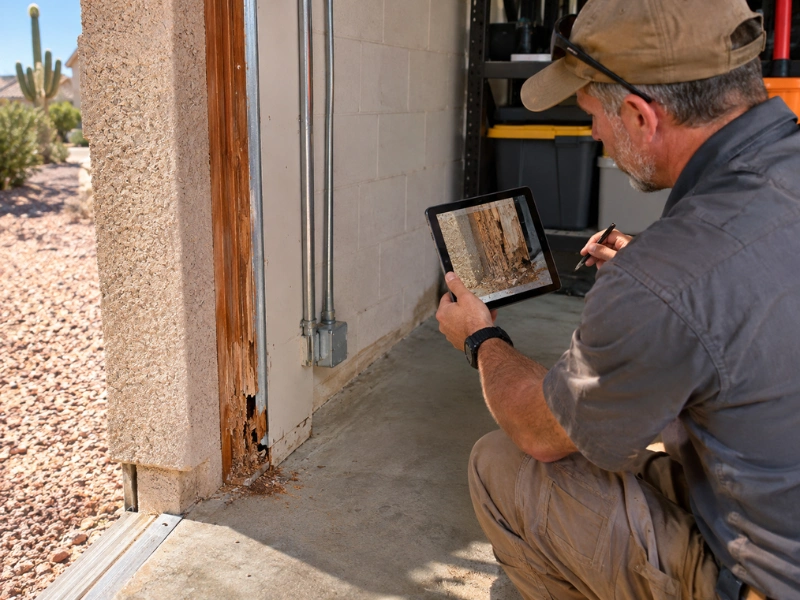
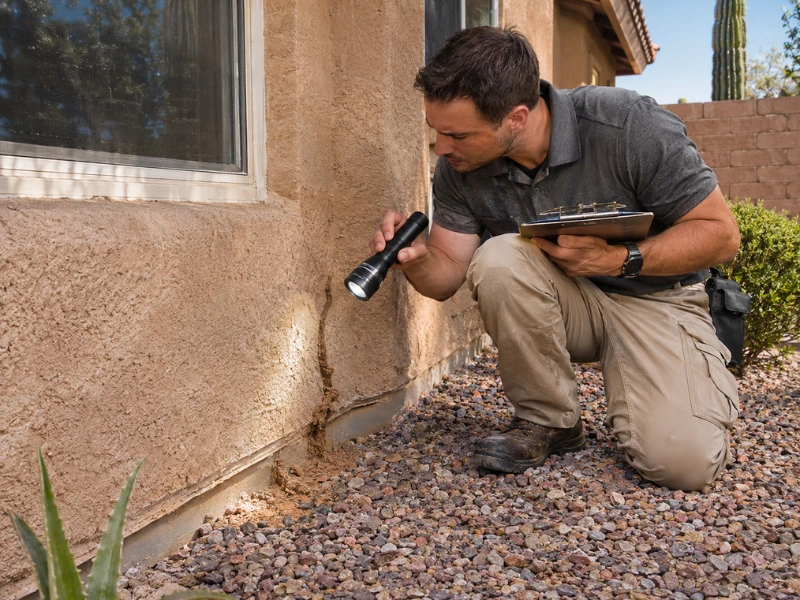
Mud tubes or damaged wood | Foundation, garage, trim, door frames | Possible termite activity to refer out |
Wood-to-soil contact | Fence posts, decks, siding near grade | Gives termites a direct path in |
Damp soil at the foundation | Near sprinklers, drip emitters and AC drains | Moisture draws termites in a dry climate |
Cellulose debris | Crawlspaces, under decks, against walls | Food source right next to the house |
Rodent or scorpion signs | Attics, garages, gaps at doors | Common Valley pests with their own fixes |
Gaps and openings | Weep screeds, utility penetrations, vents | Entry points for many pests |
When we find something, you get photos and a clear note in the report. From there, a licensed pest company can confirm activity and recommend treatment. You can see everything included on our pest inspections page.
Termites aren't the only pests we see, either. Our post on scorpions, roof rats and other Phoenix pests covers the rest.
Do you need a separate termite report to buy a Phoenix home?
Arizona law doesn't require one, but many lenders do, so most buyers end up ordering one anyway. If you're asking do Arizona homes need a termite report, the honest answer depends on your loan.
According to the Arizona Department of Agriculture's WDIIR guidance, there's no state law requiring a Wood-Destroying Insect Inspection Report for the sale of a structure. However, banks and lenders typically ask for one before closing. State law does set minimum standards for the report, and only a licensed pest control business can prepare it.
That shapes how termite reports for a Phoenix home purchase usually work:
Your lender may require one, so check your loan terms early
A licensed pest company prepares the state form, not your home inspector or agent
The report covers visible evidence only, which is why your home inspection still matters
Timing matters, since both reports need to land inside your inspection period
For a closer look at the form itself and who can issue it, see our guide to what a WDIIR report is.
How can you check a house's termite treatment history?
You can check treatment history through the state's termite records database, and by asking the seller for any treatment paperwork. Together, those tell you a lot more than a single visit can.
The Department of Agriculture's Pest Management FAQ explains that it keeps a searchable database of termite-related actions, called TARFs, through its eTARF system. These records cover termite treatments reported by licensed companies, including treatments done on existing homes.
Before you close, it helps to gather:
eTARF results for the property address
Any active termite warranty or service agreement, and whether it transfers to a new owner
Treatment receipts from the seller, including dates and treatment type
Seller disclosures about past termite activity or damage
A home with a recent treatment and a transferable warranty is a very different purchase from one with damage and no records. That's why we suggest pulling this history while you still have time to ask questions. If the records show a treatment but the seller has no paperwork, ask the treating company directly whether a warranty is still active.
Which conditions invite termites around a desert home?
Moisture and easy access to wood invite termites more than anything else in the Phoenix area. In a dry climate, any steady source of water near the foundation becomes a magnet.
These are the conditions we flag most often on Valley homes:
Irrigation against the foundation, especially drip emitters and sprinkler heads aimed at walls
AC condensate lines that drain right beside the slab
Soil or rock piled above the weep screed, which hides the base of the stucco
Wood-to-soil contact, from fence posts tied into the house to wood trim set in the ground
Firewood and lumber stacked against exterior walls
Pool decks and patios that keep soil damp along one side of the house
Many of these are cheap fixes. Moving a drip emitter, extending a condensate line or pulling soil back from the stucco can lower risk quickly. Still, they're worth noting before closing, since they also point to where a pest company should look closely.
What should you do if the inspection finds termite evidence?
If we find evidence, get a licensed pest company to confirm it and quote any treatment before your inspection period ends. That gives you real numbers to work with instead of guesses.
A sensible order of steps looks like this:
Order the state termite report from a licensed pest management company
Ask for a written treatment proposal, including method, coverage and warranty terms
Check for hidden damage if wood looks hollow, soft or blistered, since repairs may need a contractor
Negotiate with the seller using the report, the proposal and any repair estimates
Treatment usually takes one of two forms. Some companies apply a liquid treatment to the soil around the foundation, while others install bait stations in the ground around the house. Each option differs in cost, disruption and how long protection lasts, so ask the pest company to explain why it recommends one over the other for this particular home.
Most termite findings in the Valley are treatable, and they rarely kill a deal on their own. What matters is knowing the scope before you're committed.
Where does Halcomb inspect near Phoenix and Tempe?
We inspect homes across the Valley, from central Phoenix to Tempe and the East Valley. If you're comparing termite and pest inspections in Phoenix AZ, our inspectors regularly work in:
Phoenix, including central and north Phoenix neighborhoods
Tempe, Mesa and Chandler
Scottsdale, Paradise Valley and Gilbert
If you need wood destroying organism reports near Phoenix and Tempe AZ, those come from licensed pest management companies. We'll refer you to one and share our photos, so their inspector knows exactly where to look. For Scottsdale buyers, our post on pest inspections in Scottsdale covers that area too.
Above all, pest inspections work best alongside a full home inspection. Together, they show what's there now and what could invite trouble later.
Frequently asked questions
1. How common are subterranean termites in the Phoenix valley?
They're very common, since the desert subterranean termite is the main wood-destroying insect that pest companies treat across the Phoenix valley. Subterranean termites live in the soil and travel up through mud tubes, so even block and stucco homes can be affected through wood framing, trim and door frames.
2. What does the report actually look at, and what does it not?
A wood destroying organism report looks for visible evidence of termites and other wood-destroying insects, prior treatment, damage and the areas the inspector couldn't reach. The honest answer to what does a termite report cover is only what's visible, since inspectors can't see inside walls or under slabs, so the report isn't a guarantee that no termites are present.
3. Where does activity usually show up first in a desert home?
Activity usually shows up first as mud tubes on the foundation, at slab expansion joints, along the bottom of stucco, around plumbing penetrations and in the garage where the slab meets the wall. Termite activity in desert soil follows moisture, which is how do you know if a house has termites in practice: look first wherever irrigation, drip lines or leaks keep the ground damp.
4. Does old damage mean the problem is still live?
No, old damage doesn't prove termites are still active, but it doesn't rule them out either. A licensed pest inspector looks for live termites and fresh mud tubes, and the state's treatment records help confirm whether the house was treated and when.
5. Does the report get done at the same visit as the home report?
Not usually, because the state termite report has to come from a licensed pest management company, while our home inspection covers visible evidence and conducive conditions. Many buyers schedule both on the same day, and we share photos of anything we find so the pest inspector knows where to look.
Visit or Call Us
Halcomb Property Inspections
Address: Serving the Phoenix metropolitan area
Phone: (480) 273-9328
Hours: Mon - Sun, 6:00 am - 9:00 pm
InterNACHI-certified home inspection company licensed in Arizona Serving Phoenix, Tempe, Scottsdale, Paradise Valley, Mesa, Chandler and Gilbert.
Call for a free quote, or use our contact page to book a visit.
