What Is a WDIIR Report, and Who Can Issue One in Arizona?
A WDIIR is Arizona's state-regulated termite report, and it can only be issued by a pest management business licensed by the Department of Agriculture. Not by a home inspector, not by an agent. If your lender has asked for one, that's who you need — and knowing that early prevents a scramble at closing.
By Alex & Jeff, Certified Home Inspector · Last updated August 19, 2026
What Is a WDIIR Report?
Short answer to what is a WDIIR report: the Wood-Destroying Insect Inspection Report is Arizona's standard form for documenting visible evidence of wood-destroying organisms in a property transaction. It's a state-regulated document with a defined format, not a letter a company writes however it likes.

Worth knowing that it covers more than termites. The wood-destroying organisms in scope include subterranean termites, drywood termites, carpenter ants, carpenter bees, and wood-boring beetles, along with conducive conditions — the situations that invite infestation even where none is present yet.
And it records limits honestly. Inspectors can't dismantle walls, lift foundations, or examine enclosed structural voids, so obstructed and inaccessible areas get listed rather than glossed over. A termite report Chandler area buyers receive should name what couldn't be seen.
Who Can Actually Issue One
This is the part that matters and it's worth being direct about, including about what we do.
Under Arizona law, all inspectors and pest management companies performing this work must be licensed by the AZDA Pest Management Division. The Department states on its WDIIR guidance that the report must meet explicit minimum standards on the approved form, and its licensee resources specify that when a WDIIR is required it must be completed by a Certified Applicator holding either the Wood-Destroying Organism Treatment or Wood-Destroying Organism Inspection certification.
A home inspector doesn't hold that licence. Neither does your agent. So if you need a WDIIR, you need a licensed pest management company, and anyone asking which company handles WDIIR reports in Maricopa County is asking the right question of the right trade.
What we do instead. During a general home inspection we look for and report visible evidence and conducive conditions — mud tubes, damaged wood, moisture against the structure, wood-to-soil contact, cellulose debris in the crawl or against the foundation. What we can't do is issue the state form. When we find something, you get photographs and a referral, and the licensed company takes it from there.
That's not a limitation worth hiding. It's the honest division of a regulated activity, and the same reason we refer refrigerant testing and structural engineering out.

Do Lenders Require Termite Inspections in Arizona?
Here's the distinction most people get backwards, and the Department states it plainly.
Arizona state law sets standards for how a WDIIR is conducted. It does not mandate a report for property sales. The requirement comes from lending institutions, not from the state.
So do lenders require termite inspections in Arizona: often, yes — particularly on VA, FHA, and HUD-backed loans, which is why the form carries a box for the case number. Conventional lenders vary. Your contract may also call for one independently of what the lender wants.
Two practical notes. A supplemental report — a re-examination confirming corrective treatment was done or conditions corrected — must be completed within 30 days of the original, and only by the company that performed the original. So if treatment is required, the clock matters and switching companies mid-process creates a problem. And the Division maintains a statewide database of completed WDIIRs and post-construction termite treatments, so a property's treatment history is a matter of record rather than something you have to take on trust.
What Does a Termite Inspection Include?
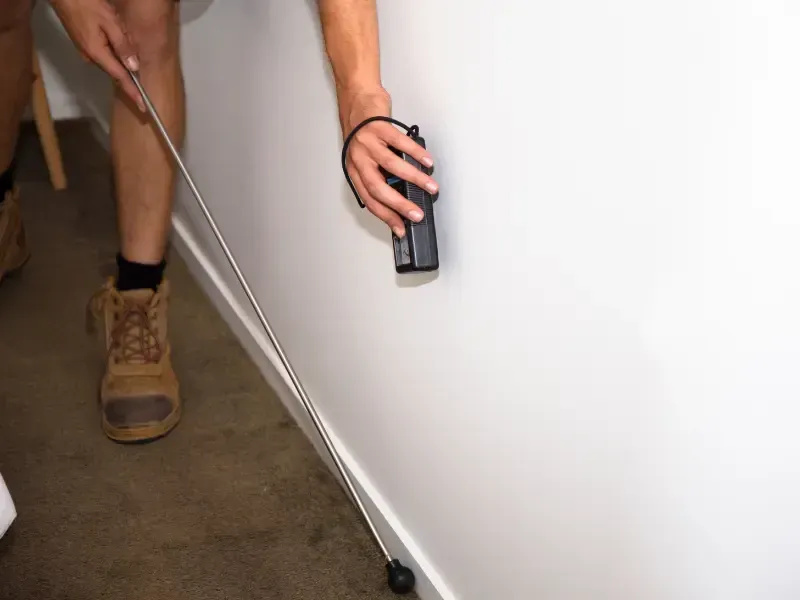
A licensed inspection covers accessible interior and exterior areas: the perimeter foundation and slab edge, block walls and stem walls, garage, any crawl space, visible framing, plumbing penetrations, expansion joints, and landscaping in contact with the structure.
The inspector documents three categories. Visible evidence — mud tubes, damaged or hollow-sounding wood, discarded wings, frass. Prior treatment, where visible or on record. And conducive conditions, which in Arizona means wood-to-soil contact, irrigation directed at the foundation, dense plantings against walls, stored cellulose in contact with the structure, and moisture from any source.
Our general residential scope, covered in our Chandler home inspection guide and buyer's checklist, overlaps on those conducive conditions — we're already looking at grading, irrigation, and moisture. What differs is the authority to issue the form.
Signs of Subterranean Termites in Arizona
Subterranean termites are the common species here, and they arrive from the soil rather than from the air.
Mud tubes are the classic sign — pencil-width earthen tunnels running up foundation walls, stem walls, or piers, built to keep the colony out of dry air. Look at the slab edge, inside the garage, and behind stored items along walls.
Damaged wood that sounds hollow when tapped, or gives under light pressure. Termites eat along the grain and leave a thin surface intact.
Swarmers and discarded wings, typically after rain, often collecting at window sills.
Bubbling or distorted paint and drywall, which can look like water damage.
The entry point is smaller than people expect — a foundation crack as narrow as a fraction of a millimetre is enough. Which is why conducive conditions matter more than perfect sealing: you can't close every gap, but you can stop directing irrigation at the foundation and keep cellulose off the soil against the wall. Our guide to things that fail a home inspection covers the moisture and grading issues that overlap.
Cost, Frequency, and Where We Work
How much does a termite inspection cost is a question for a licensed pest company rather than for us, and it varies with property size, whether a crawl space is present, and whether the report is a standalone WDIIR or bundled with treatment. What we can say is that it's a modest cost relative to the transaction, and one that lenders frequently require anyway.
On frequency: annually is the common recommendation in Arizona, and it's a reasonable one given how active subterranean termites are here and how little visible warning they give. At minimum, get one at purchase, after any treatment expires, and if you see anything from the list above.
Across Chandler, risk tracks landscaping and irrigation more than housing era. Ocotillo, Fulton Ranch, and the newer south Chandler subdivisions have mature landscaping now established against foundations. Sun Lakes and the older communities carry longer treatment histories worth checking against the state database. Anywhere on flood irrigation or with heavy drip irrigation against the wall deserves closer attention.
We inspect across Chandler and Mesa, with our scope on the residential inspections page, asset types on property types, and the full area on our locations page. A pest inspection East Valley Phoenix buyers arrange runs alongside the general inspection, not instead of it.
If you've been searching termite inspection Chandler AZ, comparing the best termite inspectors near Chandler AZ or the top rated pest inspectors in the East Valley Phoenix, check one thing first: that the company holds a current AZDA Pest Management Division licence. Without it, the WDIIR wood destroying insect inspection Maricopa County AZ lenders accept can't be issued at all.

Frequently Asked Questions
1. What does a termite inspection include in Arizona?
A licensed inspection covers accessible interior and exterior areas: perimeter foundation and slab edge, block and stem walls, garage, crawl space where present, visible framing, plumbing penetrations, expansion joints, and landscaping touching the structure. It documents visible evidence such as mud tubes, damaged or hollow-sounding wood, discarded wings and frass; any prior treatment; and conducive conditions including wood-to-soil contact, irrigation aimed at the foundation, dense plantings against walls, and stored cellulose. Inaccessible and obstructed areas must be listed rather than assumed clear.
2. How much does a termite inspection cost in Chandler?
Pricing comes from the licensed pest management company performing the work, and varies with property size, whether a crawl space is present, and whether you're commissioning a standalone WDIIR or a report bundled with treatment. It's a modest cost relative to the transaction, and one lenders frequently require regardless. Since only AZDA-licensed companies can issue the report, compare quotes among licensed providers rather than assuming a home inspector can include it.
3. Do lenders require a termite report for AZ home purchases?
Often, and the distinction matters: Arizona state law sets standards for how a WDIIR is conducted but does not itself mandate a report for property sales. The requirement comes from lending institutions. VA, FHA, and HUD-backed loans commonly require one, which is why the state form includes a field for the case number. Conventional lenders vary, and your purchase contract may call for a report independently of what the lender requires.
4. How often should AZ homes be inspected for termites?
Annually is the common recommendation, and a sensible one given how active subterranean termites are in this climate and how little visible warning they give before damage accumulates. At minimum, get an inspection at purchase, when any existing treatment warranty expires, and any time you see mud tubes, hollow-sounding wood, discarded wings, or unexplained bubbling paint. Properties with irrigation directed near the foundation or heavy planting against walls warrant closer attention.
5. What are signs of subterranean termites in Arizona?
Mud tubes are the classic indicator — pencil-width earthen tunnels running up foundation walls, stem walls, or piers, since the colony must stay out of dry air. Check the slab edge, the garage, and behind items stored against walls. Also look for wood that sounds hollow when tapped or gives under light pressure, discarded wings collecting at window sills after rain, and bubbling or distorted paint that resembles water damage. Entry needs only a hairline foundation crack.
Contact Halcomb Property Inspections
Halcomb Property Inspections Serving Chandler, AZ and the East Valley Phone: (480) 273-9328 Hours: Monday–Sunday, 6:00 AM – 9:00 PM Serving Chandler including Ocotillo, Sun Lakes, and Fulton Ranch, plus Mesa, Gilbert, and the wider Phoenix metro.
Buying in Chandler and unsure what your lender needs? Request a free quote or call (480) 273-9328, and we'll cover the general inspection and point you to a licensed provider for the WDIIR.
