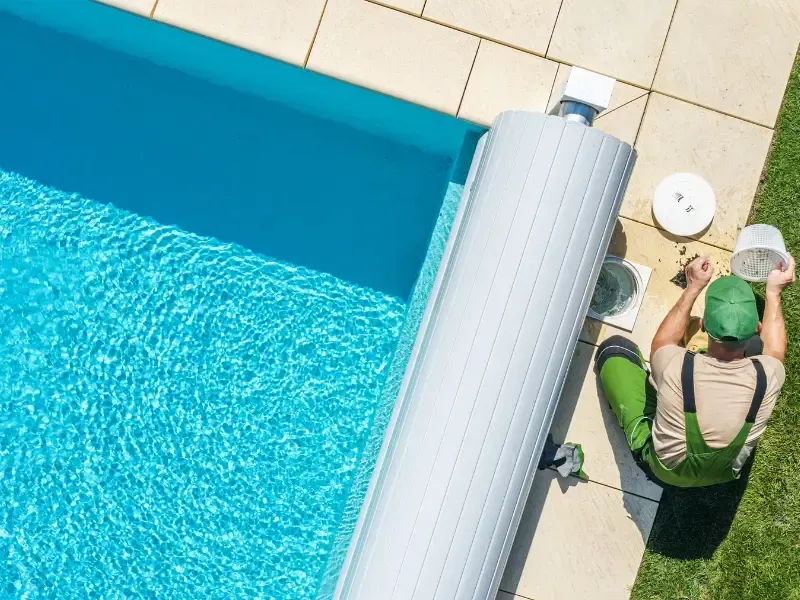
Does a Home Inspection Include the Pool in Chandler, AZ?
Generally not. The standard residential inspection scope Arizona inspectors work to doesn't cover the pool, the spa, or their equipment — so if the house has one, that's a separate engagement. Which matters here, because Arizona has a specific barrier statute and a buyer inherits whatever the seller was or wasn't complying with.
By Alex & Jeff, Certified Home Inspector · Last updated August 18, 2026
Do Pools Need a Separate Inspection?
Yes, and the reason is scope rather than upselling.
The standards Arizona certified inspectors follow are built around the dwelling. Pools, spas, and their equipment sit outside that scope, which is why a general report will often note the presence of a pool and nothing more. So do pools need a separate inspection: if you want the equipment and the barrier assessed, yes.
That's not a reason to skip the general inspection — our Chandler residential inspection guide covers what it does include, and the buyer's checklist walks the house. It's a reason to book both inside your ten-day inspection period rather than discovering the gap on day eight.
A pre purchase pool inspection Chandler area buyers commission covers two distinct things: whether the equipment works and what it will cost, and whether the safety barrier meets the law. The second one is where the money and the liability sit.
Arizona's Barrier Law, Specifically
Arizona regulates residential pool barriers by statute. A.R.S. § 36-1681 applies to a swimming pool or other contained body of water at least 18 inches deep and more than 8 feet wide, and it's specific enough to check yourself.

Where the house forms part of the barrier, all ground-level doors with direct access to the pool need a self-latching device meeting the same specification. That's common in Chandler, where a back wall of the home often closes the pool enclosure.
Escape and rescue windows from sleeping rooms with access to the pool must have a latching device not less than 54 inches above the floor. Almost nobody checks this, and it appears in the statute alongside the door requirement.
One caution worth stating plainly: local ordinances can be stricter, and the statute contemplates that. Chandler and Maricopa County have their own requirements, so confirm locally rather than treating the state figures as the ceiling. Any swimming pool inspector Maricopa County AZ buyers use should be measuring against the stricter of the two.
The Exemption That Catches Buyers
Here's the part that matters most in a transaction, and it's genuinely counterintuitive.
The statute contains exemptions, and one of them is a residence in which all residents are at least six years of age. A seller with grown children may have been lawfully exempt from barrier requirements for years. That exemption belongs to the circumstances, not to the property.
So a buyer with a toddler can close on a house whose pool barrier has never complied, and the compliance obligation arrives with them. Nothing was hidden and nobody did anything wrong — the exemption simply stopped applying at the moment the household changed.
That's the single strongest argument for a barrier assessment before closing rather than after. Bringing a gate, a latch, or a door into compliance is inexpensive. Discovering you need it after you've moved a two-year-old into the house is a different kind of problem.
Arizona also publishes a Residential Pool Safety Notice through the Department of Health Services, which sets out the requirements alongside supervision guidance. Worth reading once if you're buying a pool home.

What Is Included in a Pool Inspection?
What is included in a pool inspection splits into three parts.
Safety. Barrier height, gaps, climbability, clearance from the water, gate swing and self-closing operation, latch height and type, door and window latching where the house forms the enclosure. Plus anti-entrapment drain covers and whether main drains appear to be single or dual.
Equipment. Pump and motor operation, filter type and condition, heater where fitted, plumbing and valve condition, visible leaks at the equipment pad, timer or automation function, bonding and grounding at the pad, and GFCI protection where required.
Structure and surfaces. Interior finish condition — plaster, pebble, or tile — coping, waterline tile, deck condition and drainage, skimmers and returns, and any visible cracking or settlement.
A pool and spa inspection East Valley Phoenix buyers book covers both bodies of water and the shared equipment, since spas commonly run off the same pad with dedicated valves and a blower.
What It Doesn't Cover
Worth stating, because the limits are where disputes come from.
A pool inspection is visual and operational. It doesn't involve draining the pool, pressure-testing the underground plumbing, or opening sealed equipment. Which means it cannot confirm the absence of an underground leak — that's leak detection, a separate specialist service using pressure testing and dye or acoustic methods.
It also can't determine remaining life on a heater or a pump with any precision, or certify barrier compliance in the way a jurisdiction can. What it can do is tell you what's there, what's working, what's visibly failing, and where the barrier falls short of the statute.
If water loss is the concern going in — and in Chandler, evaporation makes that a genuinely hard call — say so when booking. We'll tell you whether the pattern suggests a leak worth investigating, which is a different question from proving one.
Cost, Duration, and Where We Work
How much does a pool inspection cost depends on whether it's booked alongside a home inspection or standalone, and on what's present: a pool alone, a pool and spa, water features, or automation. Bundled with a general inspection it's the cheaper route, since the visit is already happening. Leak detection is a separate service at a separate price.
How long does a swimming pool inspection take: typically 45 minutes to an hour and a half for a residential pool, longer with a spa, water features, or extensive automation. Equipment has to run through a cycle, which sets a floor on the time regardless of pool size.
Across Chandler, era shapes what we find. Ocotillo and south Chandler pools are largely 1990s and 2000s, where original equipment is at or past expected life and barriers were built to the code of the day. Sun Lakes and the active-adult communities are where the age exemption most often applied, so barriers deserve a close look on resale. Central and north Chandler run older with more variation in barrier construction and retrofits.
We cover Chandler, Mesa, and the East Valley, with the service on our pool inspections page, residential scope on our residential inspections page, asset types on property types, and the full area on our locations page. Apartment and semi-public pools carry separate operating permit requirements, covered in our multi-family inspection guide.
If you've been searching pool inspection Chandler AZ, comparing the best pool inspectors near Chandler AZ or the top rated swimming pool inspectors in the East Valley Phoenix, ask one question: will you measure the barrier against the statute and tell me what's non-compliant? Anyone answering which inspector handles pool equipment and safety in Maricopa County should do both halves, not just the pump.

Frequently Asked Questions
1. What does a pool inspection include in Arizona?
Three parts. Safety: barrier height, gaps, climbability, clearance from the water, gate swing and self-closing operation, latch height and type, plus door and window latching where the house forms part of the enclosure, and anti-entrapment drain covers. Equipment: pump and motor operation, filter, heater, plumbing and valves, visible leaks at the pad, timer or automation, bonding and grounding, and GFCI protection. Structure: interior finish, coping, waterline tile, deck condition and drainage, skimmers and returns, and visible cracking.
2. How much does a pool inspection cost in Chandler?
It depends on whether it's booked alongside a home inspection or as a standalone visit, and on what's present — pool only, pool and spa, water features, or extensive automation. Bundling with a general inspection is the cheaper route since the visit is already happening. Leak detection, which requires pressure testing rather than visual assessment, is a separate service priced separately. Quotes are free.
3. Does a standard home inspection include the pool?
Generally not. The standards Arizona certified inspectors work to are built around the dwelling, and pools, spas, and their equipment fall outside that scope — a general report will often note that a pool exists and little more. If you want the equipment assessed and the barrier measured against Arizona's statute, that's a separate engagement. Book both inside your inspection period rather than discovering the gap late.
4. What are Arizona pool safety code requirements?
Under A.R.S. § 36-1681, applying to pools at least 18 inches deep and more than 8 feet wide: a barrier at least 5 feet high measured from the exterior, no openings a 4-inch sphere can pass, no exterior handholds or footholds, and at least 20 inches from the water's edge. Gates must open outward, be self-closing and self-latching, with the latch at least 54 inches above the ground or meeting the pool-side alternative. Where the house forms part of the barrier, ground-level doors need self-latching devices, and escape windows from sleeping rooms need a latch at least 54 inches above the floor. Local ordinances may be stricter.
5. How long does a swimming pool inspection take?
Typically 45 minutes to an hour and a half for a residential pool. A spa, water features, or extensive automation extend it, as does a difficult equipment pad. Part of that time is fixed regardless of pool size, because the equipment has to run through a cycle to be assessed properly — you can't evaluate a pump and filter that haven't been operated. Reports generally follow within 24 hours, which matters when you're working inside a ten-day inspection period.
Contact Halcomb Property Inspections
Halcomb Property Inspections Serving Chandler, AZ and the East Valley Phone: (480) 273-9328 Hours: Monday–Sunday, 6:00 AM – 9:00 PM Serving Chandler including Ocotillo, Sun Lakes, and Fulton Ranch, plus Mesa, Gilbert, and the wider Phoenix metro.
Buying a home with a pool? Request a free quote or call (480) 273-9328, and we'll run the equipment and measure the barrier against the statute before you close.
