What Residential Property Inspections Check On Rentals?
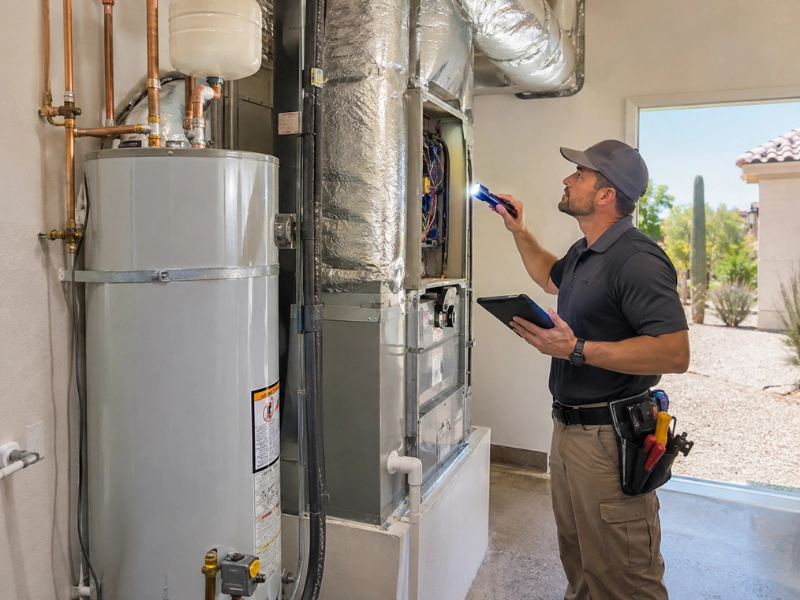
Residential property assessments in Scottsdale AZ check the same core systems on a rental as on any home. That means structure, roof, electrical, plumbing and HVAC. On a short-term rental, though, we look harder at guest safety and city license rules. We also check the pool and how each system copes with a full house in desert heat. Halcomb Property Inspections delivers that report within 24 hours.
By Alex & Jeff, Certified Home Inspector · Last updated November 18, 2026
What do residential property inspections cover on a Scottsdale rental?
Residential property inspections cover the whole house, foundation to roof, in a two-to-three-hour visit. The scope doesn't shrink because the buyer is an investor. Instead, it simply gets read through a different lens.
Our residential property inspections include:
Foundation, attic, insulation, walls, floors, doors and windows
Roof covering, flashing, gutters, grading and drainage
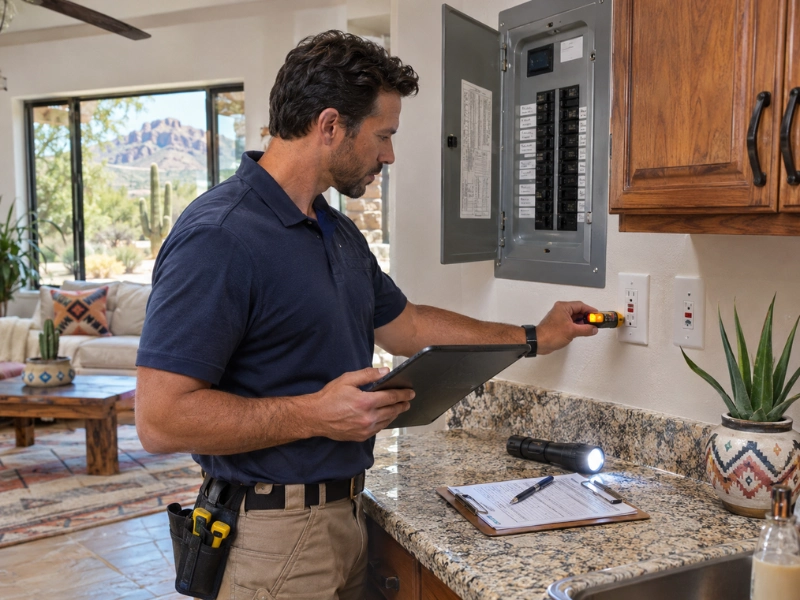
Electrical panels, outlets, grounding, and smoke and CO detectors
Plumbing fixtures, drains, water heaters, visible piping and water pressure
HVAC equipment, thermostats, ductwork and ventilation
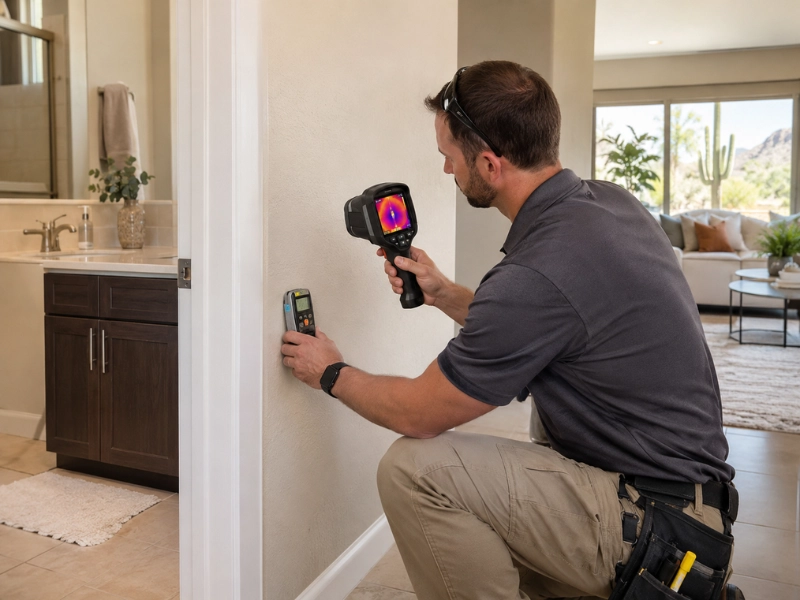
We also bring thermal imaging and moisture meters to every inspection. Those tools matter on a rental, since fresh paint and staging can hide a damp wall. Finally, the full digital report arrives within 24 hours, and often the same day.
What matters most when buying a short-term rental in Scottsdale?
When buying a short-term rental, the items that matter most affect guest safety, your license and running costs. A buyer moving in can live with a quirky outlet. A host with strangers sleeping there every weekend can't.
Clients often ask us what should be checked before buying a short term rental. Here's where we start:
Smoke and CO alarms in the right places, and their age
GFCI protection near sinks, tubs, outdoor outlets and the pool
Bedroom windows large enough for emergency escape, especially in rooms listed as bedrooms
Water heater temperature, since guests don't know a tap runs scalding hot
Stairs, railings and guardrails on balconies, decks and lofts
Door locks and keypads, which take heavy daily use
Assessing a Scottsdale property bought as a short-term rental also means checking that the house matches the listing you're planning. For instance, a converted garage marketed as a fourth bedroom may lack proper egress or a permit. That gap affects safety and the number of guests you can honestly advertise.
Which Scottsdale rules shape a short-term rental purchase?
Scottsdale requires every short-term rental to hold an annual city license. Several of its conditions tie directly to the inspection. It's worth knowing them before you close, rather than after.
According to the City of Scottsdale's short-term rental good neighbor guide, Ordinance 4566 requires a license for each property. In addition, owners need a state TPT license and liability coverage of at least $500,000.
The same guide lists safety conditions that line up with what we inspect:
Smoke alarms must be installed, working, and replaced every 10 years
Fire extinguishers or sprinklers must be properly serviced
Pools must meet the city's barrier requirements and be kept in working order
There's also an occupancy cap. The guide limits stays to six adults plus their related dependent children. Therefore, a big house with extra bedrooms doesn't automatically mean extra paying guests.
Why does a rental pool get extra attention?
A rental pool gets extra attention because guests, and often their children, use it without knowing its quirks. A barrier gate that doesn't self-close is a minor fix for an owner. For a host, however, it's a serious liability.
Our pool inspections check the barrier, gates and latches, along with the pump, filter, heater and electrical bonding. We also look at the deck surface for trip edges and cracks.
Desert sun is hard on pool equipment. In fact, pumps and timers that run all summer in Scottsdale heat often show their age sooner than buyers expect. Knowing that before closing lets you budget for it.
Planning to buy a rental in Scottsdale?
Call: (480) 273-9328
Hours: Mon–Sun, 6:00 am – 9:00 pm
Free, no-pressure estimate and a digital report within 24 hours.
Which systems carry the heaviest load in a desert rental?
The air conditioning, the water heater and the roof carry the heaviest load in a desert rental. A full house in a Scottsdale summer pushes each one harder than a typical family would.
Air conditioning comes first. Guests set thermostats low and leave doors open to the patio. As a result, an older or undersized AC unit can struggle on a 110-degree afternoon. We check its age, its condition and how well it actually cools.
Next is hot water. A tank sized for two people may run cold when eight guests shower in one morning. So we note the tank's size, age and condition against the number of bedrooms you plan to rent.
Then there's the roof. Many Scottsdale homes have tile roofs, where the tiles last far longer than the underlayment beneath them. Consequently, a roof can look fine from the street while the layer underneath is near the end of its life.
What should a rental buyer do with the report?
A rental buyer should treat the report as a repair budget and a maintenance plan. It's more than a pass-or-fail list. Each finding comes with photos and a clear description, so it's easy to price.
First, sort the findings into three groups: safety items to fix before the first guest, near-term repairs, and long-term replacements. Then, add the near-term costs to your purchase numbers.
Termites deserve their own line. They're common across the Valley, and a pest inspection on the same visit keeps everything in one report.
Finally, keep the report. It becomes the baseline for your own records once the property is running. Later, when a guest reports a problem, you'll know whether it was there on day one. That record also helps when you talk to an insurer or plan the next round of upgrades.
Where do we inspect rentals around Scottsdale?
We inspect rental properties across Scottsdale and the wider Phoenix metro. That includes Old Town, South Scottsdale, McCormick Ranch and the communities further north.
If you're looking for property assessments for rental investors near Scottsdale and Tempe AZ, we cover Tempe, Paradise Valley, Phoenix and Mesa as well. Our full service area lists the rest of the Valley.
Some investors buy small multifamily buildings instead. Our post on building inspections for Phoenix apartments explains how those visits work. Meanwhile, if your rental is an older house, read why older homes need residential property inspections.
Every inspector on our team is licensed in Arizona and InterNACHI-certified.
Frequently asked questions
1. Buying this to rent out rather than live in - does that change what matters?
Yes, because a rental is judged on guest safety, durability and running costs, while someone moving in tends to focus on comfort and layout. Questions like "what do investors look at that homeowners do not" and "how is a rental property assessed differently" both come down to investor priorities against owner priorities, with liability items, remaining system life and repair budgets moving to the top.
2. What shows up on a property that has had constant guest turnover?
Constant guest turnover usually shows up as loose door hardware, wobbly towel bars and toilet seats, scuffed walls, tired appliances and filters that haven't been changed on schedule. That turnover wear and tear is mostly cosmetic, but loose railings, damaged outlets or a disabled smoke alarm are safety items we flag separately.
3. Which findings are a price negotiation and which are a walk-away for an investor?
Repairs with a clear price, like an aging water heater, worn roof underlayment or an AC unit near the end of its life, are usually a negotiation point. Structural movement, widespread moisture or termite damage, and unpermitted rooms marketed as bedrooms tend to be walk-away findings, because they threaten the license or the occupancy the numbers depend on.
4. How fast can this happen inside a short closing window?
Most inspections take two to three hours on site, and the digital report usually arrives the same day and always within 24 hours. Because we schedule seven days a week, we can usually fit the inspection, plus a pool or pest add-on, inside a short inspection period.
5. Is it worth assessing a property already running as a rental?
Yes, because an active rental can hide problems behind fresh cleaning and staging, and the seller's maintenance habits rarely show in listing photos. The report also gives you a documented starting point, which helps with insurance questions and future repair planning.
Visit or Call Us
Halcomb Property Inspections
Phone: (480) 273-9328
Hours: Mon–Sun, 6:00 am – 9:00 pm
Family- and veteran-operated home inspection company
Serving Scottsdale, Tempe, Paradise Valley, Phoenix, Mesa and the wider Valley. Call for a free estimate, or use our contact page to book a visit.
