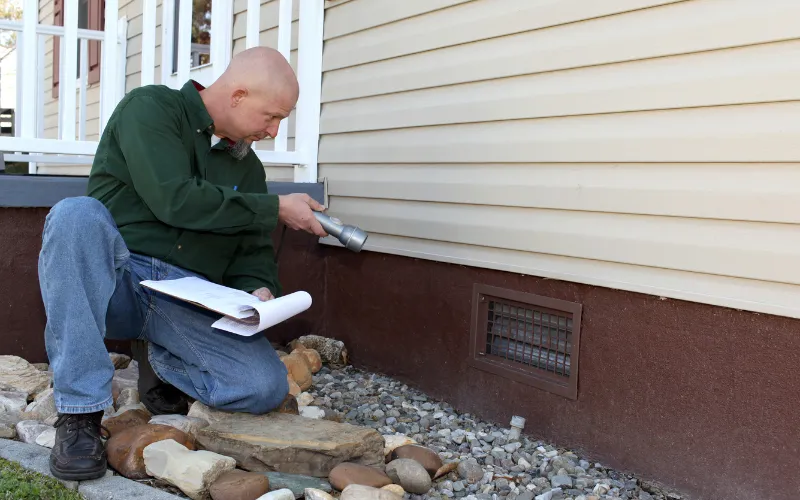
Why Every Home Needs a Foundation and Framing Check — Before It’s Too Late
Every home stands on something. A base. A skeleton. The foundation and the framing—they’re the real deal. The parts that actually hold everything together. Without them, the whole house is just... decoration. The scary part? Most problems start quietly. A small crack. A door that doesn’t close quite right. Maybe a floor that suddenly feels uneven. You shrug it off. Then one day—it’s not small anymore.
A foundation and framing check isn’t just some fancy add-on inspection. It’s survival mode for your home. It’s how you catch problems before they become disasters. Soil moves. Wood shifts. Moisture creeps in where it shouldn’t. These things don’t announce themselves. They just happen. Slowly. Quietly. Until it’s too late to pretend you didn’t notice.
That’s where Halcomb Property Inspections changes everything. They’re not the “quick in and out” kind of inspectors. Nope. They look deeper. They listen to what your home’s trying to say. Every crack. Every joint. Every inch gets their full attention. They mix modern tools with old-school skill—the kind that only comes from years of actually crawling under homes and seeing what’s real. And when they’re done, you get answers. Real ones. Straightforward, human, and easy to understand. That’s why Arizona homeowners trust them. Because they care enough to tell you the truth—even when it’s not pretty.
Key Takeaways
✓ A foundation and framing check looks at both your foundation and the internal structure of your home.
✓ It goes beyond cracks—measuring alignment, stress, and load transfer between base and frame.
✓ Helps prevent serious structural failures before they happen.
✓ Often reveals hidden water damage or soil movement no one else noticed.
✓ It’s not just an inspection—it’s protection.
What Exactly Is a Foundation and Framing Check?
Let’s keep it simple.
The foundation is the bottom—the part holding everything up.
The framing is the skeleton—the bones of your house.
When both are aligned, your home stands tall and steady. But if one shifts? The other starts to complain. You’ll see doors sticking. Cracks spreading. Floors tilting.
A foundation and framing check looks at how those two systems work together—or fail together. It’s not your average home inspection. It’s deeper. More technical. More honest.
It’s what separates guessing from knowing.
Why It’s Different from a Regular Inspection
Most home inspections skim the surface. They check outlets, paint, maybe a visible crack or two.
But this one? It goes under, inside, around. It uses tools. Lasers. Levels. Moisture meters.
It doesn’t just ask what’s broken.
It asks why.
That “why” is everything. It’s the difference between fixing symptoms or fixing causes.
The Dual Focus: Foundation and Framing
Alright. Two main targets here. Let’s break them down.
Foundation — The Base That Bears It All
Your home’s foundation does more than hold weight. It anchors stability. It resists moisture. It connects your house to the earth—literally.
Here’s what inspectors check:
Cracks—big, small, or sneaky hairlines.
Settlement—uneven soil movement under the slab.
Drainage—does water flow away from the house, or pool against it?
Moisture damage—signs of seepage, rot, mold.
Pier or footing alignment—are they still level and secure?
Prior repairs—done right or just patched up to sell the house?
A good foundation inspection doesn’t just stop at “you have cracks.” It explains why they formed and what’s next if you ignore them.
Framing — The Skeleton That Keeps Everything in Shape
Now the fun part. Framing. The invisible network that holds your walls, floors, and roof in perfect balance.
Inspectors look at:
Joists, beams, rafters—are they sagging, bowed, or split?
Load transfer—how weight moves from roof to foundation.
Wall studs—any shifts, misalignment, or moisture damage.
Connectors—nails, brackets, and bolts that hold framing tight.
Termite or rot damage—especially near the base where framing meets the foundation.
A structural home inspection often touches these areas, but not in full detail. A foundation and framing check dives deep into the relationship between them. If one’s off, both show stress.
A Quick Example
Let’s say you’ve got a cracked tile near your kitchen. You replace it. Then six months later—another crack. Same spot. You call a handyman, maybe even a foundation company.
But the real issue? The framing above is flexing ever so slightly because of foundation movement below. You’re fixing symptoms, not the disease. A combined inspection finds that link. Saves you from chasing small fixes that never last.
Why Timing Matters
You don’t wait until your car breaks down to check the oil, right? Same idea.
Here’s when you should get a foundation and framing check done:
Before buying a home (especially older ones or flipped houses).
After a big storm, flood, or quake.
Before adding a second story or heavy remodel.
When cracks appear—walls, ceilings, or floors.
When doors or windows start sticking.
And for older homes? Every few years, just to be safe. Structures settle. Soil shifts. Climate changes. Better to catch movement early than deal with collapse later.

The Process: What Inspectors Actually Do
Most people imagine inspectors just walking around with a clipboard. Not here.
Here’s what a foundation and framing check really looks like.
1. Visual Assessment
First, they walk the property. Outside and inside. They look for clues—cracks, separations, bulges, misalignments.
It’s like detective work. Every small sign tells a bigger story.
2. Measurement & Leveling
Next, tools come out. Laser levels, zip levels, slope meters. These show how much the foundation has tilted or settled. Even small deviations—⅛ inch here, ¼ inch there—can reveal stress patterns.
3. Framing Evaluation
They check how walls, joists, and beams are handling load. Are they deflecting? Are connections loose? Any moisture or rot near base plates?
They’ll climb into attics, crawlspaces, under decks—wherever the frame hides.
4. Moisture & Soil Review
Because guess what causes half of foundation problems? Water.
Inspectors test soil grades, check drainage, and use moisture meters near walls. They know water doesn’t just “disappear.” It moves. It seeps. It erodes.
5. Documentation & Reporting
Finally, they pull it together. A real report. Not a checklist of jargon. You’ll see photos, measurements, severity levels, and—most important—what to do next.
Good inspectors don’t scare you. They guide you.
What Happens If You Ignore Structural Issues
It starts small.
A crack here. A slope there.
Then?
Cabinets separate from walls. Doors don’t shut. Windows jam. Floors squeak and dip. Drywall splits. Roofs bow.
You patch and paint and patch again. But inside, your home’s slowly shifting.
Ignoring a foundation inspection or framing problem doesn’t make it go away—it multiplies it.
Foundation movement spreads upward. Framing weakness spreads outward.
It’s like ignoring a fever and wondering why you got pneumonia.

Choosing the Right Inspector
Not every inspector’s built for this. Some focus on code compliance. Others do general home checks.
Here’s what you want:
Background in structural or civil engineering.
Certification in foundation or structural analysis.
Use of precise tools (laser levels, deflection gauges, moisture meters).
Detailed, honest reporting—no upselling.
Insurance. Always.
And the most important thing?
They should explain things like a human, not a manual. If you can’t understand their report, it’s useless.
Real Home Examples (True Stories, Different Names)
Case 1: The Invisible Crack
A homeowner in Mesa thought the small crack under his living room rug was nothing. The foundation and framing check showed soil erosion under one corner, shifting the frame by half an inch. A $300 inspection saved him from a $20,000 collapse later.
Case 2: The Second Story Surprise
A family in Phoenix wanted to add a new room upstairs. Inspection found that framing below wasn’t sized for extra load. Reinforcement cost a bit—but prevented disaster.
Case 3: The “All Fixed” Foundation
One owner hired a repair company years ago. Thought it was done. But the check revealed the new foundation piers were solid—except framing above had twisted. Half the problem solved, half ignored. Until Halcomb caught it.
What a Good Report Includes
You’ll know it’s professional if it has:
Summary of issues (green = okay, red = fix soon).
Detailed photos, diagrams, and moisture readings.
Severity ratings—minor, moderate, or critical.
Root causes, not just symptoms.
Clear next steps and cost ranges.
Monitoring plan for ongoing movement.
A report isn’t supposed to scare you. It’s supposed to educate you.
After the Check: What’s Next
Here’s where most people stop. Don’t.
Once the foundation and framing check is done, it’s time to act. Fix drainage. Seal cracks. Adjust grading. Reinforce beams.
And re-inspect periodically. Because a structure’s never “done.” It breathes, shifts, ages. Maintenance keeps it young.
Common Myths (Let’s Clear the Air)
“New homes don’t need this.” They do. New homes settle fast in the first few years.
“It’s too expensive.” Compared to rebuilding a wall? It’s cheap insurance.
“Cracks mean instant doom.” Not always. Some are normal. But you need someone trained to tell which is which.
“If it looks fine, it is fine.” Nope. Hidden moisture, slow soil shift—those don’t show until damage is done.
FAQ
Q: How long does a foundation and framing check take?
Usually 2 to 4 hours, depending on the home’s size and complexity.
Q: Will this inspection tell me exactly what repairs I need?
Yes—and it’ll prioritize them. Immediate, monitor, or preventive.
Q: Can I use the report for insurance or sale?
Absolutely. Buyers love documented evidence of structure stability.
Q: Is this the same as a structural home inspection?
Similar, but not identical. The structural home inspection gives a big-picture overview; the foundation and framing check zooms into those two systems specifically.
Q: How often should I do it?
Every few years—or after any major weather event, remodeling, or noticeable shift.
Conclusion
Every house tells a story. Most homeowners just don’t listen until it screams.
A foundation and framing check helps you hear the whispers early. It finds weakness before collapse. It turns confusion into clarity.
So yeah, it’s not glamorous. But it’s necessary. Because what’s the point of granite counters if the floor underneath is sliding?
Strong foundation. Solid frame. Peace of mind.
Call to Action
Ready to find out what your home’s really standing on?
Schedule your foundation and framing check with Halcomb Property Inspections today.
We look where others don’t. We tell you what’s real, not what sells.
Contact us today for a free quote and priority scheduling in your area.
