What Do Residential Property Inspections Include in Arizona?
A defined scope, set by the state rather than by the inspector — and behind it, a certification most homeowners never think to check. Arizona is one of the states that regulates this properly, which means you can verify the person coming to your house in about the same time it takes to read this paragraph.
By Alex & Jeff, Certified Home Inspector · Last updated August 28, 2026
What Does the Scope Actually Cover?
What does a residential property inspection include isn't left to the individual company here. Arizona certified inspectors work to the Standards of Professional Practice adopted from the state's ASHI chapter, so the scope is consistent between providers.
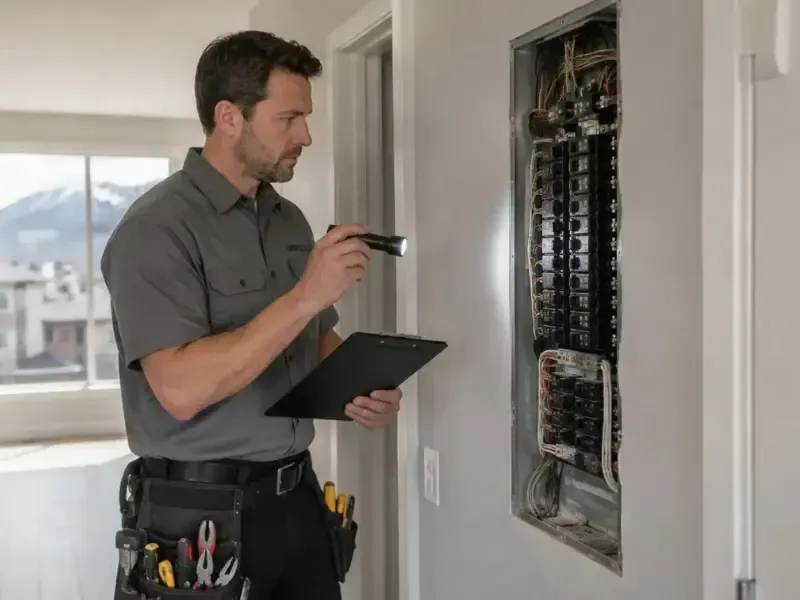
It covers structure and foundation, roof covering and drainage, exterior cladding and grading, attic and visible insulation, electrical service and panel, plumbing supply and drainage, the water heater, HVAC operated in season, interior surfaces, doors and windows, and life-safety items such as smoke alarms and the garage fire separation.
It excludes anything requiring disassembly, refrigerant charge measurement, load calculations, and concealed conditions — plus pools, septic and termite, each of which is a separately scoped and in some cases separately licensed engagement. Our Paradise Valley home inspection guide covers how those specialist scopes work on large-lot properties, including the septic transfer inspection Arizona requires by rule.
How Does Someone Become Certified Here?
This is worth knowing because it tells you what the certification on a business card is actually worth.
Under the Board of Technical Registration's rules, a candidate must complete 84 hours of classroom training from an accredited or board-approved facility, pass the National Home Inspector Examination within the two years preceding application, complete 30 parallel inspections supervised by a certified inspector, and submit a fingerprint clearance card, with the Board running a background check at application and again at each annual renewal. BTR sets the requirements out on its home inspector applicants page.
The parallel inspection requirement is the part I'd draw attention to. Those thirty aren't observation. The candidate produces a written report for each one, and the supervising inspector reviews, corrects and returns it — within ten calendar days — until the reports meet the state standards. The candidate is barred from performing any fee-paid inspection during that period. And when the application lands, Board staff select one of those thirty reports at random and read it.
Which means Arizona's training pipeline is built around report writing rather than around walking a house. That's a deliberate choice, and it's the right one — the report is the product.
Why Does Financial Assurance Matter to You?
Because it's the one requirement that exists purely for the client's benefit, and almost nobody asks about it.
Arizona requires a certified home inspector to carry and continuously maintain financial assurance: errors and omissions insurance at $200,000 in the aggregate and $100,000 per occurrence, or a $25,000 bond, or an approved alternative of at least that value. BTR's general information page states it plainly, and adds the consequence — loss of, or failure to obtain, financial assurance is grounds for revoking certification.
So the practical question for any house inspection company you're considering: are you certified, and is your financial assurance current? A firm that can answer both without hesitation has told you something real. It's the same instinct as checking a contractor's workers' compensation status, and it takes the same two minutes.
Certification is verifiable through the Board rather than taken on trust, and any residential home inspector working here should expect the question. Anyone searching for a home inspector Paradise Valley Arizona buyers rely on should look the name up rather than reading the website.
What Should the Report Contain?
Given how the training works, the report deserves the same scrutiny you'd give the inspector.
A useful one does four things. It photographs and locates every finding, so a contractor or an agent can act on it without a translation step. It distinguishes severity — a life-safety item, a system at end of life, and a cosmetic note are not the same and shouldn't read the same. It attributes findings to specific components, which matters on a property with three HVAC units or two water heaters. And it states its own limits: what wasn't accessible, what wasn't tested, and why.
That last one is the tell. A report with no limitations section is either describing an impossibly perfect inspection or quietly hiding the gaps. Every inspection has boundaries — an attic with no safe access, a roof that shouldn't be walked, a system that can't be run because of ambient temperature — and naming them is what makes the rest credible.
Do I get a written report? Yes, and you should expect it within about 24 hours, because on a purchase you're working against a contractual clock rather than a leisurely one.
How Long Does It Take, and What Does It Cost?
How long does a home inspection take is two to three hours for an ordinary single-family home. Paradise Valley properties frequently run half a day or longer, because large-lot custom houses bring multiple HVAC systems, guest houses, detached structures, pools and hillside drainage that each need their own attention rather than a glance.
Attend if you can, at least for the final portion. A report is a document; walking the property with the inspector is where you learn which items are serious and which are simply recorded.
How much does a residential property inspection cost in Paradise Valley tracks square footage, the number of separate structures, and how many discrete systems are present. A single-system home is straightforward; a main house plus casita with three systems, a pool and a workshop is a substantially larger engagement. Specialist scopes — septic, pool, termite — are quoted separately, and where licensing requires it, performed by separately licensed providers. Our quotes are free.
Where Do You Work, and What Else Should I Book?
We cover Paradise Valley, Scottsdale and Phoenix, with the service on our residential property inspections page, the buildings we handle on property types, and the full area on our locations page.
A residential home inspection near Paradise Valley rarely stands alone on these properties. Worth considering alongside it: a roof inspection if the tile underlayment age is unknown, an HVAC assessment where multiple systems are involved, a foundation inspection on hillside lots, and the recurring items in our guide to things that fail a home inspection.
If you're comparing residential property inspections near me Paradise Valley AZ, ask two questions before booking a home inspection service: is your certification current with the Board, and will the report tell me what you couldn't inspect?
Frequently Asked Questions
1. What does a residential property inspection cover?
Structure and foundation, roof covering and drainage, exterior cladding and grading, attic and visible insulation, electrical service and panel, plumbing supply and drainage, water heater, HVAC operated in season, interior surfaces, doors and windows, and life-safety items. The scope follows the Standards of Professional Practice that Arizona certified inspectors work to, so it's consistent between providers. Excluded: anything requiring disassembly, refrigerant charge testing, load calculations, concealed conditions, and pools, septic and termite, which are separately scoped engagements.
2. How much does a home inspection cost in Paradise Valley?
Square footage, the number of separate structures, and how many discrete systems are present. A single-system house with no pool is straightforward, while a main residence plus casita with three HVAC systems, a pool and a detached workshop is a considerably larger engagement and priced accordingly. Specialist scopes are quoted separately — septic transfer inspection, pool and barrier assessment, and termite reporting each require separately licensed providers under Arizona rules. Quotes are free and based on the property rather than a rate card.
3. How long does a residential inspection take?
Two to three hours for a typical single-family home, and frequently half a day or longer on Paradise Valley properties, where large-lot custom houses bring multiple HVAC systems, guest houses, detached structures, pools and hillside drainage that all need individual attention. Reports generally follow within 24 hours, which matters because a purchase runs against a contractual deadline. Attending for at least the final portion is worth the time, since walking the property is where you learn which findings are serious.
4. Are your inspectors licensed and certified in Arizona?
Yes, and Arizona's requirements are worth knowing. Certification through the Board of Technical Registration requires 84 hours of classroom training, passing the National Home Inspector Examination within two years of applying, completing 30 parallel inspections supervised by a certified inspector, and a fingerprint clearance card with a background check at application and each annual renewal. Certified inspectors must also carry financial assurance — E&O insurance at $200,000 aggregate and $100,000 per occurrence, or a $25,000 bond. Losing it is grounds for revocation.
5. Do I get a written report after the inspection?
Yes, typically within 24 hours. A report worth having does four things: photographs and locates every finding so a contractor can act on it directly, distinguishes severity rather than presenting a life-safety issue and a cosmetic note identically, attributes findings to specific components which matters where a property has several systems, and states its own limits — what couldn't be accessed, what wasn't tested, and why. A report with no limitations section should raise an eyebrow rather than reassure you.
Contact Halcomb Property Inspections
Halcomb Property Inspections Serving Paradise Valley, AZ and the Phoenix metropolitan area Phone: (480) 273-9328 Hours: Monday–Sunday, 6:00 AM – 9:00 PM Serving Paradise Valley including the Camelback and Mummy Mountain areas, plus Scottsdale, Phoenix, and the wider Valley.
Under contract and working to a deadline? Request a free quote or call (480) 273-9328, and we'll tell you what we can cover and what will need a separate specialist.
