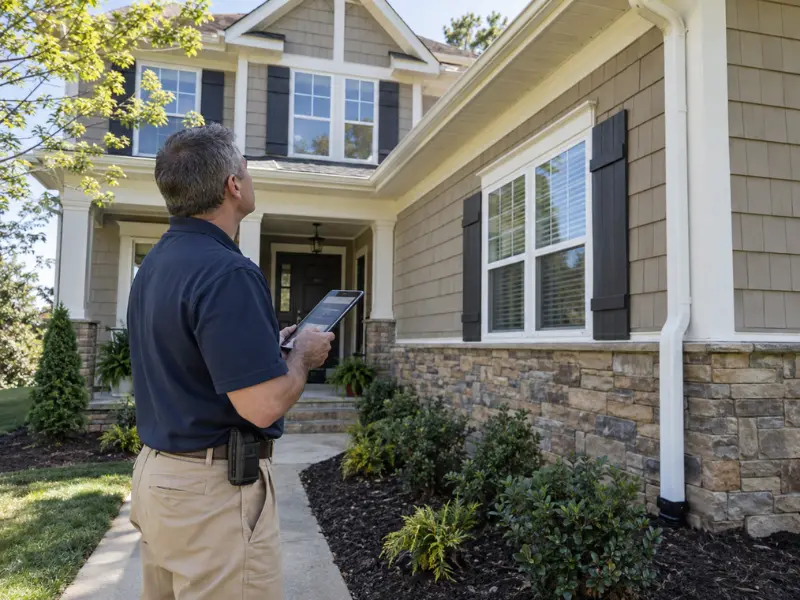
What Does a House Inspection Cover in Scottsdale?
The building to a defined standard — and outside it, two things that quietly cost Scottsdale buyers real money: the irrigation system, and the assumption that you can change the landscaping once you own it.
By Alex & Jeff, Certified Home Inspector · Last updated September 11, 2026
What Is Included in the Standard Scope?
A house inspection Scottsdale AZ buyers commission follows the Standards of Professional Practice that Arizona certified inspectors work to, so the scope is consistent between providers rather than something each firm invents.
That covers structure and foundation, roof covering and drainage, exterior cladding and grading, attic and visible insulation, electrical service and panel, plumbing supply and drainage, the water heater, HVAC operated in season, interior surfaces, doors and windows, and life-safety items such as smoke alarms and the garage fire separation.
It excludes anything requiring disassembly, refrigerant charge measurement, load calculations and concealed conditions. Pools, spas, septic and termite each sit outside it as separately scoped — and in some cases separately licensed — engagements. Our pool inspection guide covers barrier and equipment scope, and our residential property inspections guide covers Arizona's certification requirements and what a report should contain.
Why Does Irrigation Matter So Much Here?
Because it's the most common source of water against a foundation in the Valley, and it runs on a timer while nobody watches.
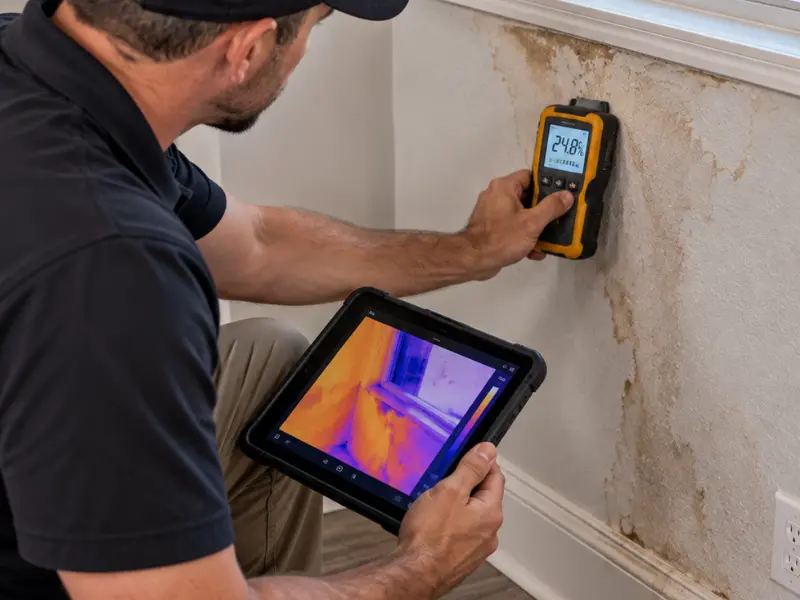
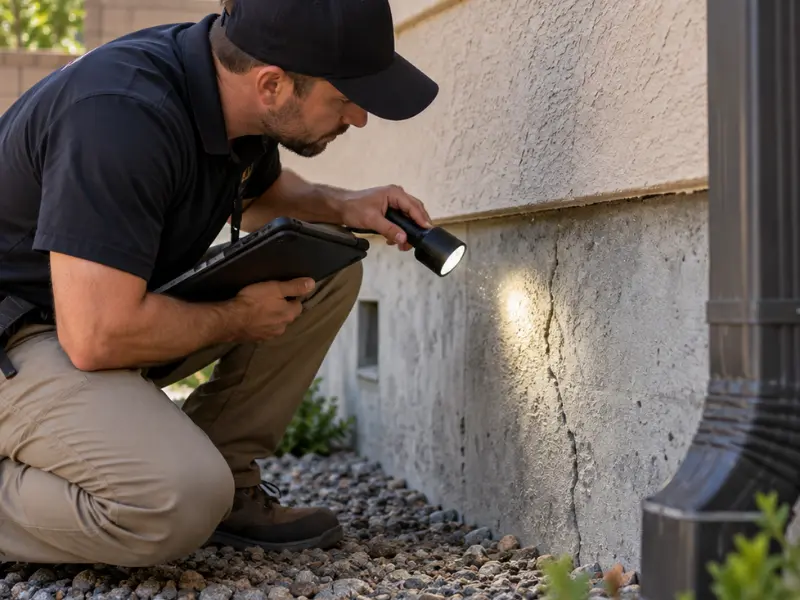
A drip system is a network of small-diameter lines, emitters and valves, mostly buried, operating unattended for a few minutes a day. When an emitter fails or a line splits, the symptom isn't a puddle — it's soil that stays wet. Next to a foundation on soil that changes volume with moisture, that's the mechanism behind a good share of the movement we document.
Four things worth attention on any Scottsdale property. Emitter placement relative to the foundation and any hardscape. Backflow prevention on the irrigation supply, which protects the potable system. Controller programming, since a system watering daily for long cycles is both wasteful and a soil-moisture problem. And evidence of past leaks — efflorescence on adjacent walls, unexplained settlement in paving, or a suspiciously green patch.
We report what's observable and operate what can be safely operated. A full irrigation audit, with pressure and flow testing across zones, is a landscape contractor's work — but knowing whether to commission one is worth the report on its own. Our foundation inspection guide covers the soil-movement side.
What Do Desert Landscaping Features Tell You?
More than people expect, because desert landscaping is largely a drainage system with plants in it.
Decomposed granite grading is the big one. DG migrates — with rain, with foot traffic, with leaf-blowing — and a surface that was graded away from the house at handover can be flat or reversed a decade later. We look at whether the ground still falls away from the structure, because that single question governs more than most people realise.
Water features carry pumps, plumbing and liners, all of which fail, and a leaking feature next to a structure is an irrigation leak with better styling.
Ramadas, shade structures and outdoor kitchens are frequently added after purchase and frequently unpermitted. Worth knowing what exists and whether the permit history matches it.
Dry-stack retaining walls holding a grade change are structural whatever the landscaper called them.
Why Might You Not Be Able to Change the Landscaping?
This is the Scottsdale specific, and it surprises buyers who assume mature plants are theirs to remove.
Scottsdale's Native Plant Ordinance — City Code Chapter 46, Article V — applies city-wide and protects large cacti and trees indigenous to the area. Critically, it applies to both natural desert and landscaped areas, so a saguaro or ironwood planted as part of a landscaping scheme can still be protected. A native plant permit is required to remove, relocate or destroy any protected plant, and the City issues those permits in conjunction with an approved or proposed development project rather than on request.
There's a state layer too. Under Arizona's native plant law a private landowner retains the right to clear protected native plants on their own land, but must file notification with the Arizona Department of Agriculture 20 to 60 days before destruction — a lead time that matters if you're planning work. And a saguaro over four feet tall moved from its original growing location requires a permit, tag and seal.
So for a buyer: the mature saguaro, ironwood or palo verde on the lot is part of what you're acquiring, and possibly not part of what you can remove on a whim. We identify what's present and flag it as worth checking. Whether a specific plant is protected, and what removing it would involve, is a question for the City and the AZDA rather than an inspector.
How Soon Can You Inspect During the Inspection Period?
Quickly, and the honest advice is to call before you need to.
The standard Arizona resale contract gives a ten-day inspection period by default, and everything you might want to do sits inside it — the general inspection, any specialist follow-ups, reading the report, getting costs, and having your agent draft the notice. Our pre-purchase guide sets out that timeline and why all inspections must be complete before the notice is delivered.
The practical consequence: book in the first two or three days of the period, not the last three. A buyer who calls on day seven has left no room for a roof or sewer scope to come back with something, and the clock doesn't extend because scheduling was tight.
Anyone asking which home inspector near me can inspect before my inspection period ends is asking a scheduling question with a contractual deadline behind it — and a pre purchase house inspection Phoenix metro buyers leave late is the commonest way that deadline gets missed. Tell us your acceptance date when you call and we'll work to it. In peak season across the Phoenix metro, that conversation is better had early.
How Much Does It Cost and When Do You Get the Report?
How much does a house inspection cost tracks square footage, the number of separate structures, and how many discrete systems are present. A single-system home is straightforward; a larger property with a casita, several HVAC units, a pool and extensive landscaping is a bigger engagement. Specialist scopes are quoted separately, and home inspection services Maricopa County AZ owners book price the same way. Estimates are free.
How long does a house inspection take is two to three hours for a typical single-family home, longer on larger properties. Attend the final portion if you can — walking the significant findings with the inspector is where you learn which items are urgent and which are simply recorded.
On turnaround: expect the report within about 24 hours, and same-day where the schedule allows. That timing is deliberate rather than a courtesy, because you're working against the inspection period above.
We cover Scottsdale, Paradise Valley, Phoenix and the wider Valley — scope on our residential inspections page, asset types on property types, the area list on our locations page, and recurring findings in our guide to things that fail a home inspection.
Comparing the best house inspection company near Scottsdale AZ, wondering who inspects homes in the Scottsdale area, or searching who does house inspections near me? Ask two things: will the report cover the irrigation and grading, and can you be here inside my first three days.
Frequently Asked Questions
1. How much does a house inspection cost in the Scottsdale area?
Square footage, the number of separate structures, and how many discrete systems are present. A single-system home with no pool is straightforward, while a larger property with a casita, several HVAC units, a pool and extensive landscaping is a considerably bigger engagement and priced accordingly. Specialist scopes — pool and barrier assessment, termite reporting, septic where applicable — are quoted separately and, where Arizona licensing requires it, performed by separately licensed providers. Estimates are free and based on the property rather than a rate card.
2. How soon can you schedule an inspection during my inspection period?
Quickly, and the useful advice is to call before you need to. The standard Arizona resale contract gives a ten-day inspection period by default, and everything has to fit inside it: the general inspection, any specialist follow-ups, reading the report, obtaining costs, and your agent drafting the notice. Book in the first two or three days rather than the last three, because a follow-up scope returning a finding on day nine leaves nowhere to go. Tell us your acceptance date when you call and we will work to it.
3. Are you certified by the Arizona Board of Technical Registration?
Yes. Arizona certification through the Board requires 84 hours of classroom training, passing the National Home Inspector Examination within two years of applying, completing 30 parallel inspections supervised by a certified inspector, and a fingerprint clearance card with a background check at application and at each annual renewal. Certified inspectors must also carry financial assurance — errors and omissions insurance at $200,000 aggregate and $100,000 per occurrence, or a $25,000 bond. Losing that cover is grounds for revocation, so it is worth asking whether it is current.
4. Do you inspect pools, spas, and desert landscaping features?
Pools and spas are a separately scoped engagement covering barrier compliance, equipment and structure rather than part of the standard inspection. Desert landscaping is reported where it bears on the building: decomposed granite grading and whether ground still falls away from the structure, drip irrigation emitter placement and evidence of past leaks, backflow prevention on the irrigation supply, water features as potential leak sources, and dry-stack retaining walls holding a grade change, which are structural regardless of what they were called. A full irrigation audit is a landscape contractor's work.
5. Do you provide a same-day or next-day inspection report?
Expect the report within about 24 hours, and same-day where the schedule allows. That timing is deliberate rather than a courtesy, because the standard Arizona contract runs a ten-day inspection period and you need time to read the findings, obtain costs on anything significant, and have your agent prepare the notice before the window closes. The report photographs and locates each finding, distinguishes severity, and states its own limitations — what was not accessible, what was not tested, and why.
Contact Halcomb Property Inspections
Halcomb Property Inspections Serving Scottsdale, AZ and the Phoenix metropolitan area Phone: (480) 273-9328 Hours: Monday–Sunday, 6:00 AM – 9:00 PM Serving Scottsdale, Paradise Valley, Phoenix, Mesa, Chandler and the wider Valley.
Just gone under contract? Request a free quote or call (480) 273-9328 — give us your acceptance date and we'll fit inside your inspection period.
