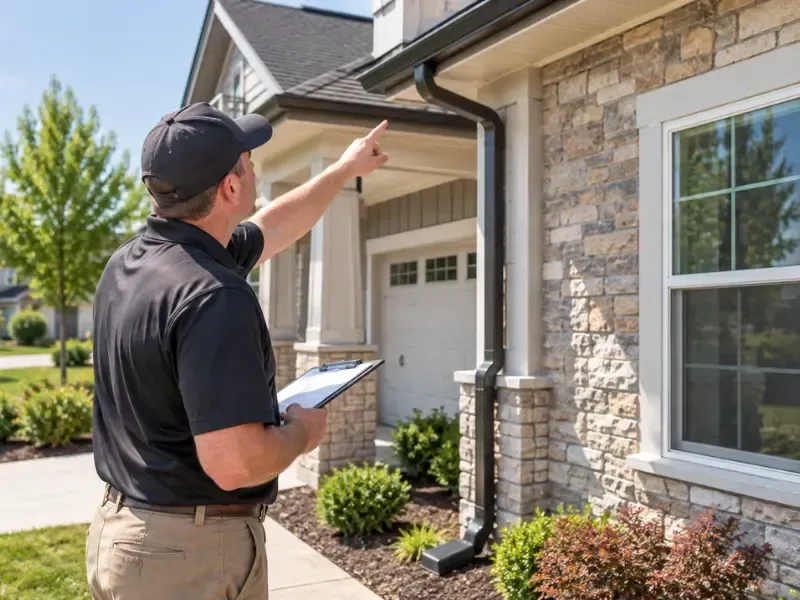
When Should a New Construction Home Inspection Happen?
Earlier than most buyers realize, and then once more after you've moved in. There are three useful moments during the build and one after — and that last one matters because Arizona puts a hard two-year limit on your ability to make the builder fix anything.
By Alex & Jeff, Certified Home Inspector · Last updated September 4, 2026
Why Inspect a Brand-New Home at All?
Because the inspections that already happened weren't done for you.
Municipal inspectors verify that work meets the code minimum for the jurisdiction. They're checking compliance, on a schedule, across many sites — not workmanship, not completeness, and not whether the house does what you were sold. Those are different questions with a different client.
Do I need an inspection on a new construction home? Nothing requires one. But new builds carry their own defect patterns, and they're not the ones you'd expect. Not worn-out systems — unfinished ones. Insulation missing in a bay nobody could see once the drywall went up. A bath fan venting into the attic instead of through the roof. Roof flashing right in nine places and wrong at the tenth. HVAC never balanced, so one bedroom runs five degrees warm. Grading that sends water toward the slab because landscaping came after the final grade.
Every one of those is cheap to correct while the builder is still on site, and expensive once they've handed over and moved to the next lot.
What Are the Three Phases Worth Inspecting?
When should a new construction inspection happen? Not once — a new home phase inspection isn't a single visit. It's a small number of well-timed ones, each looking at something that will shortly be invisible.
Phase | Timing | What can still be seen |
Pre-pour | Footings and forms set, before concrete | Reinforcement placement, forms, sub-slab plumbing, vapour barrier |
Pre-drywall | Framing and rough MEP complete, before board | Framing, fastening, plumbing and electrical rough-in, ducting, flashing, insulation |
Final | Substantially complete, before closing | Finishes, systems operated, fixtures, grading, everything on the punch list |
Pre-drywall is the one to prioritize if you only do one. It's the last moment anyone sees the structure and the systems together, and almost every expensive latent defect in a house lives behind drywall rather than in front of it.
The pre-pour visit is narrower but not trivial — reinforcement and sub-slab plumbing become permanently inaccessible in an afternoon.
Coordination matters more than the inspection here. A new construction inspector needs the builder's schedule, and framing-to-drywall can move quickly, so book the window rather than the date and expect to be flexible.
Why Does the Two-Year Clock Change the Timing?
This is the part almost nobody tells new-build buyers, and it should shape when you inspect.
The Arizona Registrar of Contractors publishes a firm deadline on its complaint page: for new construction, complaints against licensed contractors must be filed within two years from the close of escrow or actual occupancy, whichever occurred first. A.R.S. 32-1162 is the statutory basis, and the Registrar's ability to enforce workmanship standards runs on the same window.
Two implications.
A long builder warranty doesn't extend the state's window. A written warranty advertised as ten years is a contract you can pursue privately. It does not lengthen the two years in which the ROC can compel a contractor to correct work. Those are separate routes with separate clocks — and the Recovery Fund has its own deadline again.
So the most valuable post-occupancy inspection is well before month twenty-four, not at it. You want findings, a written list to the builder, time for them to respond, and time to escalate if they don't — all inside the window. Waiting until the clock is nearly out is how people discover that negotiating in good faith consumed their remaining recourse.
Write your trigger date down on the day it happens. Everything runs from close of escrow or occupancy, whichever came first.
None of this is legal advice — check your own contract, and take a question about entitlement to the ROC or to an attorney.
What Does a New Construction Inspection Include?
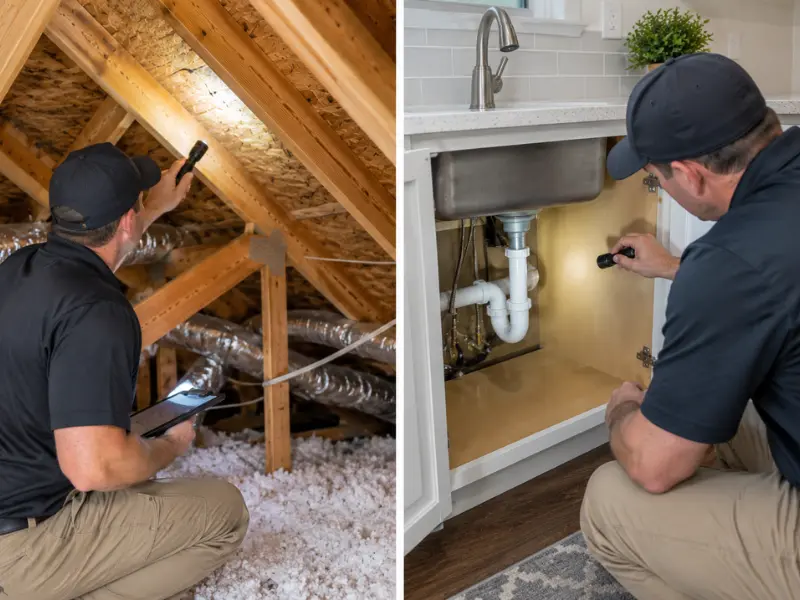
What does a new construction inspection include depends on the phase, but a final or post-occupancy inspection runs the standard residential scope: structure and foundation, roof covering and drainage, exterior cladding and grading, attic and visible insulation, electrical service and panel, plumbing supply and drainage, water heater, HVAC operated in season, interior surfaces, and life-safety items. Our residential property inspections guide covers that scope and the report standards.
What differs on a new build is emphasis rather than checklist. We're looking for incomplete rather than worn — trades that didn't return, penetrations never sealed, systems installed but never commissioned, and the difference between what the plans specified and what got built.
Specialist scopes still sit outside it: roof where tile underlayment detail matters, HVAC where several systems and zoning are involved, and pool and barrier compliance where one has been built.
What Is Different About a Paradise Valley Build?
Two things, and both affect scheduling more than scope.
Hillside parcels go through additional review. Roughly one in seven Paradise Valley lots is Hillside-designated, and Article XXII of the Town's zoning ordinance brings grading, cut and fill, and drainage under the Hillside Building Committee. On those lots the pre-pour and drainage questions carry more weight, and our foundation guide explains why the cut-and-fill boundary matters for the life of the structure.
Septic is simpler on a new build than a resale. Arizona's transfer of ownership inspection requirement carries a narrow exemption for a system that has never been used — so a genuinely new installation isn't subject to it. Our Paradise Valley home inspection guide covers the resale position, which is very different.
Beyond that, expect the same large-lot realities: multiple HVAC systems, casitas and detached structures, and a footprint that takes longer to inspect than a tract house.
How Much Does It Cost and How Do You Book?
How much a new build inspection costs tracks the same drivers as any other: square footage, the number of separate structures, and how many discrete systems are present. Phase inspections are priced individually, so a three-phase programme costs more in total than a single final visit and catches things a final visit structurally cannot.
Booking is the part that needs handling early. Speak to us before the framing goes up, not when you're invited to the walkthrough — phase timing depends on the builder's schedule and those windows close fast. Estimates are free.
We cover Paradise Valley, Scottsdale and Phoenix, with scope on our residential inspections page, asset types on property types, and the area list on our locations page.
If you're searching for a new build inspector Paradise Valley Arizona buyers use independently of the builder, or comparing new construction home inspection near me Paradise Valley AZ, ask one question: can you get there before the drywall. A new construction inspection near Paradise Valley booked after handover is still worth having — it's just working with less.
Frequently Asked Questions
1. Why inspect a brand-new home?
Because the inspections that already happened served the jurisdiction rather than you. Municipal inspectors verify code minimums on a schedule across many sites; they aren't assessing workmanship, completeness, or whether the house performs as sold. New builds carry distinctive defect patterns — insulation missing from a bay hidden by drywall, a bath fan venting into the attic, flashing correct in nine places and wrong at the tenth, HVAC never balanced, grading that directs water at the slab. All cheap to fix while the builder is on site, expensive afterwards.
2. What does a new construction inspection include?
At the final or post-occupancy stage, the standard residential scope: structure and foundation, roof covering and drainage, exterior cladding and grading, attic and visible insulation, electrical service and panel, plumbing supply and drainage, water heater, HVAC operated in season, interior surfaces and life-safety items. What differs is emphasis — we look for incomplete rather than worn work: trades that never returned, penetrations left unsealed, systems installed but never commissioned, and departures from what the plans specified.
3. How much does a new construction inspection cost in Paradise Valley?
The same drivers as any inspection here: square footage, number of separate structures, and how many discrete systems are present, which on a large-lot Paradise Valley property usually means more of all three. Phase inspections are priced individually, so a three-phase programme costs more in total than one final visit — and catches things a final visit structurally cannot, since the framing and rough-in are behind drywall by then. Specialist scopes are quoted separately. Estimates are free.
4. When should the inspection be scheduled?
Three moments during the build and one after. Pre-pour, once footings and forms are set but before concrete. Pre-drywall, once framing and rough mechanical, electrical and plumbing are complete — the highest-value visit, and the last chance to see structure and systems together. Final, before closing. Then a post-occupancy inspection well before the two-year mark, since Arizona requires complaints against licensed contractors to be filed within two years of close of escrow or occupancy, whichever came first.
5. Do you offer phase inspections during the build?
Phase inspections require site access during construction and coordination with the builder's programme, so the practical answer starts with a conversation about timing rather than a price. Contact us before framing begins rather than at the walkthrough invitation — framing-to-drywall can move in days, and once board is up the pre-drywall opportunity is gone permanently. Book the window rather than a fixed date and expect some flexibility, because builder schedules move and the inspection has to move with them.
Contact Halcomb Property Inspections
Halcomb Property Inspections Serving Paradise Valley, AZ and the Phoenix metropolitan area Phone: (480) 273-9328 Hours: Monday–Sunday, 6:00 AM – 9:00 PM Serving Paradise Valley including the Camelback and Mummy Mountain areas, plus Scottsdale, Phoenix, and the wider Valley.
Building in Paradise Valley? Request a free quote or call (480) 273-9328 — and get in touch before the drywall, not after.
