
What Is a Pre-Listing Home Inspection Worth to Sellers?
Control, mostly — and it comes with a trade-off nobody mentions in the marketing. Arizona sellers must disclose what they know about a property, but aren't obliged to go looking. A Pre-Listing Home Inspection turns unknowns into knowns. That's usually the right call, and you should walk into it understanding you can't un-know the results.
By Alex & Jeff, Certified Home Inspector · Last updated September 2, 2026
What Is a Pre-Listing Home Inspection?
What is a pre-listing home inspection: the same inspection a buyer would commission, run for the owner before the property goes on the market.
Same scope, same standards, same report. What differs is timing and who holds it. A buyer's inspection produces findings you learn about while under contract, on a deadline, with the other side holding cancellation rights. A seller home inspection produces the same findings while you still control the calendar, the price, and what you do about them.
That's the whole product. Not better information — earlier information.
What Does It Commit You To?
Here's the part worth understanding before booking, and the reason to have this conversation with your agent as well as with us.
Arizona places a real disclosure duty on sellers. You must disclose known material and latent defects — the principle Arizona courts set out in Hill v. Jones is that where a seller knows facts materially affecting value that aren't readily observable and aren't known to the buyer, there's a duty to disclose them. That duty isn't switched off by an "as is" clause, and the warranty you give on the disclosure statement survives closing.
What you are not required to do is investigate. Arizona sellers have no obligation to inspect or test for problems they don't know about.
So a home inspection before selling genuinely does change your position: findings become knowledge, and knowledge becomes disclosable. Anyone telling you otherwise is not being straight with you.
The reason it's still usually worth doing is that the alternative isn't ignorance — it's discovery at the worst possible moment. A competent buyer's inspector will very likely find the same things, except then it surfaces inside the inspection period with a cancellation right attached and a deadline running. Our pre-purchase guide sets out that timeline from the buyer's side, and it's worth reading to see the position you'd be negotiating from.
Talk it through with your agent, and with a real estate attorney if the property has history. This page is information, not advice.
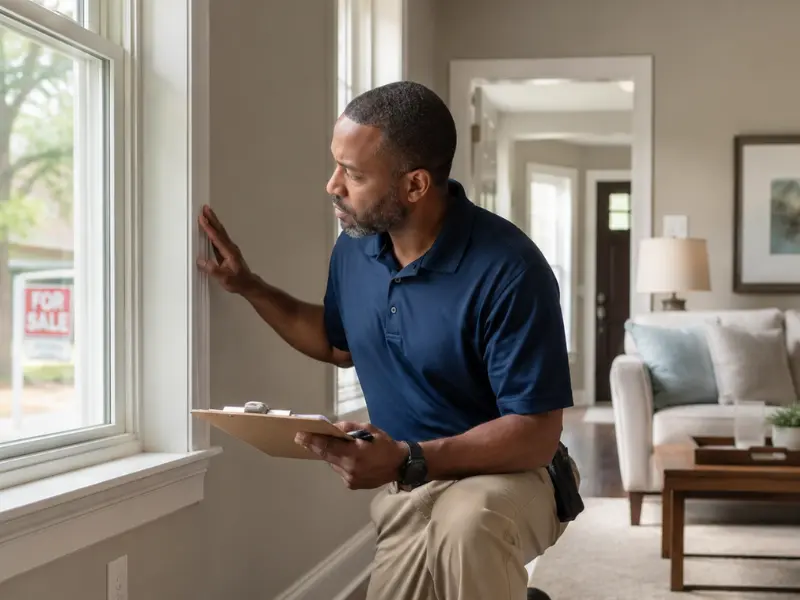
Why Is It Worth It for Sellers?
Is a pre-listing inspection worth it for sellers? In most cases, and the value is specific rather than vague.
You choose the remedy. Fix it properly, on your schedule, with your own contractor, at trade timing rather than escrow timing. A repair done under a BINSR deadline costs more and gets less scrutiny.
You price with information. A known condition can be reflected in the asking price, which is a very different conversation from a mid-escrow credit request.
You reduce late renegotiation. The expensive surprise in a transaction isn't a defect — it's a defect appearing on day eight of a ten-day inspection period, when the buyer has leverage and you have a deadline.
You shorten the specialist chain. On a Paradise Valley property that often means several separate scopes, and knowing which ones you need is worth weeks. If the property is on septic, Arizona requires a transfer of ownership inspection anyway — covered in our Paradise Valley home inspection guide — so doing that early is pure timeline gain rather than an extra cost.
Where it's less compelling: a property you've owned briefly and already inspected, or a knowingly distressed sale being marketed as such to investors.
What Should You Fix Before Listing?
Not all of them, and the sorting matters more than the total spend.
Fix the cheap and the safety items. Anything that costs little relative to how badly it reads in a report — a missing GFCI, a loose handrail, a failed smoke alarm, a dripping angle stop. These are trivial to correct and disproportionately alarming in a buyer's list.
Fix the deal-killers if you can. Active water intrusion, a failed system, anything that will trigger a lender condition. These don't get negotiated, they get resolved or they end transactions.
Price the big-ticket items rather than fixing them. A roof at end of life or an ageing HVAC system is often better reflected in the price than replaced, because buyers rarely credit you full value for a replacement they didn't choose.
Disclose everything you now know, whether you fixed it or not.
One warning that matters: a half-finished repair is worse than none. An unpermitted or visibly amateur fix becomes a disclosed repair of unknown quality, and it invites a harder look at everything else. Use a licensed contractor and keep the paperwork — receipts and permits are the thing that turns a disclosed defect into a disclosed and resolved defect.
How Does It Affect Time on Market?
Honestly, sometimes — but speed is the wrong metric to judge it on.
What a pre-listing inspection service reliably does is reduce the chance of a transaction falling apart late, which is a different and more valuable outcome. A cancellation on day nine doesn't just cost time; it puts the property back on the market with a stigma and, in Arizona, with a disclosure history you now carry into the next contract.
Where it does help speed: fewer renegotiation rounds, a faster buyer inspection period because the obvious items are already resolved, and the option of sharing your report with serious buyers to pre-empt questions. That last one is a strategy question for your agent — some use it well, some prefer not to, and it depends on the market and what the report says.
In Paradise Valley specifically, the properties that stall are usually the ones where a large-lot inspection turns up several specialist scopes at once — roof, pool, septic, multiple HVAC systems. Knowing that in advance is the difference between a sequenced plan and a scramble.
How Much Does a Pre-Listing Inspection Cost?
How much does a pre-listing inspection cost is the same calculation as a buyer's: square footage, the number of separate structures, and how many discrete systems are present. A single-system house is straightforward; a main residence with a casita, three HVAC systems, a pool and a workshop is a considerably larger engagement. Specialist scopes are quoted separately, and where Arizona licensing requires it, performed by separately licensed providers.
Set against the transaction, and against a single mid-escrow credit request, it's a small number. Estimates are free.
Timing: book it before you set a price, not after. The report is an input to the listing strategy, and a price set without it is a price you may have to defend or reduce later.
We cover Paradise Valley, Scottsdale and Phoenix, with scope on our residential inspections page, the report standards in our residential property inspections guide, and the area list on our locations page. Worth booking alongside: a roof inspection, an HVAC assessment where several systems are involved, and a foundation inspection on hillside lots.
If you're searching for a pre-listing home inspection near me Paradise Valley AZ, or comparing a seller home inspection Paradise Valley Arizona owners use before listing, do one thing first: ask your agent how they'd use the report. A pre-listing inspection near Paradise Valley is a strategy tool, and it works best when the strategy comes with it.

Frequently Asked Questions
1. What is a pre-listing home inspection?
The same inspection a buyer would commission, run for the owner before the property goes to market — same scope, same standards, same report. What differs is timing and who holds the findings. A buyer's inspection delivers them while you're under contract, on a deadline, with the other side holding cancellation rights. A pre-listing inspection delivers them while you still control the calendar, the asking price, and what you choose to do about each item.
2. Is a pre-listing inspection worth it for sellers?
Usually, for four specific reasons. You choose the remedy, your own contractor and your own schedule rather than working to an escrow deadline. You can reflect known conditions in the asking price rather than field a mid-escrow credit request. You reduce the chance of late renegotiation, which is where transactions actually get expensive. And on a large Paradise Valley property you learn which specialist scopes you need in time to sequence them. Less compelling if you've recently bought and inspected, or are selling knowingly distressed to investors.
3. How much does a pre-listing inspection cost in Paradise Valley?
The same calculation as a buyer's inspection: square footage, the number of separate structures, and how many discrete systems are present. A single-system home is straightforward, while a main residence with a casita, three HVAC systems, a pool and a detached workshop is a considerably larger engagement priced to match. Specialist scopes — septic transfer inspection, pool and barrier assessment, termite reporting — are quoted separately and performed by separately licensed providers where Arizona requires it. Estimates are free.
4. Will it help my home sell faster?
Sometimes, though speed isn't the right measure. What it reliably reduces is the chance of a sale collapsing late — and a cancellation on day nine costs more than time, since the property returns to market with a disclosure history you carry into the next contract. Where it does help pace: fewer renegotiation rounds, a smoother buyer inspection period because obvious items are already handled, and the option to share the report with serious buyers, which is a strategy call for your agent.
5. Should I fix issues before listing?
Sort rather than spend. Fix the cheap and safety items — a missing GFCI, a loose handrail, a dead smoke alarm — because they cost little and read badly. Fix genuine deal-killers such as active water intrusion or anything triggering a lender condition. Price the big-ticket items like an ageing roof rather than replacing them, since buyers rarely credit full value for a replacement they didn't choose. And disclose everything you now know either way. One caution: a half-finished repair is worse than none, so use a licensed contractor and keep receipts and permits.
Contact Halcomb Property Inspections
Halcomb Property Inspections Serving Paradise Valley, AZ and the Phoenix metropolitan area Phone: (480) 273-9328 Hours: Monday–Sunday, 6:00 AM – 9:00 PM Serving Paradise Valley including the Camelback and Mummy Mountain areas, plus Scottsdale, Phoenix, and the wider Valley.
Thinking about listing? Request a free quote or call (480) 273-9328 — and book it before you set the price, not after.
